Preparing Kids for Future Tech Careers Without Pressure
26 August 2026
Every few months, a new article appears warning parents that coding bootcamps are obsolete, or that AI will replace all entry-level programming jobs, or that the next generation needs to be "AI-native" by age ten. These headlines create a low hum of anxiety in family kitchens. Parents who work in tech or adjacent fields feel the pressure acutely. Parents who do not work in tech feel it even more, because they cannot see the path clearly.
The truth is more reassuring and more complicated. The future of technology careers will not be a single track that children either board or miss. It will be a wide landscape of roles, many of which do not exist yet, and most of which will value a blend of skills rather than a single technical specialty. The job of a parent is not to build a future engineer. It is to build a future adult who can think clearly, communicate well, and adapt when the ground shifts under them.
This article is about how to do that without turning your living room into a classroom, without making your child resent the word "coding," and without sacrificing their childhood to a hypothetical job market.

The Real Problem Is Not Skills. It Is Pressure.
Most parents who push their kids toward tech do so out of love. They see automation replacing routine work. They see software eating the world. They want their children to be safe. That instinct is correct. The execution is often wrong.When a seven-year-old is forced to sit through a Python tutorial that was designed for a college student, the child does not learn Python. They learn that programming is boring and stressful. When a twelve-year-old is told that their Minecraft hobby is a waste of time because it is not "real coding," they learn that their interests do not matter. When a teenager is pushed toward AP Computer Science because it looks good on a transcript, but they actually love writing and history, they learn that their passions are secondary to parental ambition.
Pressure creates resistance. Resistance creates avoidance. And avoidance, over time, creates a genuine lack of skill. The child who was pushed away from tech at age eight is unlikely to return to it at age twenty-five, even if the job market strongly favors technical fluency.
The alternative is not neglect. It is cultivation without coercion. You do not force a tomato plant to produce fruit by pulling on the stems. You give it sunlight, water, and good soil, then you wait.
Shift the Goal: From "Tech Career" to "Tech Fluency"
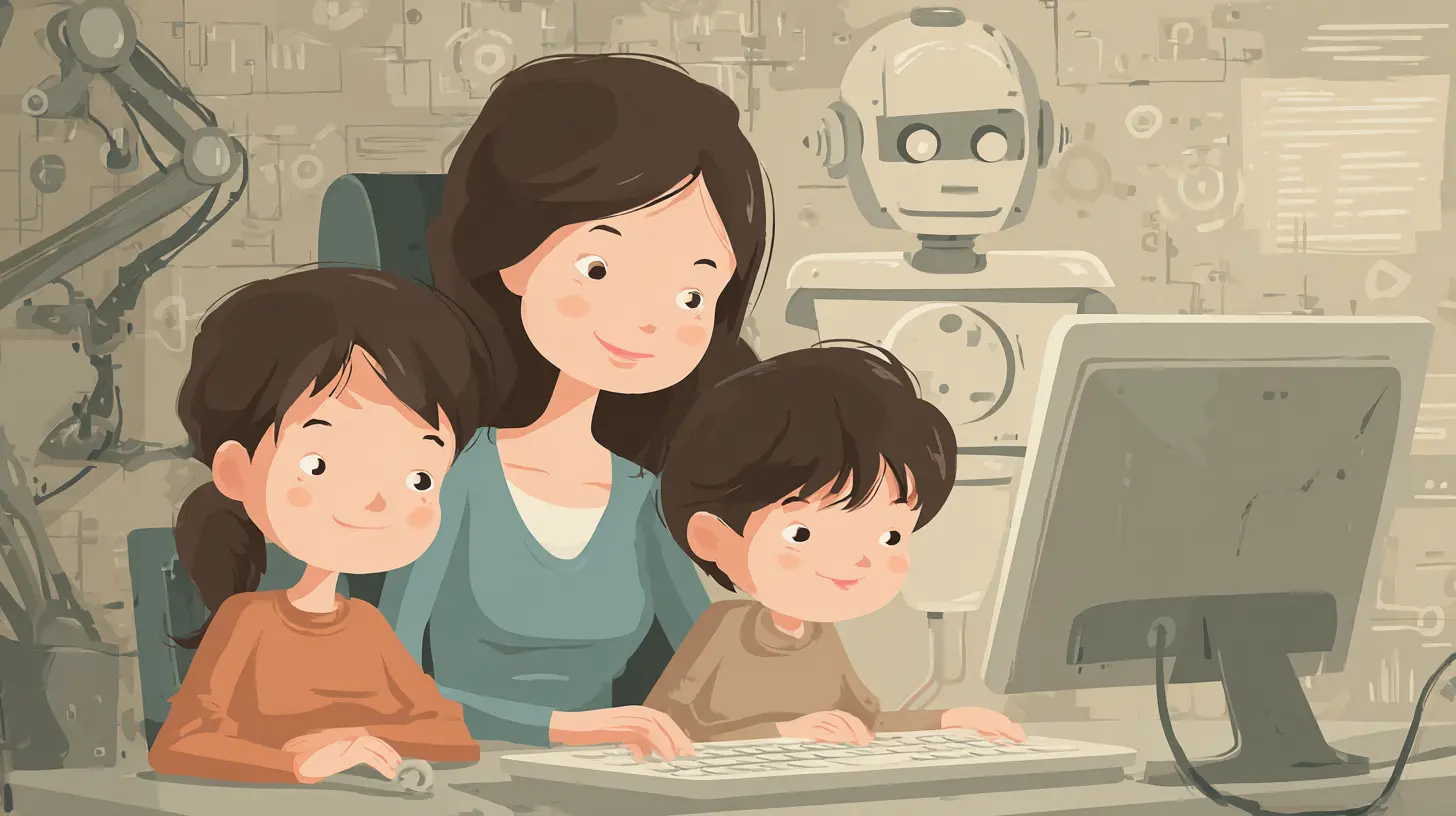
There is a useful distinction between a tech career and tech fluency. A tech career means working directly in the field, whether as a software engineer, data scientist, cybersecurity analyst, or product manager. Tech fluency means being comfortable with how technology works, being able to use it effectively, and being able to communicate with technical people even if you are not one of them.Most parents fixate on the first. The second is more realistic and more valuable.
Consider the world your child will enter. A lawyer in 2040 will use AI to review contracts. A nurse will use predictive analytics to flag at-risk patients. A marketing manager will build automated campaigns using no-code tools. A teacher will use adaptive learning platforms. None of these people need to be software engineers. All of them need to be comfortable with technology, able to judge its outputs, and capable of asking smart questions.
Tech fluency is like literacy in the 19th century. You did not have to become a novelist to benefit from reading. You just had to be able to read well enough to function and think. The same applies to technology in the coming decades. A child who understands the basics of how data works, how algorithms make decisions, and how to troubleshoot a broken system will be far ahead of a child who memorized a few programming syntaxes but never learned to think computationally.
So the first shift is this: stop asking "Will my child get a job in tech?" and start asking "Will my child be able to use technology as a tool, understand its limits, and adapt to new tools as they appear?"

What Actually Matters for Future Tech Careers
If you want to prepare your child for the tech world, focus on these foundational abilities. They are not flashy, and they do not require a screen.Logical Thinking and Problem Decomposition
Every technical task, from debugging a script to designing a database, involves breaking a large problem into smaller pieces. This is called decomposition, and it is the core of computational thinking.You can practice this without a computer. Cook a recipe with your child and ask them to predict what happens if you skip a step. Build a LEGO set and ask them to sort the pieces by type before starting. Play board games that require planning, like chess or Settlers of Catan. Ask your child to explain, step by step, how they would organize a closet or plan a birthday party.
The goal is not to make every activity a lesson. The goal is to naturally model the habit of breaking things down. When your child sees you approach a messy garage by sorting items into categories, they internalize that approach. Later, when they see a messy codebase, they will instinctively look for structure.
Comfort with Ambiguity and Iteration
Technology is never finished. Software ships with bugs. Products launch and then get redesigned. The best engineers and product people are comfortable with the fact that their first attempt will be wrong.This is hard for children, who often want to be "done" and "correct." It is also hard for parents, who want to see a finished result.
You can help by celebrating revision. When your child writes a story, ask them what they would change if they rewrote it. When they build a fort that collapses, ask what they learned about balance. When they finish a puzzle, ask them which piece was hardest and why.
The key is to avoid praising only the final outcome. Praise the process of trying, failing, adjusting, and trying again. This builds the tolerance for frustration that every tech worker needs.
Communication and Collaboration
Tech careers are deeply collaborative. Engineers do not sit alone in dark rooms. They work in teams, write documentation, review each other's code, and explain their decisions to non-technical stakeholders. A brilliant coder who cannot communicate is a liability.Encourage your child to explain things to you. Ask "Why did you choose that approach?" or "How does this work?" Do not settle for "I do not know." Push gently for explanations. When your child argues with a sibling, help them articulate their position and listen to the other side. These are the same skills used in a design review or a sprint planning meeting.
A Healthy Relationship with Screens
This is the most counterintuitive point. The path to a tech career does not require unlimited screen time. In fact, it requires the opposite.Children who spend all their time consuming content, whether it is YouTube, TikTok, or games, are not building skills. They are building habits of passive consumption. The children who benefit most from technology are those who use it as a creation tool, not just an entertainment device.
That does not mean banning games. Games can teach strategy, resource management, and persistence. But they should be balanced with creation. A child who makes a simple video, writes a blog post, designs a digital card, or modifies a game setting is engaging with technology actively. That is the mindset that matters.

Coding: When to Start, and When to Stop Worrying
The most common question parents ask is "When should my child learn to code?" The honest answer is "It depends on the child."Some children take to programming naturally at age eight. They love the logic, the immediate feedback, and the feeling of control. Others are not interested until they are fifteen, and some never develop a passion for it. All of these outcomes are fine.
Here is a practical framework. Before age ten, do not push any formal programming language. Instead, use tools that teach logic without syntax. Scratch is a good visual language, but even board games and puzzles work. The goal is to develop the thinking, not the typing.
Between ages ten and thirteen, offer opportunities without making them mandatory. A paid online course, a coding club at school, or a weekend workshop can be great. But if your child does not enjoy it, stop. Forcing a middle schooler to code is a recipe for resentment. Revisit it in a year.
At fourteen and older, the child can make their own choices. If they want to learn to code, support them with resources and time. If they do not, trust that they can still build a tech-adjacent career. Many successful product managers, UX designers, technical writers, and IT project managers have limited coding skills. They succeed through communication and strategic thinking.
One common mistake is starting with a text-based language like Python or JavaScript too early. These languages require abstract thinking that most children under twelve have not developed. The result is frustration and a false belief that they are "bad at coding." Start visual. Start game-based. Start with logic puzzles. Let the syntax come later.
The Role of AI and Automation: What to Tell Your Child
Your child will hear that AI is taking jobs. They will see headlines about programmers being replaced. They may ask you, directly, "Why should I learn to code if AI can do it?"This is a fair question, and you should not dismiss it. The answer is nuanced.
AI can write code. It can debug code. It can even design simple systems. But AI cannot decide what to build, why to build it, or whether it is worth building. AI cannot understand the messy human needs that drive technology. AI cannot negotiate with a client who does not know what they want. AI cannot judge ethical trade-offs between privacy and convenience.
The jobs that remain will be the ones that require judgment, context, and human interaction. This is true in every field, not just tech. A doctor does not lose their job because AI can read an X-ray. The doctor uses AI as a tool and applies their clinical judgment to the result.
Tell your child this directly. Technology is a tool, not a replacement for thinking. The people who thrive will be those who know how to use the tool, question the tool, and decide when the tool is wrong.
This framing also removes the pressure. Your child does not need to be faster than AI at writing code. They need to be better than AI at knowing what code should do.
Real-World Examples of Pressure Done Wrong and Done Right
Consider two families.Family A has a father who is a software engineer. He wants his son to follow in his footsteps. He buys him a Raspberry Pi at age six and sets up a Python tutorial. He gets frustrated when the son loses interest after ten minutes. He signs the son up for a competitive coding club at age nine. The son goes, but he is the youngest and struggles. By age twelve, the son says he hates computers. The father is heartbroken.
Family B has a mother who works in marketing. She does not know how to code. She notices her daughter likes to rearrange the family's digital photo albums, creating folders and renaming files. She encourages this, asking her daughter to explain her organizational system. She buys her daughter a tablet and lets her explore drawing apps. When the daughter gets interested in making simple animations, the mother finds a free online tool and learns alongside her. The daughter never takes a formal coding class until high school, but by then she has years of experience with problem-solving and digital creation. She decides to study human-computer interaction in college.
The second child is not necessarily smarter. She just had a parent who observed her natural interests and connected them to skills, rather than imposing a predetermined path.
The lesson is not to be lazy. It is to be attentive. Watch what your child does when they are free. That is where their intrinsic motivation lives. Your job is to find ways to feed that motivation, even if it does not look like "tech" on the surface.
The Danger of the "Passion" Trap
There is a counter-argument that says you should not push tech at all. "Just let kids follow their passion," the argument goes. "If they love art, let them be an artist."This advice is half right. Passion is a powerful motivator. But passion without practical skills can leave a young adult stranded. The better approach is to find the intersection between what your child loves and what the world needs.
A child who loves drawing can become a UI designer. A child who loves writing can become a technical communicator. A child who loves sports can work in sports analytics. A child who loves music can work on audio engineering or algorithm design for streaming platforms.
The skill is not the passion. The skill is the ability to apply the passion to a real-world problem. Parents can help by asking questions like "How could you use this interest to help people?" or "What problems exist in this area that technology could solve?"
This approach avoids both pressure and neglect. It respects the child's interests while also keeping the future in view.
Practical Steps for Parents at Every Age
Ages 4 to 7: Play and Exploration
Do not talk about careers. Talk about how things work. Take apart an old toy together. Ask "Why is the sky blue?" and look up the answer together. Use simple coding toys like Botley or Code-a-Pillar if your child enjoys them, but do not push.The goal is to build curiosity and a sense that the world is understandable. A child who asks questions is a child who will eventually learn to code or to work with those who do.
Ages 8 to 11: Creation and Logic
Introduce Scratch or a similar visual programming environment. Let your child make games or animations. Encourage them to modify existing projects. Ask them to show you what they made and explain how it works.This is also a good age for "unplugged" activities. Logic puzzles, pattern recognition games, and even simple cooking chemistry all build the same mental muscles.
Do not force it. If your child prefers drawing or building with blocks, that is fine. The creativity and spatial reasoning they develop will serve them in tech too, especially in fields like 3D modeling or game design.
Ages 12 to 14: Options and Autonomy
Present coding as an option, not a requirement. Let your child choose from a menu of activities: a mobile app builder, a robotics kit, a game development platform like Roblox Studio, or a beginner Python course.If they choose something, support them. If they do not, do not panic. Middle school is a time of identity formation. Many kids reject things simply because they are suggested by parents. The same kid who refuses a coding class might spend hours building complex worlds in Minecraft. That is still computational thinking.
Ages 15 to 18: Real Projects and Mentorship
At this stage, the child can handle more formal learning. Encourage them to build a real project, even a small one. A personal website, a simple app, a data analysis of a topic they care about. The project matters more than the course.Seek out mentorship. A family friend who works in tech, a local meetup, or an online community can provide guidance that you cannot. The mentor does not need to be a coder. A designer, a project manager, or a data analyst can all provide valuable perspective.
Also, have honest conversations about money and careers. Do not scare your child, but do not lie either. Explain that some careers are more stable than others, and that technical skills provide flexibility. Let them make their own decisions with that information.
Common Mistakes to Avoid
Mistake One: Confusing "Screen Time" with "Learning Time"
Watching coding videos on YouTube is not the same as writing code. Playing an educational game is better, but still passive if the child is not creating anything. The metric is not hours spent on a device. The metric is whether the child is making something, solving a problem, or building a skill.Mistake Two: Overvaluing "Talent"
Some children pick up programming quickly. That does not mean they will succeed in a tech career. Persistence, communication, and the ability to work with others matter more than raw intellectual speed. Conversely, a child who struggles at first but keeps trying often ends up more skilled because they have learned how to learn.Mistake Three: Ignoring Soft Skills
Tech companies do not hire robots. They hire humans who can write clear emails, give presentations, and work in teams. A child who spends all their time alone coding but cannot talk to people will struggle. Make sure your child has opportunities for group activities, whether that is sports, theater, or a school club.Mistake Four: Making Tech a Reward or Punishment
If you say "You can use the computer after you finish your homework," you are subtly teaching that technology is a treat. If you say "No more screens until you clean your room," you are teaching that screens are a privilege. Neither is terrible, but be aware that your framing shapes your child's attitude. Try to make technology a normal part of life, neither forbidden nor idolized.Mistake Five: Comparing Your Child to Others
There will always be a child who built an app at age ten or won a hackathon at fourteen. That child is not the norm. Comparisons only create stress. Focus on your child's progress, not their rank in some imaginary leaderboard.
The Long View: What a Tech Career Actually Looks Like
Parents often imagine a tech career as sitting in front of a screen for eight hours, typing code. That is one version, but it is not the only version.A tech career can mean designing user interfaces that are accessible to people with disabilities. It can mean analyzing data to help a hospital reduce readmission rates. It can mean writing documentation that helps non-technical users understand a complex product. It can mean managing a team of engineers and translating business goals into technical requirements. It can mean working in cybersecurity to protect a school district's student records. It can mean building a website for a local bakery.
The common thread is not programming. The common thread is using digital tools to solve real problems for real people. A child who understands this will be less anxious about the future and more interested in the present.
A Final Word on Pressure
The word "pressure" in the title of this article is there for a reason. It is the main thing that goes wrong when parents try to prepare kids for tech careers.Pressure comes from fear. Fear that your child will be left behind. Fear that you are not doing enough. Fear that the world is changing too fast.
But fear is a terrible teacher. It makes children anxious, and anxious children do not learn well. They comply, or they rebel, but they rarely develop genuine curiosity.
The best thing you can do for your child's future in tech is to model a calm, curious relationship with technology yourself. Ask questions. Tinker. Admit when you do not know something and look it up together. Show that learning is a lifelong process, not a race to a finish line.
Your child will not remember the specific coding concepts you tried to teach them. They will remember whether you made them feel safe, whether you respected their interests, and whether you trusted them to find their own path. That trust is the most powerful tool you have.
Give them that, and the tech career will take care of itself, in whatever form it takes.
all images in this post were generated using AI tools
Category:
Parenting And TechnologyAuthor:

Max Shaffer
Discussion
rate this article
2 comments
Nadia Barlow
Great advice for mindful parenting!
September 13, 2026 at 4:01 AM
Max Shaffer
Thank you! I'm glad you found it helpful. Mindful parenting can really make a difference.
Brooke McClure
This article offers valuable insights on nurturing kids' interests in technology while keeping the experience enjoyable and low-pressure. Fostering curiosity and creativity is key to guiding them toward future careers in tech. Great read!
August 29, 2026 at 2:52 PM
Max Shaffer
Thank you for your thoughtful comment! I'm glad you found the insights helpful. Encouraging curiosity and creativity really makes a difference.