Potty Training Breakthroughs and Setbacks
30 August 2026
Potty training is rarely the linear, cheerful process that parenting books suggest. It is a messy, emotional, and deeply personal journey that tests both the child's readiness and the parent's patience. Some days feel like a victory lap, with dry underwear and proud smiles. Other days feel like a regression to square one, with puddles on the floor and tears on both sides. Understanding why these swings happen, and what to do about them, is the difference between a power struggle and a partnership.
This article is not a one-size-fits-all schedule. It is an analysis of the mechanics behind breakthroughs and setbacks, the psychology of toddler autonomy, and the practical strategies that actually hold up under real-world pressure. If you are in the thick of it, or preparing to start, the goal here is to give you a framework for thinking about the process, not just a checklist.
The Real Definition of Readiness
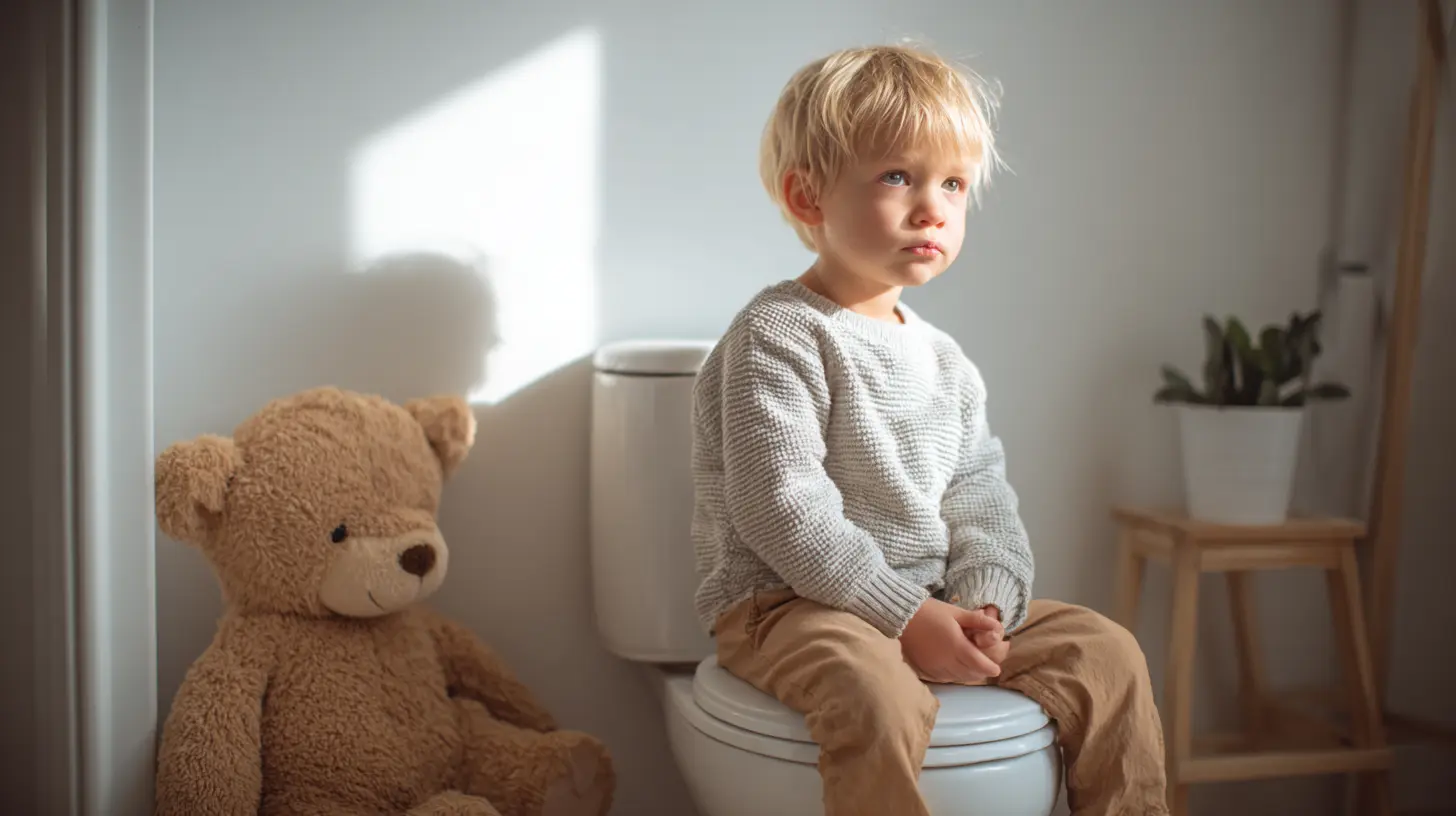
Most parents ask the wrong question first. They ask, "When should I start?" The better question is, "Is my child showing me they are ready?" Age is a weak predictor. Some children are reliably trained at two and a half, others at four, and both are within the normal range. What matters is a cluster of behavioral and physical signs that signal the child can participate in the process.Readiness is not just about staying dry for two hours. It is about the child understanding the sensation of a full bladder or bowel, connecting that sensation to the act of going to the potty, and having the motor skills to undress and sit down. The child also needs the cognitive ability to follow a two-step instruction, such as "pull down your pants and sit on the potty."
A common misconception is that a child who shows interest in the toilet is ready to train. Interest is a necessary ingredient, but it is not sufficient. A toddler who wants to flush the toilet or watch you use it may simply be curious about the mechanics, not ready to manage their own elimination. Starting too early, based on interest alone, often leads to frustration because the child lacks the physical control to succeed.
The physiological component is often overlooked. The nerves that control the bladder and bowel sphincters need to mature. This is not something a parent can speed up with practice. If a child is not producing a substantial amount of urine at once, or if they have soft stools that are hard to hold, their bodies are not ready for the kind of control that potty training requires. Watch for the child who wakes from a nap dry, or who hides behind the couch to poop. That hiding behavior is a huge clue. It means the child is aware of the urge and is trying to manage it, even if they are not yet using the potty.
Why Breakthroughs Happen: The Mechanics of Success
A breakthrough is not a random event. It is the result of several factors aligning. The most important factor is the child's internal motivation. When a child decides that they want to be dry, or that they want to wear underwear instead of a diaper, the process accelerates dramatically. This is why the "child-led" approach often works faster than a rigid parent-led schedule, even if it takes longer to start.Another key to a breakthrough is timing. If you start training during a period of low stress, such as after a holiday or when the family routine is stable, the child has more mental bandwidth to learn the new skill. Conversely, starting during a move, a new sibling's arrival, or a change in childcare often leads to failure, not because the child is incapable, but because their emotional resources are already stretched thin.
The physical setup matters too. A potty that is the right size, placed in a convenient location, and accessible without help removes barriers. A child who can reach the potty, pull down their own pants, and sit without assistance is far more likely to go on their own. If they have to ask for help every time, they will often just hold it until they cannot, which leads to accidents.
Positive reinforcement works, but not in the way most parents think. Stickers and small treats can help establish the habit, but they are not the long-term driver. The real reward is the feeling of competence. When a child successfully uses the potty, they feel a sense of accomplishment that is intrinsically rewarding. The parent's job is to highlight that feeling, not to bribe for it. Saying, "You did it! You must feel so proud of yourself," reinforces the internal motivation. Saying, "Good job, here is a sticker," shifts the focus to the external reward, which can backfire when the stickers lose their novelty.
The Anatomy of a Setback: It Is Not a Moral Failure
Setbacks are not a sign that you failed, nor are they a sign that your child is stubborn or lazy. They are a normal part of the learning curve. However, understanding the specific type of setback is crucial, because the response differs.The first type is the "skill regression." This happens when a child who was reliably using the potty suddenly starts having accidents, often after a period of success. This is frequently linked to a change in routine, illness, or a stressful event. The child has not forgotten how to use the potty. They are simply overwhelmed. The best response is to lower the pressure, go back to reminders, and offer extra comfort. Punishing or shaming a child for this type of setback will only prolong it, because it adds anxiety to an already difficult situation.
The second type is the "power struggle." This is when the child knows exactly what to do but refuses, often by holding their urine or stool for long periods. This is a control issue, not a skill issue. Toddlers are discovering that their bodies are their own, and the potty is one of the few areas where they have absolute authority. If a parent is too forceful, the child will dig in. The solution is to give choices that are not about whether to go, but about how to go. For example, "Do you want to use the potty before or after we read this book?" or "Do you want to walk to the bathroom or hop like a bunny?" This gives the child a sense of agency without giving them the option to refuse entirely.
The third type is the "constipation cascade." This is the most physically dangerous setback. When a child holds their stool, it becomes hard and painful to pass. The child then avoids going because it hurts, which makes the stool harder, which makes the pain worse. This can spiral into a chronic issue called encopresis, where liquid stool leaks around the hard mass. If you suspect constipation, address it immediately with dietary changes, increased fluids, and possibly a pediatrician's advice. Do not try to push through the potty training while the child is in pain. The pain will override any motivation.

Common Mistakes That Turn Setbacks into Chronic Problems
Many parents inadvertently create long-term issues by reacting poorly to short-term accidents. The most common mistake is punishment. Yelling, scolding, or making a child sit on the potty as a consequence for an accident teaches them that the potty is a place of shame. They will begin to associate the entire process with negative emotions, which leads to hiding the need to go, which leads to more accidents.Another mistake is inconsistency. If you use diapers at night but underwear during the day, that is fine. But if you allow diapers during a tantrum or a long car ride, the child learns that the rules are flexible based on your mood. This is confusing. If you are going to use a pull-up for a nap or a trip, frame it as a special situation, not as a retreat from the training. Say, "We are using this for the long drive so we do not have to stop, but when we get there, you will use the potty."
A third mistake is asking "Do you need to go?" too often. This turns the potty into a constant interrogation. The child will start saying no just to assert independence, even if they do need to go. Instead, make the potty a routine part of the day. Have them sit at key times, such as after waking, after meals, and before bed. This is not a question. It is a routine. The child learns that the potty is simply what happens at certain times, which removes the power struggle.
The Role of Nighttime Training
Daytime dryness and nighttime dryness are controlled by different mechanisms. Daytime control is a learned skill. Nighttime control is largely a hormonal and neurological event. The body needs to produce enough antidiuretic hormone to slow urine production at night, and the brain needs to wake up when the bladder is full. Neither of these can be trained in the traditional sense.Many parents make the mistake of waking their child up in the middle of the night to use the potty, hoping to speed up nighttime dryness. This often backfires. It interrupts the child's sleep cycle, which can lead to sleep problems, and it does not teach the brain to wake up on its own. The child becomes reliant on the parent's intervention. A better approach is to limit fluids in the hour before bed, ensure the child uses the potty right before lights out, and then let the body do its work. If the child wakes up dry, great. If not, use a pull-up until they have a string of dry mornings. This is not a failure. It is a biological timeline that you cannot rush.
Handling the "I Don't Care" Phase
There is a specific phase where the child simply does not care about being wet or dirty. This is different from a power struggle. The child is not trying to defy you. They are just not motivated by dryness. This often happens with younger toddlers who are not fully ready, or with older toddlers who have realized that a diaper change is easier than walking to the bathroom.In this phase, the parent must become the external motivator. This is where a reward system can actually be useful, but it must be structured carefully. The reward should be immediate, consistent, and tied to the behavior of using the potty, not to the outcome of staying dry all day. For example, a sticker for every successful trip to the potty is better than a prize for a dry day, because the dry day is too abstract for a toddler to grasp.
If the child is truly indifferent, it may be worth pausing the training for a few weeks. Forcing a child who does not care will only lead to a battle of wills. Taking a break is not giving up. It is waiting for the child's motivation to catch up with their ability. When you restart, do so with a fresh approach and a new reward system to signal that this is a new phase.
The Comparison Trap and Social Pressure
One of the most corrosive influences on potty training is comparison. When you hear that a friend's child was trained at two, or when a grandparent asks why your three-year-old is still in pull-ups, it is easy to feel like you are failing. This pressure often leads parents to push too hard, which causes resistance, which leads to a longer process overall.The truth is that the age of completion has no correlation with long-term intelligence, independence, or success. It is a developmental milestone, like walking or talking, and it happens on a child's own schedule. Some children are simply late bloomers in this area. The best thing you can do is protect your child from the pressure. Do not talk about potty training as a problem in front of them. Do not compare them to siblings or peers. The child can sense your anxiety, and it will make them anxious too.
If you are dealing with external pressure from family, set a firm boundary. You can say, "We are following our pediatrician's advice and our child's lead. We are not worried about the timeline." You do not need to justify your parenting choices to anyone else.
The Difference Between Training and Readiness for School
Many preschools require children to be potty trained. This is a practical policy, but it creates a stressful deadline. If you are facing this deadline, it is important to understand that a child can be "trained enough" for school without being fully independent. Most schools expect the child to be able to use the toilet with minimal assistance, but they do not expect perfection. Accidents are common in the first few weeks of school, and most teachers are prepared for this.If you are training against a school deadline, start at least two months in advance. This gives you time for the initial learning, the inevitable setback, and the recovery from that setback. Do not start a week before school begins. That is a recipe for disaster. Also, communicate with the teacher. Let them know that your child is newly trained and may need gentle reminders. A good teacher will be supportive. A bad fit between the school's expectations and your child's development is a reason to consider a different school or a delay, if possible.
Practical Strategies for the Long Haul
The following strategies are not quick fixes, but they are the most reliable methods for moving through the process with minimal drama.First, use clothing that is easy to manage. Overalls, tight leggings, and complicated buttons are the enemy of potty training. A child who cannot get their pants down in time will have an accident, not because they did not need to go, but because they could not undress. Elastic waistbands and simple pull-on pants are your best friends.
Second, keep a potty in the room where the child spends the most time, not just in the bathroom. The distance from the playroom to the bathroom can feel like a mile to a toddler with a full bladder. A portable potty in the corner of the living room removes the distance barrier. You can move it to the bathroom later once the habit is established.
Third, teach the child to recognize the physical signs. Ask them, "What does your tummy feel like?" or "Does your bottom feel full?" This helps them connect the internal sensation to the external action. Over time, they will start to say, "I need to go," without prompting.
Fourth, do not make a big deal out of accidents. When an accident happens, say something neutral like, "Oops, you had an accident. Let us clean up and change your clothes." Do not lecture, do not sigh, do not show disappointment. The child already feels bad. Your job is to make the cleanup quick and boring, so that the inconvenience of an accident is the natural consequence, not your anger.
Fifth, celebrate the process, not just the result. If a child sits on the potty but does not go, that is still a step in the right direction. Acknowledge the attempt. "You sat on the potty. That was a good try." This builds confidence and makes the child more willing to try again.
When to Seek Professional Help
There are times when potty training is not just a behavioral challenge but a medical one. If your child is over four and a half and shows no interest or progress despite consistent efforts, it is worth a conversation with a pediatrician. This is not a judgment on your parenting. It is a check for underlying issues like chronic constipation, urinary tract infections, or sensory processing differences.If your child experiences pain when urinating or having a bowel movement, do not ignore it. This is a red flag for a physical problem. If your child is holding their stool for days at a time, or if you see signs of liquid stool in their underwear, seek medical advice. These are not things that will resolve with more stickers or stricter schedules.
Also, if the process is causing significant distress for you or your child, if there are daily tears or screaming fits, step back. A break of a few weeks is not a failure. It is a strategic retreat. The goal is not to train the child as quickly as possible. The goal is to help the child achieve a developmental milestone in a way that preserves their self-esteem and your relationship.
The Bigger Picture
Potty training is a microcosm of parenting. It is about balancing guidance with respect, structure with flexibility, and patience with progress. The breakthroughs feel amazing because they are earned. The setbacks feel terrible because they are personal. But both are part of the same process. A child who is allowed to move at their own pace, with support and without shame, will eventually get there. And when they do, you will both look back on this time as a period of growth, not a war to be won.The most important thing to remember is that this is temporary. The child who is having accidents today will not be having them in high school. The parent who is scrubbing the floor today will eventually have a fully independent child. The days feel long, but the phase is short. Keep that perspective, and you will navigate both the breakthroughs and the setbacks with grace.
all images in this post were generated using AI tools
Category:
Parenting MilestonesAuthor:

Max Shaffer
Discussion
rate this article
2 comments
Edward Hughes
Great insights! Potty training can be a wild ride, but celebrating the small wins helps us all. Keep going, parents!
September 15, 2026 at 5:08 AM
Alana Erickson
Potty training is a journey filled with ups and downs. It's crucial to celebrate every small victory while staying patient during setbacks. Consistency, encouragement, and understanding your child's pace can make a significant difference. Remember, every child learns differently, so embrace the process and enjoy these moments together.
September 4, 2026 at 3:10 AM
Max Shaffer
Absolutely! Celebrating those small wins is key. Patience and understanding really do make a difference on this journey.