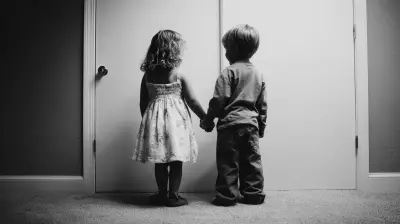
How to Celebrate Your Child’s First Major Achievement
28 September 2026
Your child just did something that made your heart stop for a second. Maybe she scored her first goal. Maybe he stood on stage and remembered every line. Maybe she finished a project that took weeks of frustration and re-dos. Whatever it was, you are now standing at a crossroads that most parents do not think about until they are already in it: how do you mark this moment in a way that fuels your child instead of flattening the meaning of it?
The instinct is to go big. Balloons. A party. A new bike. A social media post that gets two hundred likes. Those things are not wrong by themselves. But the way you respond to a first major achievement sets a template your child will carry into every future success, and that template matters more than the celebration itself. This article is about building that template deliberately.

Why the First Major Achievement Deserves More Thought Than It Usually Gets
Most parents treat celebrations as a reward. The child did the thing, so the child gets the prize. That is a transactional frame, and it is not harmful on its own, but it misses what is actually happening in your child's brain at this moment.A first major achievement is a data point your child uses to answer a question they cannot yet articulate: "What does it mean when I try hard and something good happens?" The answer they form now shapes how they approach challenge for years. If the answer is "I get stuff," they learn to chase stuff. If the answer is "the people I love see me," they learn that effort is witnessed. If the answer is "I am now the kid who is good at this," they learn to protect a label rather than take risks.
None of those outcomes are locked in by a single event. But firsts carry disproportionate weight because they are the reference point. Your child will compare every later success to this one, even unconsciously. That is why the celebration is not really about the celebration. It is about the story your child starts telling about themselves.

What Counts as a "First Major Achievement"
Parents often underestimate what qualifies. A major achievement is not defined by trophies or external validation. It is defined by the effort, the risk, and the personal significance to your child.It might look like:
- The first time a child reads an entire book alone
- The first time a child performs in front of an audience
- The first time a child makes a team after being cut the year before
- The first time a child stands up to a bully
- The first time a child finishes something hard they wanted to quit
- The first time a child creates something original, a story, a drawing, a song, a game
It can also be quiet. A child who has struggled with anxiety and finally raised a hand in class has just done something enormous. A child who has been working on emotional regulation and walked away from a fight instead of throwing a punch has achieved something that no medal can capture.
The mistake is waiting for the version of achievement that looks good on a refrigerator. The better move is noticing the version that cost your child something.
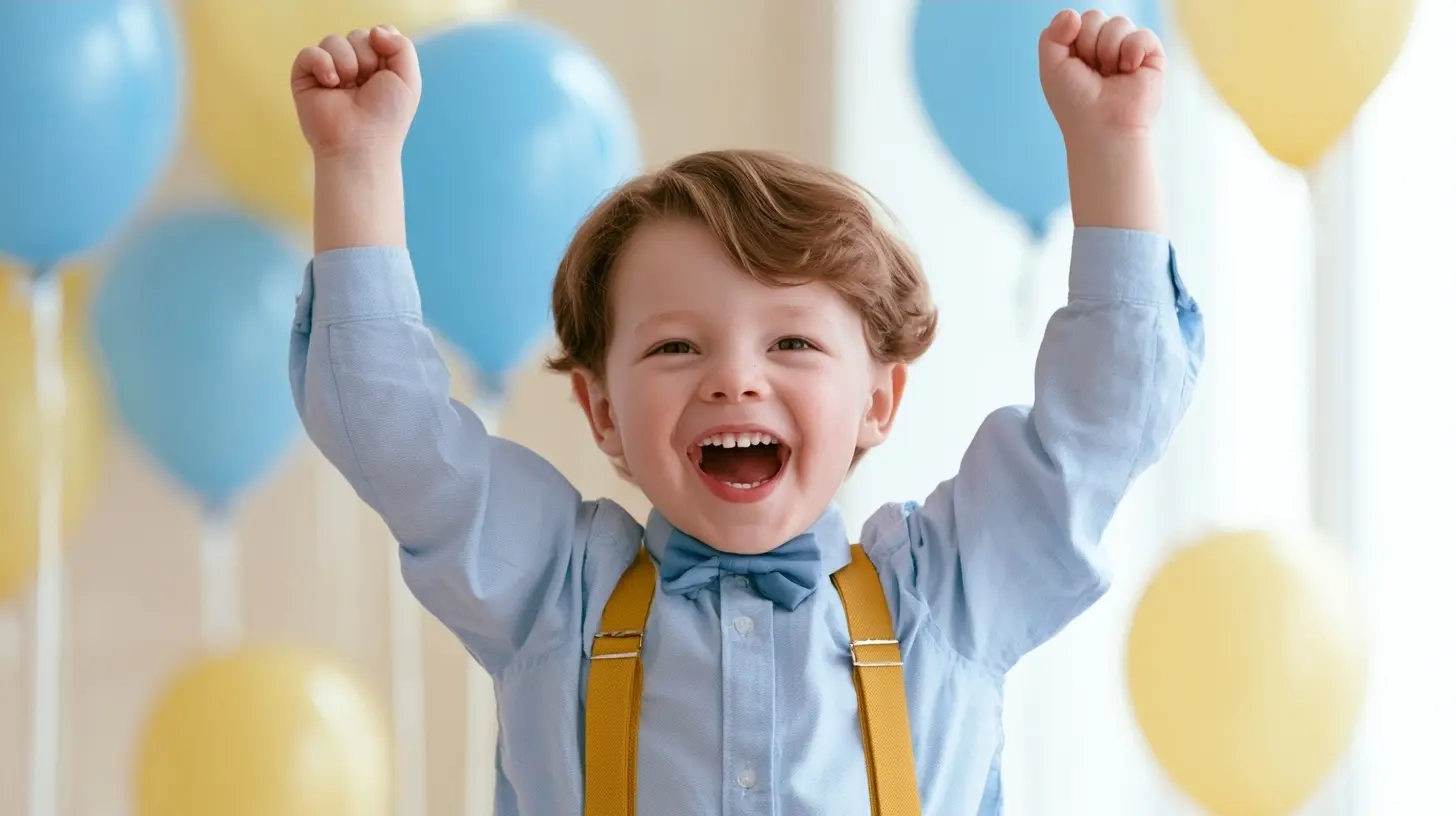
The Core Principle: Match the Celebration to the Child, Not Your Pride
Here is the hardest part of this whole topic. Your instinct to celebrate is often more about you than about your child. You are proud. You want the world to know. You want your child to feel loved and seen. All of that is legitimate. But the celebration you design should be built around what your child actually experiences as affirming, not what feels affirming to you.Some children light up in front of a crowd. Others shrink. Some children want a big deal made. Others want a quiet acknowledgment and then to move on. Some children want the story retold at every family dinner for a month. Others want it left alone so they can try again without pressure.
Before you plan anything, ask yourself three questions:
1. How does my child typically respond to attention?
2. What does my child value more, recognition or autonomy?
3. What would make my child feel seen without feeling exposed?
The answers will tell you more about the right celebration than any parenting book.

Big Celebrations vs. Small Rituals: A Real Trade-Off
There is a genuine tension here, and pretending there is one right answer does a disservice to parents.The case for a big celebration
A large, visible celebration does several things well. It marks the achievement as significant, which validates your child's effort. It creates a memory that anchors the moment. It signals to extended family and community that this matters. For children who thrive on social recognition, a big celebration can be genuinely nourishing.The risk is that the size of the event starts to overshadow the achievement itself. When a child remembers the party more than the work, the lesson shifts from "effort leads to growth" to "achievement leads to attention." That is a subtle but real distortion, and it becomes a problem when the next achievement is smaller or slower to arrive.
The case for a small ritual
A small, consistent ritual, a special dinner, a handwritten note, a walk together, a specific dessert, does something different. It says, "This is how we mark important things in our family." Rituals are repeatable. They build identity. They do not require escalation. A child who grows up with a ritual learns that achievement is recognized reliably, not performed for an audience.The risk is that a small ritual can feel underwhelming if the child was expecting more, especially if peers are getting bigger responses. A child who feels their achievement was minimized may internalize the message that it did not matter.
The balanced approach
Most families do best with a layered response. A private, immediate acknowledgment that is specific and personal. A small family ritual that becomes a tradition. And then, if the child wants it, a larger celebration that they help design. The key is that the child has input into the scale.The Immediate Response: The First Five Minutes Matter Most
What you say in the first few minutes after your child tells you about the achievement does more work than anything else you will do. This is where most parents accidentally undercut the moment.Common mistakes in the first response:
- "Great job, buddy." This is fine but generic. It does not tell the child what specifically you noticed.
- "You're so smart." This attributes success to a fixed trait, which research on mindset suggests can make children avoid challenge later because they do not want to risk losing the "smart" label.
- "Finally!" This implies the achievement was overdue, which can feel like a criticism dressed as praise.
- "See, I told you that you could do it." This centers your prediction rather than the child's effort.
- Immediately asking about the next step. "So when is the next competition?" This turns a moment of arrival into a moment of departure.
What works better is specific, effort-focused, and emotionally present:
- "You kept working on that even when it was hard. I saw you."
- "Tell me about the part that was hardest."
- "How do you feel right now?"
- "I noticed how you handled the part where you almost gave up."
The goal is not to avoid praise. It is to make the praise land on something your child controls, so they can repeat it.
The Specific Praise Framework: Name the Effort, the Strategy, and the Growth
A useful structure for the immediate response has three parts.Name the effort. "You practiced that free throw for weeks, even on the days you did not want to."
Name the strategy. "You figured out that breaking the project into smaller pieces made it manageable."
Name the growth. "A year ago, you would have quit when it got frustrating. This time you stayed with it."
This framework works because it gives your child a map. It tells them not just that they succeeded, but how they succeeded. That map is what they will use the next time they face something hard.
It also protects against the trap of outcome-only praise. If your child's achievement was partly luck, partly circumstance, partly the weakness of the competition, effort-based praise still holds. They will not feel like a fraud when the next result is less flashy.
Designing a Celebration That Fits Your Child's Age
The developmental stage matters enormously, and parents often apply the same approach across a decade of childhood. That does not work.Ages 3 to 6
Young children experience achievement mostly through the lens of their attachment to you. The celebration is less about the achievement and more about the shared joy. A big hug, a specific sentence, a small treat, and telling one other trusted adult in front of the child is usually plenty. Overcomplicating it can confuse them. They may not yet understand why the thing they did was a big deal, so your job is to help them feel that it was.Ages 7 to 10
This is when peer comparison starts to matter. Children in this range are acutely aware of who got what and who was recognized. A celebration that is too small can feel like a slight. A celebration that is too large can feel embarrassing. The sweet spot is often a family ritual plus a choice. "We are going to do something special to mark this. Do you want it to be a dinner out, a movie night, or something else?" Giving the child control over the form, while you control the fact that it happens, tends to work well.Ages 11 to 14
Early adolescents are navigating a complicated relationship with attention. They want to be seen but not exposed. They want to be treated as capable but still want comfort. A public celebration can be mortifying. A private acknowledgment can feel insufficient. The best approach is usually to ask directly. "I want to mark this. What would feel good to you? And what would feel like too much?" Most kids this age will tell you if you give them permission to.Ages 15 to 18
Older teens are often more focused on the future than the present. They may already be thinking about how this achievement fits into a larger trajectory. A celebration that acknowledges the achievement while also respecting their autonomy tends to land well. This might mean a meaningful conversation rather than an event. It might mean resources, a book, a tool, a connection to someone in the field, rather than a party. It might mean simply being told, clearly and without hedging, that you are proud of who they are becoming.
The Role of Extended Family and Community
Extended family can amplify a celebration or complicate it. Grandparents, aunts, uncles, and family friends often want to be involved, and their involvement can be genuinely meaningful. But it can also introduce dynamics that are not about your child.Before you invite others into the celebration, consider:
- Does your child enjoy this person's attention?
- Will this person respect the tone you are setting?
- Is there a risk of comparison with cousins or siblings?
- Will the focus stay on your child or shift to the adults?
If the answer to any of those is uncertain, you can still include the person, but you may want to set expectations in advance. A simple text, "We are keeping this low-key and focused on Maya. No gifts, just presence," can prevent a lot of awkwardness.
What About Gifts?
Gifts are the most common way parents mark achievement, and they are also the most likely to backfire if used carelessly.A gift works well when it is connected to the achievement in a meaningful way. A new sketchbook for a child who just finished their first real drawing series. A book about a person who did something similar. A piece of equipment that lets them go further in the thing they just accomplished.
A gift works poorly when it is random, oversized, or used as a substitute for presence. A child who receives a new phone for a small achievement learns that achievement is a transaction. A child who receives a gift that has nothing to do with the achievement learns that the gift is about the parent's pride, not the child's effort.
The best gifts tend to be tools, not trophies. They say, "You are someone who does this, and here is something to help you keep doing it."
The Sibling Question
If your child has siblings, the celebration introduces a complexity that parents often handle badly. The sibling may feel left out, may try to overshadow the moment, or may quietly withdraw.A few principles help:
First, do not require the sibling to perform enthusiasm. They are allowed to have their own feelings about not being the one celebrated.
Second, do not diminish the achievement to protect the sibling's feelings. "Well, your brother is good at other things" teaches both children that achievement is a threat.
Third, consider giving the sibling a role. Let them choose the dessert. Let them be the one to make the toast. This gives them a place in the moment without taking it over.
Fourth, if the sibling has been working hard on something without recognition, notice that privately. Not as a consolation prize, but as a genuine acknowledgment. The goal is not equality of outcome. It is that each child feels seen for their own effort over time.
The Trap of Over-Celebrating
There is a real phenomenon where parents, often out of genuine love, celebrate so intensely and so often that achievement loses its meaning. Every test, every practice, every small step gets a parade. The child learns that any effort deserves a reward, which sounds nice but creates two problems.First, the child stops being able to self-evaluate. They need the external response to know if something was good. That is a fragile way to move through the world.
Second, the child stops being able to distinguish between real milestones and ordinary progress. When everything is celebrated, nothing is. The first major achievement loses its weight because it is just one of many identical responses.
The fix is not to celebrate less. It is to celebrate differently. Small acknowledgments for small things. Bigger, more deliberate celebrations for bigger things. And a clear, consistent message that the effort matters regardless of the outcome.
The Trap of Under-Celebrating
The opposite problem is just as real. Some parents, often because they were raised that way, believe that celebrating too much will make a child arrogant or soft. They offer a nod and move on. The child learns that their effort is not worth noticing.This is not about raising entitled children. It is about raising children who know that their effort is seen. A child who never gets that message will often spend years seeking it in unhealthy places, from peers, from romantic partners, from employers, from strangers online.
The balance is not complicated. It is consistent, specific, and proportionate.
When the Achievement Is Not What You Expected
Sometimes your child achieves something you did not want them to achieve. They win a video game tournament you think is a waste of time. They get praise for a behavior you find concerning. They succeed at something that does not align with your values.You still have to respond. And the response matters.
The best approach is to separate the achievement from your feelings about the domain. You can say, "I see how much time you put into that, and I see how much it means to you." That is honest and it respects your child. You do not have to celebrate the thing itself. You can celebrate the effort and the dedication.
If the achievement is genuinely concerning, address it separately. Do not use the celebration as a moment to lecture. That teaches your child that achievement is conditional on your approval, which is a lesson you probably do not want to teach.
Making the Celebration a Memory, Not Just a Moment
A single celebration fades. A memory lasts. There are simple ways to help an achievement become part of your child's story.Take a photo, but not a posed one. Take one that captures the actual moment, the face, the mess, the realness.
Write something down. A short note in a journal, a letter they can read later, a sentence on the back of a photo. Children often treasure these far more than they will admit.
Tell the story. At dinner, at holidays, in the car. "Remember when you did that thing?" Retelling builds identity. It says, "This is part of who you are."
Keep something. The medal, the ticket stub, the program, the drawing. Not everything, but something. A small box of meaningful objects is more powerful than a shelf of trophies.
What to Do After the Celebration
The days after the celebration matter as much as the celebration itself. This is when your child is figuring out what the achievement means for who they are now.A few things help:
Return to normal. Do not extend the celebration indefinitely. Let the achievement settle into the ordinary rhythm of life. This teaches your child that achievement is part of life, not a separate state.
Ask about the next thing, but not immediately. Give it a week or two. Then, if it fits, ask what they want to do next. The goal is to keep momentum without turning the achievement into a pressure to repeat it.
Watch for signs of pressure. Some children, especially high achievers, will internalize the celebration as an expectation. They will start to believe they have to keep achieving to keep being loved. If you see that, name it directly. "You do not have to keep winning for me to be proud of you."
Common Mistakes and How to Avoid Them
Mistake: Making it about you. The celebration is for your child. If you find yourself telling the story more than they are, you have shifted the focus.Mistake: Comparing to siblings or peers. "You did better than your sister did at this age" is not a compliment. It is a setup for resentment.
Mistake: Promising more than you can deliver. "If you do this again, we will go to Disney" creates a contract you may regret. Keep celebrations proportionate and sustainable.
Mistake: Ignoring the emotional side. Achievement can be complicated. Your child may feel relieved, anxious, or even sad that the thing they worked for is over. Ask how they feel. Let them have the full range.
Mistake: Forgetting to follow up. A celebration without follow-up feels hollow. Check in a week later. Ask how they are feeling about it now. Show that your interest is not just in the moment.
A Final Word on What You Are Really Doing
When you celebrate your child's first major achievement, you are not just marking a moment. You are teaching your child how to relate to their own effort, how to receive recognition, how to handle pride without arrogance, and how to move forward without losing themselves.You are also teaching yourself something. You are learning what your child needs from you in these moments. Some children need a parade. Some need a quiet walk. Some need a new tool. Some need a sentence they will remember for the rest of their lives.
The goal is not to get it perfect. The goal is to be present, specific, and thoughtful. The celebration is not the point. The child is the point. And if you keep that in view, you will probably get more right than wrong.
all images in this post were generated using AI tools
Category:
Parenting MilestonesAuthor:

Max Shaffer