Helping Your Child Welcome a New Sibling in 2027
4 September 2026
Bringing a second child into the family is a seismic shift. You are not just adding a baby; you are renegotiating the entire emotional geography of your home. Your firstborn, who once had your undivided attention, now has to share the stage. And in 2027, this transition happens in a world that looks very different from the one you grew up in. Screens are everywhere, attention spans are shorter, and parenting advice arrives in overwhelming, often contradictory, waves.
The good news? The core of this transition has not changed. It is about security, connection, and helping your child feel that their place in your heart is not a limited resource. The tools we use to communicate that message, however, need to evolve. This guide is not about Pinterest-perfect sibling announcements. It is about the messy, real, and deeply human work of expanding your family without breaking your firstborn's spirit.

The 2027 Reality: Why This Feels Different
Before we talk about tactics, let's acknowledge the context. In 2027, your child is likely more digitally native than you are. They might have their own tablet for educational apps, or they might be used to video calling grandparents. This creates a unique challenge and an opportunity.The challenge is that screens often provide passive entertainment. A toddler or preschooler who is used to swiping and tapping might have a shorter tolerance for the slow, unglamorous process of waiting for a baby to finish feeding. They might also be exposed to idealized versions of families on social media or streaming shows, where siblings instantly love each other. When their own reality involves jealousy and a screaming newborn, they might feel like they are failing.
The opportunity is that you can use technology intentionally. You can create digital countdowns, record video messages from the baby, and use video calls to keep connections strong with distant relatives. The key is not to demonize screens but to use them as bridges, not babysitters. The goal is to make your firstborn feel like an active participant in a story, not a passive observer of a disruption.

The Emotional Prep Work: Starting Before the Baby Arrives
Preparation is not about telling your child what is coming. It is about listening to what they are feeling. A common mistake parents make is to over-narrate the positives. We say, "You will have a little brother to play with!" But a two-year-old cannot conceptualize a future playmate. They only understand that Mommy's belly is getting bigger and that she is tired more often.Reframing the Announcement
Instead of a big, dramatic reveal, try a series of small, concrete conversations. Use a doll or a picture book to show what a baby looks like. Let them feel your belly when the baby kicks, but frame it as a secret they share with you. Say, "The baby just kicked. That means they know you are here." This builds a sense of alliance.Avoid the phrase, "You are going to be a big brother." It sounds like a promotion, but to a child, it often sounds like a demotion. They are losing the title of "the baby." Instead, use language that emphasizes their current importance. Say, "You are my special helper," or "You are the one who knows how to show the baby how our family works." This positions them as a guide, not a displaced rival.
The "Special Job" Strategy
Give them a tangible job that is theirs alone. This is not about chores. It is about ownership. For example, let them pick out the baby's "first outfit" from two options you have already chosen. Let them be in charge of the "welcome home" sign. When the baby arrives, they can be the official "toy tester," deciding which of their old toys are safe and soft enough for the baby to look at.Why does this work? It gives them a sense of control in a situation where they have absolutely no control. The baby is coming regardless of their feelings. But their job is essential. This mitigates the feeling of helplessness that often fuels jealousy.

The Hospital and Homecoming: Managing the First Meeting
The first meeting is often romanticized. We imagine a tearful, loving embrace. The reality is often more awkward. Your toddler might ignore the baby entirely and run to you. They might cry. They might even try to hit the baby. All of these are normal. They are testing the waters to see if your love is still intact.The "Don't Hold the Baby" Rule
When you come home, do not be holding the baby. Have your partner or a grandparent hold the newborn. This allows you to greet your firstborn with open arms. Your child needs to see that you are still physically available to them. The moment you walk in with the baby in your arms, you are creating a physical barrier. Let the first hug be for them.The "Bait" Gift
Have a small gift ready for the firstborn. It should not be a bribe. It should be a symbol. Say, "The baby saw how much you love your toy truck, and they wanted you to have this new one." This creates a narrative where the baby is a giver, not a taker. It is a subtle psychological trick, but it works. It frames the sibling as someone who adds to their life, rather than someone who subtracts from it.The "Time Lag" Expectation
Do not force interaction. If your child wants to ignore the baby for the first few days, let them. This is a defense mechanism. They are processing. Forcing them to kiss the baby or "be nice" only creates resentment. Instead, create a space where they can approach the baby on their own terms. Put the baby in a bassinet and let your firstborn come to you for cuddles. Eventually, curiosity will win.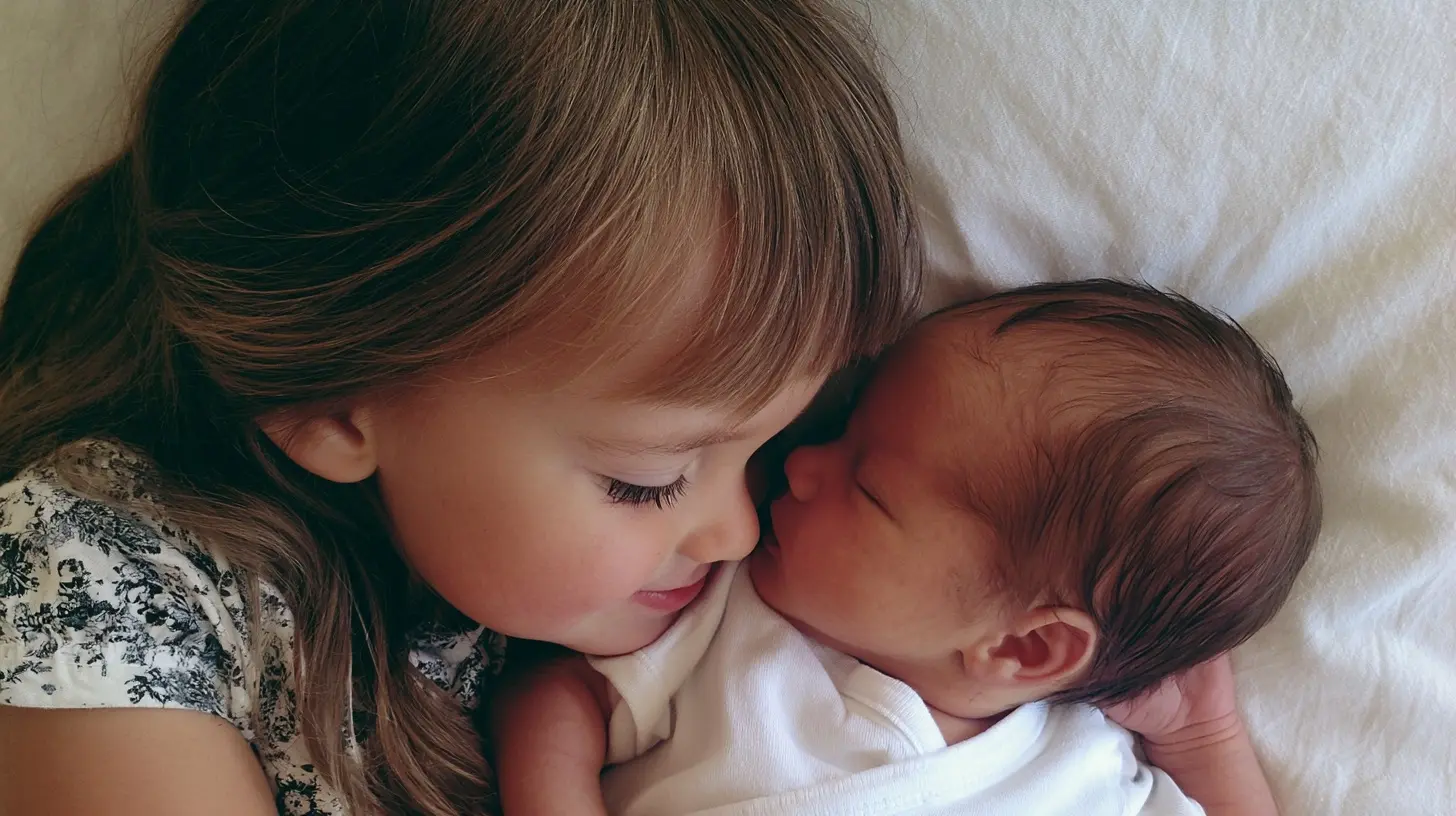
Navigating the First Six Months: The Real Work
The honeymoon phase, if there is one, lasts about two weeks. Then the exhaustion sets in, and the older child realizes that this baby is not a guest. They are a permanent resident. This is where the real work begins.The "Ten Minutes of Undivided Attention" Rule
Quality time is a myth. Children need quantity time. But in the chaos of a newborn, quantity is impossible. The solution is strategic, high-intensity bursts of attention. Aim for two or three sessions of ten minutes each day where you are completely present with your older child. No phone. No baby in your arms. No distractions.During these ten minutes, you are not teaching them anything. You are following their lead. If they want to build a tower and knock it down twenty times, you do it. This is not about entertainment. It is about filling their emotional tank. When a child feels full, they are less likely to act out to get your attention. The acting out is usually a cry for connection, not a cry for discipline.
The "Yes" Strategy
When you have a newborn, your default answer becomes "no." No, we cannot go to the park. No, we cannot be loud. No, I cannot play right now. This constant negativity wears a child down. To counter this, look for opportunities to say "yes."If they want to jump on the couch, say, "Yes, you can jump on the floor." If they want a cookie before dinner, say, "Yes, you can have one after you eat your chicken." This is called "positive redirection." You are not fighting them. You are finding a compromise. This reduces the power struggles that often spike after a new baby arrives.
The "Big Feelings" Vocabulary
Your child is going to feel angry. They might not have the words to express it. You need to give them the vocabulary. When they throw a toy, do not just say, "Stop that." Say, "You look really angry right now. It is okay to be angry. It is not okay to throw toys." This validates the emotion while correcting the behavior.Over time, this teaches emotional intelligence. They learn that feeling jealous or sad is not shameful. It is just a feeling. And feelings pass. This is a life skill that is far more valuable than learning to share a toy.
Common Mistakes and Misconceptions
There are several well-meaning but counterproductive things parents do. Avoiding these can save you a lot of heartache.The "Big Kid" Trap
Do not tell your child they are a "big kid" now. This implies that being a baby is bad. They might regress. They might start asking for a bottle or wanting to wear diapers again. This is not a setback. It is a signal. They are saying, "I see the baby getting all that attention. Maybe if I act like a baby, I will get that attention too."When this happens, do not shame them. Instead, give them a dose of "babying." Let them sit in your lap and pretend to feed them. Let them wear the diaper for an hour. This often fulfills the need, and they will quickly return to their more mature behavior because they realize being a baby is actually not that fun.
The "Helping" Fallacy
We often ask the older child to "help" with the baby. We ask them to fetch a diaper or a pacifier. This is good in moderation. But if you overuse it, it becomes a chore. They will start to resent the baby because the baby is the reason they have to do work.Instead, frame it as a privilege. Say, "You are the only one who can get the pacifier because your hands are the cleanest." Make it a special mission, not a task. And always thank them with specific praise. Do not say "good job." Say, "You found the pacifier so fast. That really helped me calm the baby down. You are a great detective."
The "Comparison" Instinct
Never compare your children. Not even positively. Saying, "You were such an easy baby, I hope this one is like you," can create a burden. And saying, "Why can't you be quiet like your sister?" is a direct path to resentment. Each child is a distinct human being. Your job is to see them as individuals, not as competitors in a race for your approval.
The Role of the Partner and Extended Family
You cannot do this alone. The parent who is not the primary caregiver for the newborn needs to step up in a specific way. Their primary job is to be the "fun parent" for the older child. They need to create a buffer zone of joy.The "Outings" Strategy
The non-birthing parent should take the older child on regular outings. It can be as simple as a trip to the grocery store or a walk to the park. The goal is to give the older child a break from the baby. This prevents the home from feeling like a prison where the baby is the warden.These outings also give the primary caregiver a break. It is a win-win. The older child gets exclusive attention, and the parent gets a moment of silence.
Managing Grandparents
Grandparents often mean well, but they can inadvertently make things worse. They might shower the older child with gifts to "compensate" for the new baby. This teaches the child that material goods are a substitute for emotional connection.Talk to your family in advance. Tell them that the best gift they can give the older child is time. Ask them to take the child for a walk or read them a story, without mentioning the baby. This reinforces that the older child is valuable for who they are, not because they are a sibling.
Looking Ahead: Building a Long-Term Sibling Bond
The goal is not just to survive the first year. It is to build a foundation for a lifelong friendship. This does not happen by accident. It happens by design.The "Shared Enemy" Strategy
This sounds negative, but it is actually a powerful bonding tool. Find something that the siblings can agree on, even if it is just that Dad's jokes are terrible or that Mom is ticklish. This creates an "us versus them" dynamic that is healthy within a family. It is a way of building a coalition.The "No Tattling" Rule
This is controversial, but it works. When you have two children, tattling is a way for one child to gain power over the other. If you punish the tattler, you stop the flow of information. If you punish the accused, you create a victim.Instead, teach them a different phrase: "I need help." If your child comes to you to tattle, say, "Are you telling me this because you need help, or because you want to get your sibling in trouble?" This forces them to think about their motives. Then, if they need help, you solve the problem together. If they are tattling to get the other in trouble, you ignore it. This removes the reward for tattling and encourages them to solve small problems themselves.
The "Celebration of Difference" Approach
As they grow, they will be different. One might be athletic, the other artistic. Do not force them to be the same. Celebrate their differences. Say, "I love how you are so careful with your drawings, and I love how your brother is so fast on his bike." This teaches them that they do not have to compete for your love. They just have to be themselves.
When to Seek Professional Help
Most jealousy and regression is normal. But there are times when you need to call in a professional. If your older child is showing signs of extreme distress, such as:- Hurting themselves or the baby deliberately
- Refusing to eat or sleep for extended periods
- Showing a complete loss of interest in activities they used to love
- Becoming excessively clingy to the point where they cannot function
These are signs that they are struggling to cope. This is not a failure on your part. It is a sign that they need extra support. A child therapist or a family counselor can provide tools that you cannot. There is no shame in asking for help. It is a sign of strength, not weakness.
The Final Word: Patience with Yourself
You will lose your temper. You will cry in the bathroom. You will feel guilty that you are not giving your firstborn enough attention. This is all part of the process. The perfect parent does not exist. The parent who shows up, apologizes when they are wrong, and tries again tomorrow is the parent who raises secure children.Your children do not need a perfect childhood. They need a present parent. They need to see that you are human, that you make mistakes, and that you love them enough to keep trying. In 2027, the technology will change, the trends will change, but this fundamental truth remains. The best thing you can do for your new baby is to make sure your older child feels safe, seen, and deeply loved. When they feel that, they will have plenty of love to share with their new sibling.
all images in this post were generated using AI tools
Category:
Sibling RelationshipsAuthor:

Max Shaffer
Discussion
rate this article
2 comments
Alessia McMurtry
Welcoming a new sibling can be tough for kids. Encourage open conversations about feelings and involve them in preparations to make the transition smoother for everyone.
October 1, 2026 at 4:09 AM
Zeke McVicar
This article offers practical tips for easing the transition. Helping kids adjust to a new sibling is crucial for family harmony.
September 9, 2026 at 3:48 PM
Max Shaffer
Thanks for your comment! I'm glad you found the tips helpful for a smooth transition. Adjusting to a new sibling can really strengthen family bonds.