When Your Child Learns to Read: What Parents Should Know
15 August 2026
There is a moment, usually around the kitchen table or in the back seat of the car, when your child sounds out a word for the first time. It might be "cat" or "stop" or the name of a favorite cereal. Your heart swells. You think, "They did it. They are reading." And then, about three weeks later, you realize the real adventure has just begun. Because learning to read is not a single event. It is a long, messy, glorious process that will test your patience, your sanity, and your ability to pretend that you are not bored out of your mind reading the same picture book for the forty-seventh time.
This guide is not about phonics worksheets or reading levels. It is about the actual experience of raising a child who is learning to read, and what you, as the parent, need to know to survive it with your sense of humor intact.
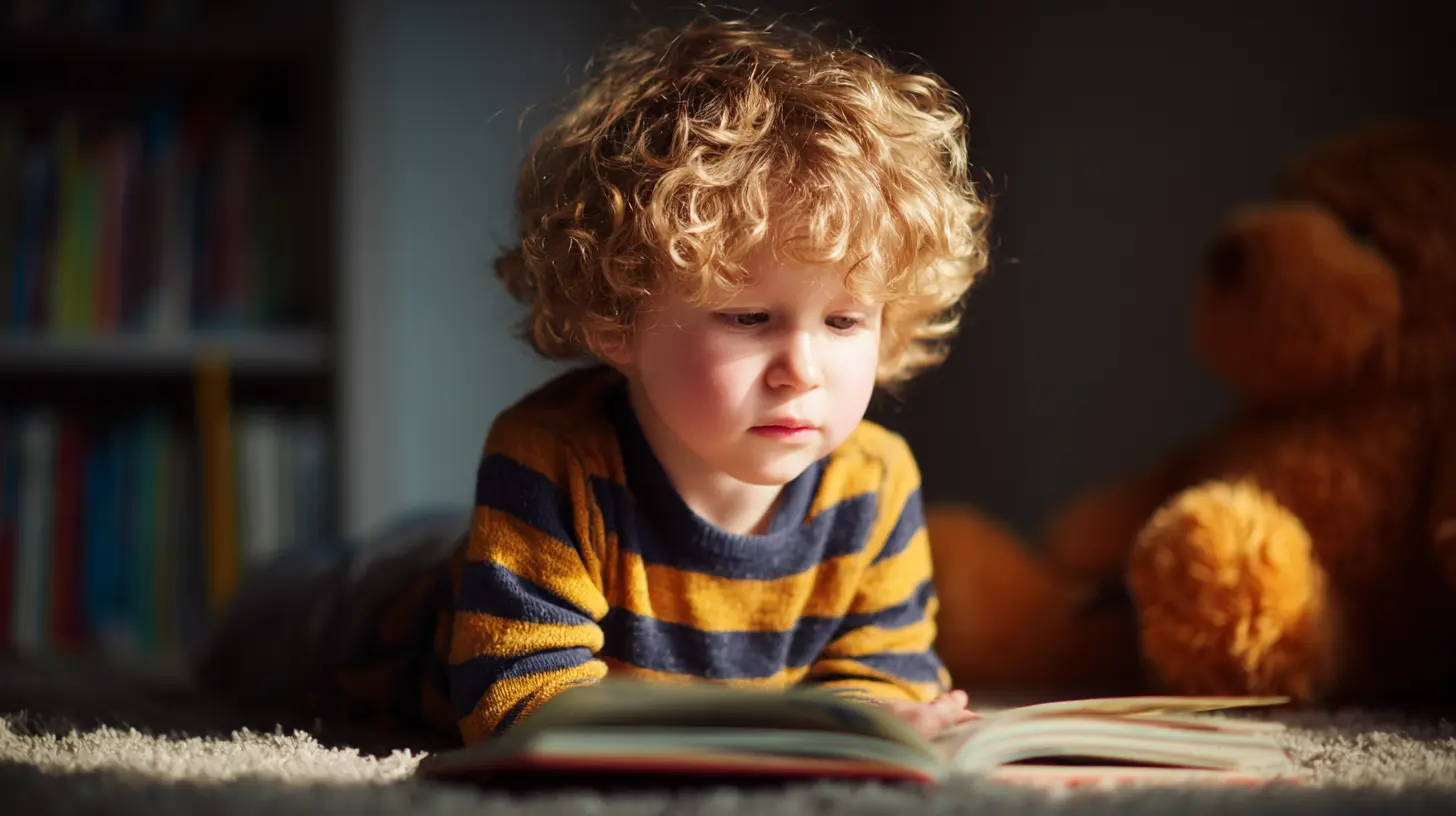
The Big Lie About "Reading Readiness"
Every parent has heard the phrase "reading readiness." It sounds like a switch that flips on at a certain age, usually around five or six, and suddenly the child is ready to absorb letters and sounds like a sponge. This is mostly nonsense. Reading readiness is not a single point in time. It is a sliding scale, and your child is on it from the moment they start babbling.The truth is that reading begins long before the first word is decoded. It begins when you point at a stop sign and say "STOP." It begins when your child pretends to read a menu at a restaurant, holding it upside down and making up words. It begins when they scribble on paper and tell you it is a letter to grandma. All of that is pre-reading, and it matters more than any formal lesson.
The mistake many parents make is waiting for a magical sign that their child is "ready" before doing anything. That is backwards. The best approach is to treat every interaction as a reading opportunity, but without turning it into a drill. If you are reading a book and your child asks about a word, answer. If they point at a label on a cereal box, sound it out together. If they are not interested, drop it. The goal is not to force readiness. The goal is to make reading feel like a natural part of life, not a chore.

The Phonics vs. Whole Language Debate: A Parent's Guide to Not Losing Your Mind
If you spend any time on parenting forums, you will eventually run into the phonics versus whole language debate. It is a war that has been raging for decades, and it is easy to get swept up in the drama. Phonics says children should learn the sounds that letters make and blend them together. Whole language says children should learn to recognize whole words in context, like seeing "dog" and knowing it means a furry animal.Here is the practical reality: almost all children benefit from a mix of both, but phonics is the non-negotiable foundation. The reason is simple. English has about 44 sounds but only 26 letters. If a child only memorizes whole words, they will hit a wall around the second grade when they encounter words they have never seen before. Phonics gives them the tools to decode new words independently. Whole language gives them the context and motivation to keep going when decoding is hard.
What does this mean for you at home? It means you should not panic if your child's school uses a "balanced literacy" approach. It means you should not panic if your child's school is heavy on phonics. What you should do is pay attention to whether your child is actually learning the letter-sound correspondence. If they can tell you that "b" makes the "buh" sound, that is progress. If they can only recognize the word "the" because it is on a flashcard, that is not enough.
A common mistake is drilling flashcards until the child cries. Do not do that. Instead, play sound games. Say "What starts with the same sound as 'sun'?" and let them guess. Point out rhyming words in songs. The best phonics practice is invisible to the child. They think they are playing. You know they are building neural pathways.

The Decoding Phase: When "C-A-T" Becomes "Cat" (Eventually)
The moment your child starts sounding out words is both magical and excruciating. It is magical because you can see their brain working. It is excruciating because it takes forever. A single sentence like "The dog ran" can take three minutes to read, with your child sounding out each letter, then each word, then forgetting the first word by the time they get to the third.This is normal. Do not rush them. Do not finish their sentences. Do not sigh loudly. The single most important thing you can do during this phase is to let them struggle productively. If they sound out "d-o-g" and then say "doll," gently point at the word and ask them to look at the last letter. If they still get it wrong, tell them the word and move on. The goal is not perfection. The goal is building confidence.
A practical tip: use your finger to track under the words as you read. This helps the child connect the spoken word to the printed word. And when they are reading to you, let them choose the book. Even if it is the same book about a truck that you have read two hundred times. Repetition is how they build fluency. They will eventually get bored and move on, but only after they have mastered that book.
One thing that surprises many parents is that children often read better when they are not being watched. If you sit across from them and stare, they freeze. Instead, sit next to them, or have them read to a stuffed animal, or read to the dog. The dog is a very patient listener and never corrects pronunciation. This lowers the stakes and makes reading feel less like a test.

The Fluency Cliff: Why Your Child Can Read but Doesn't Understand
Around the time your child can decode most words, you will notice something odd. They can read a sentence out loud perfectly, but if you ask them what the sentence meant, they have no idea. This is called the fluency gap, and it is completely normal. Their brain is so busy decoding the words that there is no leftover processing power for comprehension.This is where many parents panic and assume their child has a learning disability. They do not. They are just using all their mental energy on the mechanics of reading. The solution is not to drill comprehension questions. The solution is to read more, and to read easier books. When your child is reading a book that is slightly below their decoding level, their brain can start to focus on meaning instead of just sounds.
You can also help by reading aloud to them, even after they can read independently. When you read aloud, you model fluency. You pause at punctuation. You change your voice for dialogue. You show them that reading is not just about saying words, but about telling a story. This is a powerful lesson that no worksheet can teach.
Another trick is to ask open-ended questions while reading together, but not in a quiz format. Say "I wonder why the bear did that" instead of "What did the bear do?" This invites them to think about the story without feeling interrogated. Over time, their comprehension will catch up to their decoding. It just takes patience.
The "I Hate Reading" Phase: How to Survive It
Every child goes through a phase where they claim to hate reading. This usually happens between ages six and eight, right when reading stops being a novelty and starts being expected. The child who loved storytime at three now throws a fit when you suggest reading a book. This is not a reflection on your parenting. It is a reflection on the fact that reading is hard work, and children are wired to avoid hard work.The worst thing you can do is force it. If you make reading a punishment or a requirement, your child will associate it with negativity. Instead, try to figure out why they are resisting. Are they tired? Is the book too hard? Are they bored? Are they frustrated because they cannot read as fast as their friends? All of these are common reasons, and each requires a different response.
If the book is too hard, find easier books. There is no shame in a second grader reading kindergarten books. The goal is to build fluency, not to impress anyone. If they are bored, let them choose their own material. This might mean comic books, graphic novels, or even the back of a cereal box. Reading is reading. If they are tired, read to them instead of having them read to you. Sometimes the best way to encourage reading is to take the pressure off.
A surprising but effective strategy is to let them see you reading for pleasure. If your child sees you curled up with a novel, they will eventually want to imitate you. If they only see you on your phone, they will assume that screens are the only source of entertainment. So put down the phone and pick up a book. It is the most powerful modeling you can do.
The Screen Question: E-Books, Apps, and the Digital Temptation
Let us address the elephant in the room. Screens are everywhere, and many reading apps promise to teach your child to read in weeks. Some of them are decent. Most of them are not. The problem is not the technology itself. The problem is that reading on a screen is fundamentally different from reading on paper, especially for young children.Paper books have a physical structure. There is a front and a back. Pages turn. You can feel how much of the book is left. This helps children develop a sense of narrative structure. Screens are endless. You swipe and swipe and the story just keeps going. This can be disorienting for a child who is still learning how stories work.
That said, e-books have their place. They are great for travel, for keeping a library in a small space, and for children who are motivated by anything digital. The key is to use them as a supplement, not a replacement. If your child uses a reading app, sit with them the first few times. Make sure the app is not just a game with letters. A good reading app should require the child to actually sound out words, not just tap on pictures.
Also, be aware of the "passive reading" trap. Many apps read the story aloud while highlighting the words. This can be helpful, but it can also lead to the child just listening and not actually reading. If you notice your child is not looking at the words, turn off the narration and let them try on their own.
The Comparison Trap: Why Your Child's Pace Is Fine
One of the hardest things about parenting is watching other children. Your neighbor's kid is reading chapter books in kindergarten. Your child is still struggling with "see" and "the." It is easy to spiral into anxiety. But here is the truth: reading development has a huge range of normal. Some children click at four. Some click at seven. Many children who are late readers end up being voracious readers as adults.The problem with comparison is that it makes you push your child too hard. And pushing too hard backfires. Children who are pushed to read before they are ready often develop anxiety around reading. They start to see it as a source of stress, not pleasure. This can set them back years.
Instead of comparing your child to others, compare them to themselves. Are they making progress from last month? Are they more confident than they were six weeks ago? Are they willing to try new words? If the answer is yes, you are on the right track. If the answer is no, it might be worth talking to their teacher or a specialist. But do not assume the worst. Sometimes children just need more time.
The Role of Mistakes: Why You Should Let Them Be Wrong
When your child reads a word incorrectly, your instinct is to correct them immediately. Resist that instinct. If you correct every mistake, your child will become hesitant and afraid to try. Instead, let them finish the sentence. If the mistake does not change the meaning, let it go. If it does change the meaning, gently ask "Does that make sense?" and let them figure it out.This is called "meaning-based correction," and it is far more effective than "sound-based correction." When you correct a child for saying "horse" instead of "house," you are telling them that accuracy matters more than understanding. But reading is about understanding. If they say "horse" and the sentence is about a farm, that is a good guess. Celebrate the guess, then point at the word and say "Look at the 'ou' sound. What do you think it says?"
The goal is to make mistakes feel like part of the process, not failures. Every reader makes mistakes. The best readers make mistakes and then fix them without getting upset. That is the skill you want to teach.
The Endgame: Raising a Lifelong Reader
The ultimate goal of teaching your child to read is not to get them to a certain reading level by a certain grade. The goal is to raise a person who reads for pleasure. That is a very different thing. A child who reads for pleasure will read anything. A child who reads because they are forced will stop reading the moment they are not forced.So how do you raise a lifelong reader? You make reading a part of your daily routine. You have books in every room of the house. You go to the library regularly and let your child check out whatever they want, even if it is a book about slime or a graphic novel about superheroes. You read to them every night, even when they are old enough to read to themselves. You talk about books at the dinner table. You recommend books to each other.
And most importantly, you let them see that reading is not a chore. It is a reward. It is a way to escape, to learn, to laugh, to cry. When your child sees that you value reading, they will value it too. Not because you told them to, but because they want to be like you.
Common Mistakes Even Good Parents Make
Let us run through a few mistakes that are incredibly common, even among parents who mean well.First, reading level labels. Some parents obsess over the letter or number on the back of a book. They refuse to let their child read "below level" books. This is a mistake. A child who reads easy books for fun is building fluency and confidence. A child who is forced to read hard books is building frustration. Let them read easy books. They will naturally progress.
Second, stopping read-alouds too early. Many parents stop reading to their child once the child can read independently. This is a huge mistake. Reading aloud to a child who can already read is not a waste of time. It exposes them to vocabulary and sentence structures that are above their level. It also keeps the emotional connection to reading alive. Keep reading aloud until your child explicitly asks you to stop. And even then, maybe keep going.
Third, using reading as a punishment. "If you do not clean your room, you will have to read for twenty minutes." This is the fastest way to make a child hate reading. Reading should never be a punishment. It should be a treat. If you need a punishment, take away screen time. Do not take away books.
Fourth, ignoring the child's interests. If your child loves dinosaurs, get dinosaur books. If they love trucks, get truck books. If they love princesses, get princess books. It does not matter if you find the topic boring. What matters is that your child is reading. You can expand their interests later. First, you have to hook them.
When to Worry and When to Wait
Every parent wonders at some point whether their child is behind. Here is a rough guide. If your child is in kindergarten and cannot recognize any letters, that is worth mentioning to their teacher. If your child is in first grade and cannot sound out simple words, that is worth investigating. If your child is in second grade and still struggles with basic decoding, you should seek an evaluation.But also consider the child. Some children are late bloomers. Some children have a stubborn streak and refuse to read because they want to do it their own way. Some children have undiagnosed vision problems. Some children have dyslexia. The key is to trust your gut. If you feel like something is wrong, get it checked. Early intervention is always better than waiting.
On the flip side, do not panic if your child is reading early. Early reading is not a sign of genius, and it is not a guarantee of future success. It is just a skill that developed early. The same is true for late reading. Many late readers go on to be excellent students. The brain develops at its own pace.
The Final Word: Enjoy the Ride
Learning to read is one of the most remarkable things your child will ever do. It is also one of the most frustrating, for both of you. There will be tears. There will be slammed books. There will be moments when you want to scream "It says 'the,' not 'then'!" But there will also be moments of pure magic. The first time your child reads a sentence without stopping. The first time they laugh at a joke in a book. The first time they read to a younger sibling.Hold onto those moments. They are the reason you are doing this. The rest is just process. And process, as it turns out, is where all the growth happens.
So take a deep breath. Put away the flashcards. Sit down with your child and a book that makes them smile. Read it together. Let them make mistakes. Let them take their time. And when they finish, ask them what they thought. Not to test them, but because you genuinely want to know. That is what reading is really about. Connection. Understanding. And a little bit of humor when the dog is the only one who will listen.
all images in this post were generated using AI tools
Category:
Parenting MilestonesAuthor:

Max Shaffer
Discussion
rate this article
1 comments
Caelum Snyder
Reading opens a world, but remember, the journey is as important as the destination. Keep it fun and engaging!
August 17, 2026 at 3:05 AM
Max Shaffer
Absolutely! The journey of learning to read can be filled with joy and discovery. Let's make it engaging for our kids.