The Ethics of Baby Monitors with Facial Recognition
26 October 2026
A baby monitor that watches your sleeping infant and tells you whether their face is covered, whether their breathing looks normal, or whether they have rolled into a risky position sounds like the obvious next step in nursery technology. It also raises a set of ethical questions that most product pages never address. Parents are handed a box, a glossy promise of "peace of mind," and very little guidance on what it actually means to point a facial recognition system at a person who cannot consent to being monitored.
This article is not a buyer's guide in the usual sense. It is an attempt to think clearly about the ethics of these devices before you spend money on one, and to give you practical tools for deciding whether the trade-offs make sense for your family. The technology is genuinely useful in some situations and genuinely troubling in others, and the difference usually comes down to how the tool is designed, how the data is handled, and what problem you are actually trying to solve.
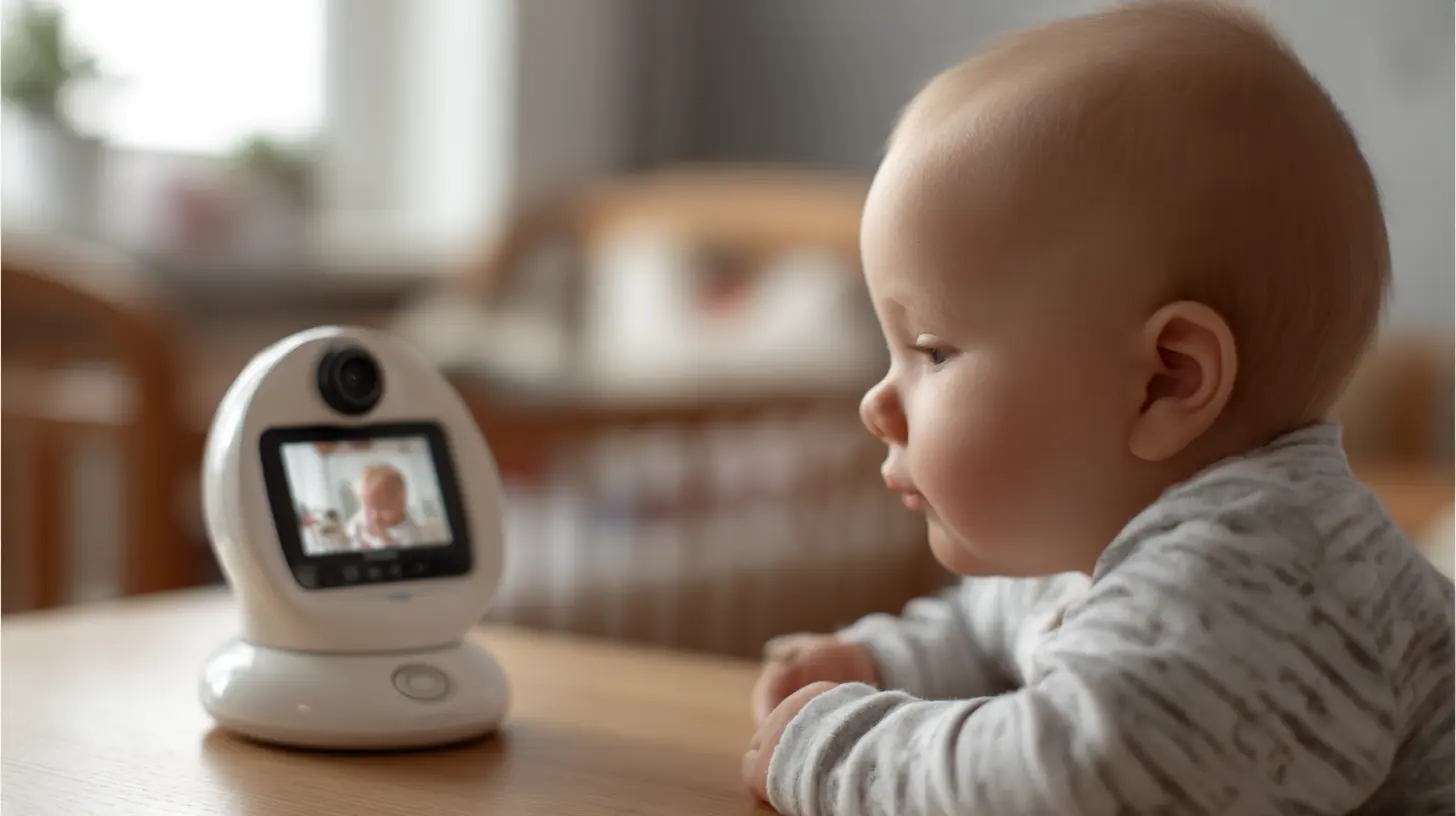
What These Devices Actually Do
Before ethics, a quick grounding in mechanics. A baby monitor with facial recognition uses a camera paired with software that detects and tracks a face. Depending on the product, it may analyze the visible face for signs of movement, estimate breathing by detecting subtle changes in the image, flag when the face is obscured, or classify sleep states. Some systems use infrared so the analysis continues in a dark room.Two things matter for the ethical discussion. First, the analysis is almost always probabilistic. The software produces an estimate, not a medical measurement, and estimates can be wrong in both directions. Second, the camera is a networked device. Even if the facial analysis happens on the device itself, the video feed and any derived data usually travel somewhere: to your phone, to a manufacturer's cloud, or both.
Those two facts, probabilistic analysis and networked video, are the source of nearly every ethical concern that follows.
The Core Ethical Tension: Safety Versus Surveillance
The case for these monitors is easy to state. Parents of newborns are exhausted, anxious, and often alone at night. A device that flags a covered face or an unusual stillness can shorten the time between a problem and a response. For families with a premature infant, a history of breathing concerns, or a parent with significant postpartum anxiety, that extra layer of watching can be genuinely valuable. It can also reduce the number of times a parent gets up to check, which matters for parental sleep and mental health.The case against is subtler. A monitor is not a medical device. It does not prevent anything. It observes and reports, and its reports are imperfect. When parents treat an estimate as a diagnosis, they can be pushed toward unnecessary intervention, or toward false reassurance. And a camera aimed at a child's bed, connected to the internet, is a surveillance system, whether or not anyone intends it that way.
The ethical question is not "is this good or bad." It is "does the benefit justify the specific form of watching this product enables, given this family's circumstances." That question has different answers for different households, and a good decision requires understanding both sides honestly.
Consent and the Problem of a Non-Consenting Subject
Your baby cannot agree to being watched, analyzed, and possibly recorded. Parents make that decision on the child's behalf, which is normal and unavoidable. But the ethics of surrogate consent depend on proportionality and on what happens to the data.Proportionality means the monitoring should be limited to what the stated purpose requires. A system that only needs to detect whether a face is visible does not need to store hours of video in the cloud. A system that analyzes breathing does not need to keep a permanent archive of your child's sleep. If a product collects far more than its function requires, the consent you are giving on your child's behalf is broader than the benefit justifies.
What happens to the data matters just as much. Video of a child in bed is among the most sensitive data a household produces. If it is stored on a manufacturer's servers, encrypted or not, it exists in a place you do not control. Data breaches happen. Employees with access exist. Law enforcement requests exist. Terms of service change. None of this means every manufacturer is careless, but it does mean you should treat "where does the video go and how long does it stay there" as a first-order ethical question, not a footnote.
A practical rule: prefer systems where the facial analysis runs on the device or on a local hub, and where video is not uploaded by default. If cloud storage is offered, check whether it is optional rather than required for the core features to work. If the product will not function without sending video off your premises, that is a design choice you are being asked to accept, and you should accept it consciously or not at all.
False Alarms, False Reassurance, and the Psychology of Monitoring
Anyone who has used a consumer facial recognition system knows it errs. A blanket pulled over a shoulder can trigger a covered-face alert. A still baby can trigger a stillness alert. A moving baby can trigger a false breathing irregularity. These errors are not minor annoyances. They shape behavior.False alarms train parents to distrust the device, which leads some to disable alerts they actually wanted. Worse, repeated false alarms can heighten anxiety rather than relieve it. A parent who is jolted awake three times a night by a spurious alert is not sleeping better than a parent who simply checks the crib.
False reassurance is the more dangerous failure mode. If the monitor says everything is fine, a parent may delay responding to a real problem, or may skip the checks they would otherwise make. This is the central ethical hazard of any monitoring technology: it can substitute an algorithmic judgment for a parental one, and the algorithm does not know your child.
The honest framing is that these devices are attention tools, not safety guarantees. They can help you notice things sooner. They cannot tell you that your child is safe. Any product marketing that blurs that line, through language like "protects against" or "prevents," is making a claim the technology cannot support. Treat such marketing as a warning sign about the company's overall candor.
What the Research Can and Cannot Tell You
There is a meaningful body of research on home cardiorespiratory monitors and their relationship to sudden infant death syndrome, and the general conclusion in pediatric guidance has been that such monitors have not been shown to prevent SIDS in healthy infants. Facial recognition baby monitors are newer and less studied, and the specific accuracy of consumer-grade breathing estimation from video is not well established in independent literature.That does not mean the devices are useless. It means you should not assume a regulatory or clinical body has validated the alerts you are relying on. Ask yourself what evidence the manufacturer provides, whether it is independent, and whether the claims are about detection accuracy, clinical outcomes, or something vaguer like "peace of mind." Vague claims are not lies, but they are not evidence either.
If your child has a specific medical concern, the right source of guidance is your pediatrician, not a product review. A monitor marketed to parents of high-risk infants is not a substitute for a medical device prescribed by a clinician, and it should never be treated as one.
Privacy in the Nursery: The Questions to Ask Before You Buy
Most parents never read the privacy policy. That is understandable and also a mistake with this category of product. You do not need to read every word, but you should be able to answer these questions before you set the camera up:- Does the video stream leave my home, and if so, where does it go?
- Is the facial analysis done on the device, on a local hub, or in the cloud?
- Is video recorded and stored by default, and can I turn that off?
- How long is data retained, and can I delete it?
- Is the connection encrypted end to end, or only in transit?
- What happens to my data if I stop paying a subscription?
- Has the company disclosed breaches or security incidents, and how did it respond?
These are not hypothetical concerns. Internet-connected cameras have been compromised before, and the nursery is a uniquely sensitive room. A camera with a weak default password, an outdated firmware, or an unencrypted stream is a liability regardless of how good its facial recognition is. Two-factor authentication and automatic firmware updates should be table stakes, not premium features.
There is also the question of who else can see the feed. Some systems allow multiple users, shared access, or integration with smart home platforms. Each additional viewer is an additional point of failure. Keep the list of people with access short, and review it periodically.
The Comparison That Matters: Local Versus Cloud Processing
When you compare monitors, the most consequential difference is often not the quality of the facial recognition but where the computation happens.Local processing keeps the analysis on the camera or a hub in your home. Video may never leave the house. The advantages are obvious: less exposure, less dependence on your internet connection, and no subscription required for core features. The trade-offs are real too. Local systems tend to be less capable, receive fewer updates, and may not offer the same remote viewing convenience. If the device fails, there is no cloud backup of its settings or history.
Cloud processing moves the analysis to the manufacturer's servers. This enables more sophisticated models, continuous improvement, and features like remote viewing from anywhere. The trade-off is that your child's video is now someone else's data. You are trusting the company's security, its retention policies, and its willingness to resist requests for access. You are also dependent on your internet connection and, often, on a subscription.
Neither model is inherently unethical. The ethical question is whether the company is transparent about which model it uses and whether the features you actually need require the less private option. Many parents pay for cloud features they never use. A candid self-assessment of what you will actually do with the monitor, watch live, receive alerts, review clips, can save money and reduce exposure at the same time.
Common Mistakes and Misconceptions
A few patterns show up again and again in how parents use these devices.Mistaking the monitor for a medical device. It is not one. It does not diagnose, treat, or prevent anything. If you find yourself making decisions based on its alerts rather than on your child's behavior and your pediatrician's advice, step back.
Over-monitoring. Some parents watch the feed continuously, which defeats the purpose of a monitor and worsens anxiety. The device is supposed to free you to sleep or step away, not chain you to a screen. If you cannot stop checking, the monitor is not helping you.
Ignoring the setup. Default passwords, unused features left enabled, and firmware that never gets updated are the most common security failures. Ten minutes of configuration at setup prevents most of them.
Assuming alerts are infallible. Every alert is an estimate. Treat a single alert as a prompt to look, not as a verdict. Treat the absence of alerts as nothing at all.
Buying for features you will not use. Facial recognition, breathing estimation, sleep tracking, cry translation, and growth analytics are sold as a bundle. Most families use live video and motion alerts. Paying for the rest, in money and in data, is often a poor trade.
Sharing access too widely. Grandparents, babysitters, and neighbors may all want a login. Each one is a potential weak point. Share sparingly and revoke access when it is no longer needed.
Best Practices If You Decide to Use One
If you have weighed the trade-offs and decided a facial recognition monitor fits your family, a few practices make the decision safer and more useful.Place the camera so it captures the crib and the room's exits, not the whole house. Point it away from anything you would not want recorded. Use a strong, unique password and enable two-factor authentication if it is offered. Turn on automatic updates. Disable cloud recording if you do not need it. Review the privacy settings after every firmware update, because defaults sometimes change. Keep the device on a separate network if your router supports it. And set a rule for yourself about how you will respond to alerts: look at the child, not just the screen.
It also helps to decide in advance when you will stop using the monitor. Many families keep cameras running well past the age where they serve a purpose, out of habit or inertia. A monitor that was useful for a newborn may be unnecessary for a toddler, and continuing to record a growing child raises privacy questions that are harder to justify as the child gets older and more aware.
A Balanced Bottom Line
Facial recognition baby monitors are neither miracle devices nor surveillance dystopia in a box. They are tools with real benefits and real costs, and the ethics depend on how they are built, how they are used, and whether the people using them understand what they are actually getting.The strongest case for these devices is narrow and specific: a family with a concrete concern, a monitor that processes data locally, transparent privacy practices, and a clear understanding that the device is an attention aid rather than a safety net. The weakest case is broad and vague: a family buying a feature-rich bundle because it promises peace of mind, without asking where the video goes or what the alerts actually mean.
If you take one thing from this article, take the habit of asking the unglamorous questions before you buy. Where does the data live. What does the alert actually measure. What happens when it is wrong. Who can see the feed. The answers will tell you more about the ethics of a given product than any marketing page ever will, and they will help you make a decision you can defend to yourself, to your partner, and eventually to the child whose face the camera is watching.
all images in this post were generated using AI tools
Category:
Parenting And TechnologyAuthor:

Max Shaffer