The Digital Footprint Your Toddler Already Has
1 November 2026
Your two year old probably has a digital footprint. Not because they posted anything, but because the adults around them did. A birth announcement on Facebook. A first-steps video sent to a family group chat. A photo tagged at a birthday party, uploaded to a shared album, backed up to three different clouds. A smart speaker in the living room that has been quietly logging voices since before the child could form words.
Most parents have never sat down and traced this. The footprint builds itself, one well-meaning share at a time, and it accumulates faster than almost any other kind of family record. By the time a child is old enough to have an opinion about privacy, a substantial file about them may already exist, scattered across platforms, devices, and organizations they have never heard of.
This is worth understanding properly, because the decisions involved are not obvious and the trade-offs are real. A blanket "share nothing" rule is not practical for most families, and neither is careless default sharing. The useful position sits somewhere in the middle, and it requires knowing what actually happens to a photo after you hit post.

What Counts as a Toddler's Digital Footprint
A digital footprint is the sum of data traces linked, directly or indirectly, to a person. For a toddler, those traces usually come from four sources, and they behave very differently.Parent-posted content. Photos, videos, and stories uploaded by parents or relatives to social media, messaging apps, and family-sharing services. This is the most visible layer and the one most parents think of first.
Institutional records. Pediatric portals, daycare apps, immunization registries, and school information systems. These are often more sensitive than social posts and far less discussed. A daycare app that logs naps, meals, and photos may store that data on a vendor's servers with its own retention policy.
Device and platform data. Voice assistant recordings, smart toy accounts, video call logs, and the profiles created when a child uses a streaming service or tablet. Some of this is behavioral data: what was watched, when, and for how long.
Indirect traces. A child's name appearing in a relative's public post. A photo of a school run posted by another parent. A home address visible in a listing photo. These traces exist without the parent ever posting anything about the child directly.
The distinction matters because each layer has different controls, different risks, and different lifespans. A group chat photo may effectively live forever on recipients' phones. A pediatric portal record is regulated and access-controlled. Treating them as one category leads to muddled decisions.
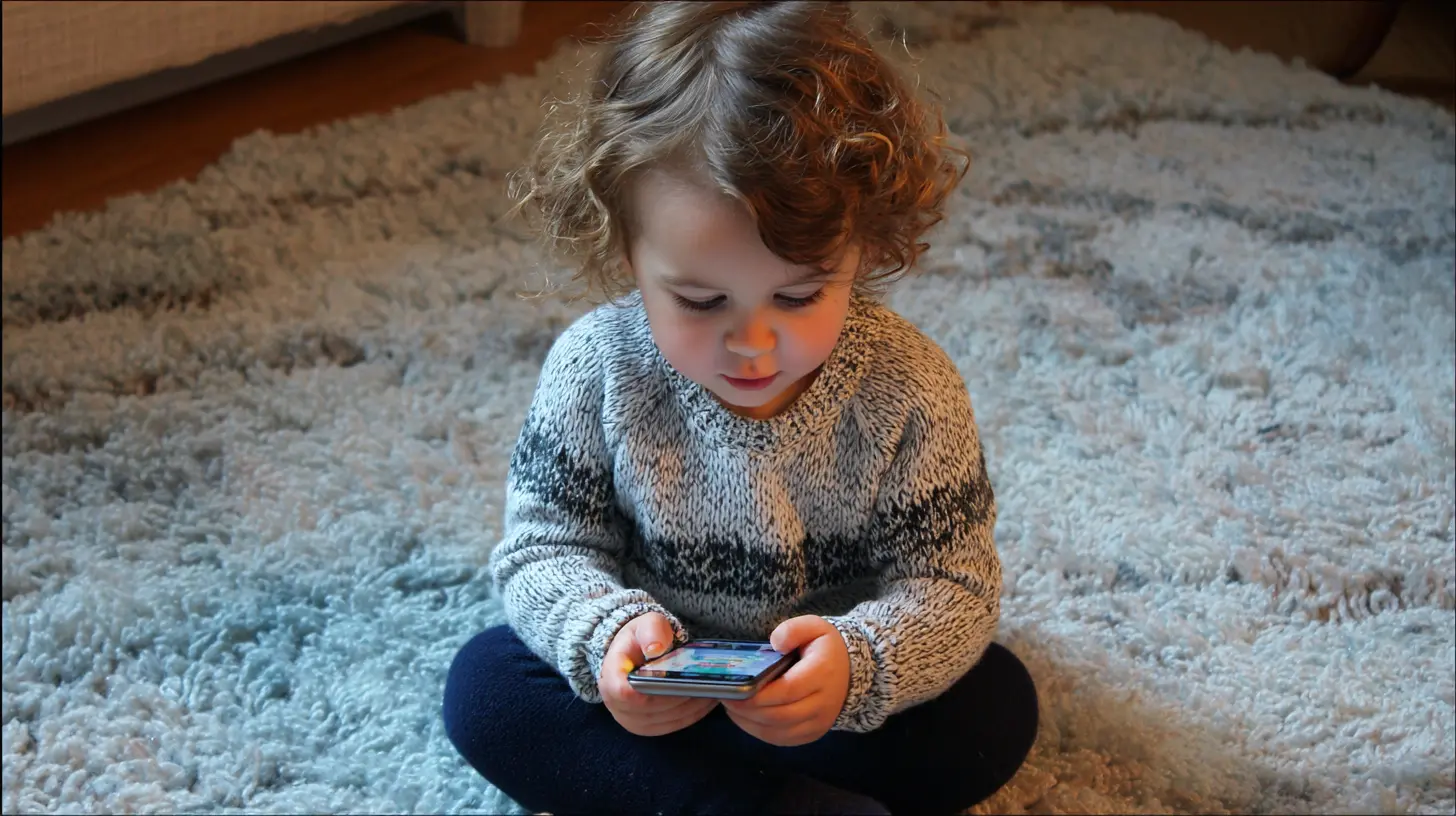
Why the Early Years Matter More Than People Assume
There is a common assumption that a toddler's footprint is harmless because nothing embarrassing has happened yet. That misses the point.The early years are when the most identifying information gets captured: full name, date of birth, birth weight, home address, faces at multiple ages, voices, medical history, and family relationships. This is exactly the combination that makes identity verification possible. A child's identity is clean and unused, which is precisely what makes it attractive to someone building a fraudulent profile.
There is also the permanence problem. Content posted when a child is one year old will likely still be online when they are eighteen. The parent posting it cannot know what the child will want then. A funny bath-time photo feels different to a teenager than to a sleep-deprived parent at 2 a.m.
And there is the consent gap. The child cannot agree to any of it. Parents make proxy decisions all the time, and that is normal and necessary. But proxy decisions work best when the decision-maker has actually thought about what they are deciding, rather than clicking through a default.
None of this means posting photos of your kid is wrong. It means the decision deserves more thought than it usually gets.

The Real Risks, Ranked by Likelihood
It helps to separate risks by how probable they actually are, because the scary headlines and the everyday problems are not the same thing.Most likely: future embarrassment and loss of control. A child grows up and finds their life documented in public without having been asked. This is not a hypothetical. It is the ordinary outcome of years of default sharing. The fix is not secrecy but selectivity and, eventually, a conversation.
Likely: data accumulation you did not intend. Photos shared in one app get backed up, synced, and indexed. A facial image posted once may end up in several systems. The risk here is not a single dramatic event but a slow loss of oversight.
Possible: identity-related misuse. A full name, birth date, and photo together are enough to start building a false identity. This is not common, but it is real, and it is one reason to avoid posting full birth dates and full names together in public.
Less common but serious: exposure through others. A relative with public settings, a friend's tagged photo, a school newsletter posted openly. You can control your own accounts; you cannot directly control everyone else's.
Rare but worth knowing: targeting based on location and routine. Public posts that reveal a child's school, park, or daily schedule create patterns. Most people who see them are harmless. But the information is public, and that is the point.
Ranking risks this way changes behavior. It suggests that the highest-value actions are about reducing public exposure, limiting identifying combinations, and setting expectations with relatives, not about deleting every photo.

The Platform-by-Platform Reality
Different services handle child data in genuinely different ways, and the differences are not always intuitive.Public social networks. Posts are indexed, shareable, and often visible to people you do not know. Privacy settings help, but they are subject to change, and screenshots defeat them. Treat anything posted here as effectively public, even in a private account.
Private messaging and group chats. The audience is known, but the content is not controlled. Recipients can forward, save, and screenshot. Group chats are informal, which makes them feel safer than they are.
Family-sharing albums. These are designed for exactly this use case and usually offer reasonable access controls. They are a good middle ground: a defined audience, a shared record, and less of the public exposure of a feed.
Daycare and school apps. These often have strong access controls but weak transparency. Read the privacy policy, or at least the data section. Ask what happens to photos and records when the child leaves the setting.
Smart toys and voice assistants. These collect voice and interaction data, sometimes to improve the product and sometimes for other purposes. Check whether recordings are stored, for how long, and whether they can be deleted.
Streaming and tablet profiles. Kids' profiles generate viewing data and sometimes advertising identifiers. The data is less sensitive than a photo, but it still builds a behavioral profile.
The practical takeaway: match the platform to the audience. Use private, purpose-built tools for family sharing, and keep public feeds free of identifying details.
A Practical Framework for Deciding What to Share
Rather than a list of rules, it helps to have a decision process. Four questions cover most situations.Who is the actual audience? Not who you imagine, but who can technically see it. If the answer includes strangers or the open internet, the bar for sharing should be higher.
What identifying combination does this create? A face alone is low risk. A face plus full name plus birth date plus location is a profile. Ask whether the post adds a piece to a puzzle that is already partly assembled.
Would the child be comfortable with this later? This is a judgment call, but it is the right one to make. A useful test: would you be comfortable if this appeared in a school assembly when the child is fifteen? If not, reconsider.
Is there a better tool for this? Often the answer is yes. A private album instead of a public post. A direct message instead of a group chat. A phone call instead of a status update.
This framework is not about fear. It is about matching the tool to the job, which is what good decisions look like in any domain.
Common Mistakes and Misconceptions
Several beliefs about toddler digital footprints are widespread and wrong in ways that matter."My account is private, so it is fine." Privacy settings reduce exposure but do not eliminate it. Settings change, platforms get acquired, and anyone in your audience can screenshot. Private is better than public, not the same as safe.
"It is just a baby photo, nothing sensitive." A baby photo is not sensitive on its own. The problem is accumulation. One photo is nothing; five years of photos plus a name plus a location is a record.
"I will delete it later." Deletion is unreliable. Backups, caches, and other people's copies persist. The better approach is to avoid creating content you would want to delete.
"Only strangers are the risk." Most exposure comes from people you know: relatives, friends, other parents. The fix is social, not technical.
"The daycare handles that." Daycare apps are convenient, but their data practices vary. You are still the decision-maker for your child's information.
"Kids do not care about privacy." Children care about autonomy, and privacy is a form of autonomy. The fact that a toddler cannot express a preference does not mean they will not have one later.
Talking to Relatives Without Starting a War
The single most effective step most families can take is a short, calm conversation with the people most likely to post about the child. This is also the step most likely to go badly if handled as an accusation.The approach that works is to frame it as a shared family standard rather than a criticism. Something like: "We are trying to be careful about what goes online about the kids. Would you be okay checking with us before posting photos?" This gives the relative a clear, easy rule and does not imply they did something wrong.
It helps to be specific. Vague requests get ignored; concrete ones get followed. "No photos in public posts, but the family album is fine" is easier to act on than "be careful online."
It also helps to provide an alternative. People share because they want to connect and celebrate. A private album, a group chat, or a direct message gives them a place to do that without the public exposure. Removing the behavior without replacing it rarely works.
For relatives who resist, it is worth deciding in advance which battles matter. A grandparent posting a first-day-of-school photo with the school name visible is worth a conversation. A grandparent posting a blurry photo of a birthday cake is probably not.
Settings and Tools That Actually Help
A few concrete measures cover most of the practical ground.Audit your own accounts first. Search your own posts for your child's name and see what is public. Most parents find more than they expect.
Turn off location tagging for photos. Location is one of the most sensitive pieces of metadata and one of the easiest to strip.
Use purpose-built family sharing. Private albums and shared photo streams give you a defined audience and better controls than public feeds.
Review app permissions on devices your child uses. A tablet game that requests contacts or location is a red flag. Deny permissions that are not needed for the app to function.
Check the privacy settings on daycare and school platforms. Confirm who can see photos and what the retention policy is.
Set a family rule about names and dates. Avoid combining full name, birth date, and location in any public post. This single rule prevents the most common identity-related risk.
Consider a periodic cleanup. Once or twice a year, review what is public and remove what no longer needs to be. This is not a substitute for good defaults, but it catches drift.
None of these measures is dramatic. Together they shift the default from accidental sharing to intentional sharing.
What About the Child's Own Future Voice?
There is a longer-term question that deserves attention: when does the child get a say?The answer is not a single age, but a gradual transfer of control. A useful pattern is to start involving children in decisions about their own image as soon as they can understand the concept, which is often earlier than parents expect. A five year old can answer "is it okay if I share this photo?" A nine year old can have opinions about what gets posted. A teenager should generally control their own accounts.
The point is not to wait for a confrontation at thirteen. It is to build the habit early, so that privacy is a normal family topic rather than a sudden restriction. Children who grow up being asked tend to be better at asking others.
There is also a practical benefit. A child who has been part of these decisions is more likely to understand why the family rules exist, which makes them more likely to follow them.
The Balance: Connection Versus Caution
It would be easy to read all of this as an argument for sharing less. That is not quite right. Sharing photos and updates with family is a genuine good. It connects grandparents, cousins, and friends. It creates a record of a childhood that the child may one day treasure. The goal is not to eliminate the footprint but to shape it deliberately.The families who handle this well tend to share a few characteristics. They use private tools for private audiences. They keep public posts free of identifying combinations. They have a short, clear conversation with relatives. They review their settings occasionally. And they treat the child's future self as a stakeholder in the decision.
That is not a complicated system. It is a set of small, repeatable choices that add up to a footprint the child can live with.
Questions to Ask Yourself This Week
If you want to move from understanding to action, a short audit is the place to start.What is the most identifying thing currently public about your child? A full name, a birth date, a school, a home address? Can you remove or reduce it?
Which relatives post about your child, and do they know your preferences? If not, what is the smallest, least confrontational way to tell them?
Which apps and devices in your home collect data about your child, and do you know what they do with it?
What is your family's rule about names, dates, and locations in public posts? Is it written down anywhere, or is it assumed?
What would you want your child to see if they searched their own name at fifteen? Is the current answer close to what you would want?
These questions do not have perfect answers. They have better and worse ones, and thinking about them is the whole exercise.
The Bottom Line
Your toddler's digital footprint is real, it is already larger than most parents realize, and it is mostly the result of ordinary, well-meaning behavior. The risks are less dramatic than the headlines suggest and more mundane than most people assume: accumulation, loss of control, and a future adult who did not get a say.The response that works is not fear and not denial. It is deliberate sharing: private tools for private audiences, a clear family rule about identifying details, a short conversation with relatives, and a periodic review. Those steps are small, but they change the trajectory. A footprint built with intention is one a child can inherit without regret.
all images in this post were generated using AI tools
Category:
Parenting And TechnologyAuthor:

Max Shaffer

