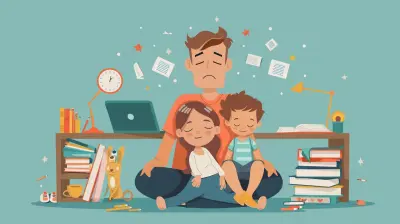
Milestones That Signal Emotional Maturity in 2027
7 September 2026
Parenting in 2027 looks nothing like it did even a decade ago. Kids are growing up with AI tutors, social media that shifts every few months, and a world that expects them to process global crises before they lose their baby teeth. But here is the thing: emotional maturity has not changed its core definition. It is still the ability to understand your feelings, manage your reactions, and show up for other people in a way that is honest and kind. What has changed is how those abilities show up, and what parents should actually look for.
Most parenting articles give you a checklist. By age six, your child should share. By age ten, they should apologize. By age fourteen, they should manage their homework. That is not emotional maturity. That is compliance. Emotional maturity is internal. It is about the why behind the behavior, not just the behavior itself. So in this article, I am going to walk you through the real milestones that signal emotional maturity in 2027, with specific attention to the digital, social, and academic pressures that did not exist for previous generations.

Why the Traditional Milestone Lists Are Failing You
If you have read a parenting book from 2015, you have seen the standard progression: toddlers learn to name feelings, elementary kids learn to take turns, teenagers learn to delay gratification. Those are fine starting points, but they miss the complexity of modern childhood. In 2027, a seven-year-old might have a group chat. A nine-year-old might be navigating a friend who posts passive-aggressive stories about them. A twelve-year-old might face social rejection that happens entirely through a screen, with no body language, no tone of voice, and no immediate adult awareness.The old milestones assume a world where social interactions are face-to-face and parents can observe most of them. That is not reality anymore. So when you look for emotional maturity, you have to look for skills that transfer across environments. The child who is polite at the dinner table but sends cruel messages online is not emotionally mature. The child who throws a tantrum at home but holds it together at school is not necessarily immature either. They might just be exhausted from masking all day.
The first milestone, then, is not a behavior. It is the ability to be consistent across contexts. That takes a lot longer to develop than most parents expect. Do not expect it before age eight or nine. Even then, it will waver.

Milestone One: The Ability to Name the Real Feeling, Not the Surface One
By age four or five, most kids can say "I am sad" or "I am angry." That is basic labeling. The deeper milestone comes later, usually between ages seven and ten, when a child can distinguish between what they feel and what they show. For example, your daughter comes home from school and says she hates her best friend. If you ask what happened, she says the friend played with someone else at recess. The surface feeling is anger. The real feeling is likely jealousy or fear of being replaced.A child who is developing emotional maturity will eventually be able to say something like, "I was mad, but I think I was actually scared she would not want to be my friend anymore." That distinction is huge. It means the child is looking inward and making sense of their own psyche. That is not a natural skill. It requires practice and a parent who asks questions instead of solving problems.
In 2027, this is even harder because digital interactions create a lot of confusing feelings. A child might feel left out because they saw a story of friends hanging out without them. The feeling is not just sadness. It is a mix of exclusion, comparison, and often a weird sense of shame for caring about it. The emotionally mature response is not to dismiss the feeling. It is to recognize that the feeling is real, even if the situation is not as bad as it seems.
What to look for: your child can tell you the difference between what they did and what they felt. They can say "I acted like I did not care, but I did care." That is gold. That is a child who is becoming self-aware.
Milestone Two: The Ability to Pause Before Reacting
Impulse control is often talked about in toddlerhood, but the real maturation happens much later. The milestone to watch for is not the absence of impulsive reactions. It is the presence of a pause. A child who is emotionally mature will sometimes stop, take a breath, and then respond. That pause can be half a second or a full minute. The key is that the child is choosing their response rather than being driven by the feeling.You will see this in small ways. Your son is playing a video game and loses. His first instinct is to throw the controller. But he does not. He puts it down, pushes his chair back, and takes a breath. That is not natural for most kids. It is learned. And in 2027, with the constant dopamine hits of short-form video and instant messaging, this pause is harder than ever.
Here is the trade-off: if you constantly intervene to prevent frustration, your child will not develop this skill. If you let them fail at a game, lose a match, or get rejected from a group project, they will learn to pause because they will realize that reacting immediately often makes things worse. But you do not have to be cruel about it. You can be present, and you can say, "That was frustrating. What do you want to do next?" That question forces the pause.
A common mistake is to punish the impulsive reaction instead of teaching the pause. If your child yells at a sibling and you send them to their room, they might learn to not yell in front of you. But they will not learn to pause internally. Instead, try a reset. Have them sit with you and simply breathe for thirty seconds. Then talk about what happened. The pause must become a habit, not a punishment.
Milestone Three: The Ability to Repair a Relationship After Conflict
This is one of the most misunderstood milestones. Many parents think emotional maturity means avoiding conflict. It does not. It means being able to move through conflict and come out the other side with the relationship intact. This requires several sub-skills: admitting fault, apologizing specifically, listening to the other person's perspective, and making amends.In 2027, the apology is becoming a lost art. Kids see public figures deny wrongdoing, shift blame, or offer non-apologies like "I am sorry if you were offended." That is not a real apology. An emotionally mature child will say, "I am sorry I called you stupid. That was mean. I was frustrated because you took my charger without asking." That is specific. It names the action, the impact, and the underlying trigger.
You will not see this before age six or seven. Even then, it will be clumsy. The real milestone is around age ten to twelve, when a child can apologize without being prompted and can also accept an apology without holding a grudge. That second part is often overlooked. Accepting an apology means letting go of the need for revenge or ongoing punishment. That is hard for adults, let alone kids.
A practical example: your two kids get into a fight over a toy. One hits the other. The hitter apologizes. The hittee says "It is okay" but then refuses to play for the rest of the day. That is not mature. Maturity would look like the hittee saying, "I am still a little upset, but I forgive you. Let us play later." That is a child who understands that relationships are more important than being right.
Milestone Four: The Ability to Sit With a Negative Emotion Without Fixing It
This is a big one. Many adults never learn this. When a child is sad, anxious, or disappointed, the natural parental instinct is to fix it. You offer a distraction, a treat, or a solution. That teaches the child that negative emotions are problems to be solved rather than experiences to be tolerated.Emotional maturity in 2027 means a child can feel disappointment and not immediately demand a replacement. For example, your daughter is upset that she did not get invited to a birthday party. She cries. She says it is unfair. Then, after a while, she stops crying and says, "I still feel bad, but I think I will be okay." That last sentence is the milestone. She is not denying the feeling. She is not asking you to fix it. She is simply acknowledging that she can survive the discomfort.
This is rare and should not be forced. If you tell a crying child to calm down, you are suppressing the emotion. Instead, you sit with them. You say, "It is okay to feel bad. I am here." Then you wait. The skill of sitting with discomfort develops over years, and it is often tested in adolescence.
In 2027, this is especially hard because discomfort is easily avoided with screens. A child who feels lonely can open an app and get a dopamine hit. That does not resolve the loneliness. It just delays it. So the milestone is not about avoiding screens. It is about choosing to be with a feeling even when a screen is available. That is a choice that must be practiced.
Milestone Five: The Ability to Read Other People's Emotional States
Empathy is often described as feeling what someone else feels. But true empathy requires cognitive perspective-taking, which is the ability to understand that someone else's experience is different from yours. This develops slowly. A three-year-old thinks everyone likes the same toys they like. A seven-year-old can understand that a friend might be sad even if they are not sad. A twelve-year-old should be able to predict how their words will affect someone else.The 2027 twist is that much of emotional reading now happens through text. Without tone, facial expression, or body language, kids have to infer meaning from word choice, punctuation, and timing. A message that says "ok" with a period can feel cold. A message that says "ok!!!" feels excited. Emotionally mature kids learn to read these cues, but they also learn to ask clarifying questions instead of assuming the worst.
A common mistake is to assume that kids who are good at reading people in person are also good at reading them online. They are not. The skills are different. So you should look for a child who, when they receive a confusing message, says something like, "I am not sure if they are mad at me. I will ask." That is a mature response. An immature response is to assume the worst and reply with a passive-aggressive message of their own.
Milestone Six: The Ability to Regulate Energy and Attention
This is not about sitting still in class. It is about understanding your own energy state and adjusting it to fit the situation. A child who is emotionally mature can be silly at recess and then shift to calm during a serious conversation. They can be loud with friends and quiet in a library. This is called state regulation, and it is a higher-order skill.In 2027, attention is under constant assault. Notifications, algorithms, and endless scrolling create a state of low-level arousal that makes it hard to settle. Kids who are emotionally mature have learned to recognize when they are overstimulated and to take a break. You will see this in a child who closes their tablet and says, "My brain feels too full." Or a child who goes to their room for ten minutes during a loud family gathering.
This milestone is often delayed because parents are afraid of boredom. If a child is never bored, they never learn to self-regulate. They always rely on external stimulation. So let your child be bored. Let them complain. That complaint is the beginning of self-awareness. They are noticing that their internal state is uncomfortable, and that is the first step toward managing it.
Milestone Seven: The Ability to Delay Gratification for a Relational Reason
The classic marshmallow test is about delaying a treat for a bigger reward. That is a cognitive skill. The emotional maturity version is different. It is the ability to delay your own needs for the sake of another person's feelings, without resentment.For example, your son wants to show you a video he made. You are on a phone call with your mother. An emotionally immature child will interrupt repeatedly. A child who is developing maturity will wait, and when you get off the phone, they will say, "I wanted to show you this, but I waited because I knew you were talking." That is not just impulse control. That is an understanding of your perspective and a willingness to prioritize the relationship.
This milestone usually appears between ages eight and twelve, but it will be inconsistent. Do not expect it every time. The key is that the child does it sometimes, unprompted, and without being told. That shows that the child has internalized the value of other people's time and attention.
Milestone Eight: The Ability to Hold Two Conflicting Feelings at Once
This is called emotional ambivalence, and it is a hallmark of mature thinking. Young children think in black and white. A friend is either good or bad. A day is either fun or terrible. Emotional maturity allows for nuance. A child can be angry at a parent and still love them. A child can be excited about camp and also nervous.You will see this in statements like, "I am happy for my friend that they won, but I am also sad that I lost." Or, "I love my sister but sometimes she is really annoying." That ability to hold both feelings without collapsing into one is a sign of a well-integrated emotional life.
In 2027, this is especially important because kids are exposed to complex social dynamics online. They might have a friend who is kind to them in person but excludes them in a group chat. The mature response is not to label the friend as all bad. It is to say, "I like them, but I do not like how they act in the group chat." That nuance protects the child from either over-idealizing or completely rejecting people.
Milestone Nine: The Ability to Set a Boundary Without Being Aggressive
Boundary setting is a hot topic, but it is often misunderstood. Setting a boundary is not telling someone what to do. It is telling someone what you will do. For example, "I will not play with you if you call me names" is a boundary. "You are not allowed to call me names" is a demand. The difference is subtle but crucial.A child who is emotionally mature can say, "I need some space right now" without slamming a door. They can say, "I do not want to talk about that" without being rude. This requires both self-awareness and the ability to communicate without escalating.
In 2027, boundaries are also digital. A mature child can say, "I do not want to be in that group chat anymore because it is too mean." They can block someone who is harassing them. That is not being dramatic. That is protecting their mental health. Parents often struggle with this because they fear their child will become isolated. But the opposite is true. A child who can set boundaries is more likely to have healthy relationships because they do not tolerate toxic ones.
Milestone Ten: The Ability to Self-Reflect Without Shame
The final milestone is metacognition, or thinking about your own thinking. This is the ability to look back at a situation and analyze your own role in it without collapsing into self-hatred. For example, after a fight with a friend, a mature child can say, "I was too harsh. I should not have said that. Next time, I will try to ask more questions." That is healthy self-reflection.An immature response is either "It is all my fault, I am a terrible person" or "It is all their fault." Both are extremes. The mature response is balanced. It acknowledges mistakes without making them part of a permanent identity.
This milestone is the hardest to achieve and often does not solidify until late adolescence. Do not expect a ten-year-old to do this consistently. But you can look for moments when your child says, "I think I made a mistake there. I want to do better next time." That is the seed of emotional maturity.
What This Means for Parents in 2027
If you read this list and feel overwhelmed, you are not alone. These milestones are not linear. A child might show maturity in one area and regress in another. That is normal. The key is to look for trends over months, not behaviors over days.Also, remember that emotional maturity is not a prize to be won. It is a capacity that develops through struggle, failure, and repair. If you are constantly protecting your child from negative feelings, you are delaying their development. If you are punishing them for having feelings, you are teaching them to hide. The best approach is to be a calm, present witness to their emotional life. You do not have to fix it. You do not have to judge it. You just have to be there.
In 2027, the biggest threat to emotional maturity is not trauma. It is distraction. A child who never sits with their own thoughts will never learn to understand them. So the most countercultural thing you can do as a parent is to create space for boredom, silence, and reflection. Turn off the notifications. Put away the devices. Sit in the car without music. Ask your child what they are thinking, and then wait. That silence is where emotional maturity grows.
The milestones are not about perfection. They are about progress. Celebrate the small moments when your child pauses, apologizes, or sits with a sad feeling. Those moments are the building blocks of a life that can handle whatever comes next.
all images in this post were generated using AI tools
Category:
Parenting MilestonesAuthor:

Max Shaffer
Discussion
rate this article
2 comments
Loretta Turner
This article highlights important milestones that show emotional maturity in kids today. It's refreshing to see how these signs evolve with changing times. As parents, we should focus on guiding our children to understand and express their emotions in a healthy way.
September 24, 2026 at 2:44 AM
Francesca McGeehan
In 2027, my kid will probably achieve emotional maturity by figuring out how to negotiate snack time while mastering the art of using emojis in every conversation. I can already see them calmly explaining feelings over a plate of avocado toast. Here's to future parenting adventures and the wisdom of tiny humans!
September 9, 2026 at 4:00 AM
Max Shaffer
Sounds like your kid will be a pro at both snacks and social cues. Exciting times ahead for parenting!