Developing Conflict-Resolution Skills Through Sibling Disputes
18 October 2026
Sibling fights can wear down even the most patient parent. The shouting over a toy, the tears about who sat where, the endless "he started it" loop. It is tempting to shut it down fast and move on with the day. But those same disputes are some of the most valuable training grounds your children will ever have for learning how to handle conflict. Nowhere else will they get so many low-stakes repetitions with someone who knows them deeply and cannot easily walk away.
This article treats sibling conflict as a skill-building opportunity rather than a problem to suppress. You will find a practical framework, concrete scripts, common mistakes, and the reasoning behind each recommendation so you can adapt it to your family instead of copying a script.

Why Sibling Conflict Is a Unique Learning Environment
Most conflict-resolution training happens in classrooms or workshops where the stakes are artificial. Sibling disputes are different in several ways that make them unusually effective for learning.First, the relationship is involuntary and long-lasting. Your children cannot fire each other. They will share holidays, family history, and eventually aging parents. That permanence raises the stakes of every fight and also creates real motivation to repair the relationship afterward. A child who learns to de-escalate with a sibling is learning to protect a relationship they will need for decades.
Second, the emotional intensity is high. Siblings know exactly which buttons to press because they helped install them. A dispute over a video game controller is rarely just about the controller. It is about fairness, status, attention, and history. That emotional charge is precisely what makes the practice valuable. Calm negotiation is easy. Staying civil while furious is the actual skill.
Third, the frequency is high. A child might have a serious conflict with a friend once a month. With a sibling, it can happen three times before breakfast. Volume matters in skill acquisition. Repetition is what turns a technique into a habit.
Fourth, the audience is safe. A sibling fight happens at home, usually with a parent nearby. Children can experiment with negotiation, compromise, and even walking away, and the consequences are contained. Compare that to practicing conflict skills for the first time with a boss or a roommate at twenty-two.
The catch is that none of this works automatically. Conflict only builds skills when someone scaffolds the process. Left alone, children tend to repeat whatever worked before, which is often shouting, tattling, or hitting. Your job is not to eliminate conflict but to shape how it unfolds.

What Children Actually Need to Learn
Before diving into tactics, it helps to name the specific skills involved. "Getting along" is too vague to teach. Break it into components.Emotion regulation. The ability to notice anger rising and do something other than explode. This is the foundation. No negotiation technique works while a child is flooded with emotion.
Perspective taking. Understanding that the other person has a version of events, and that their version might be reasonable even when it is inconvenient.
Communication. Stating a need without attacking. Listening without planning a rebuttal. Using "I" statements, which sound clichéd to adults but genuinely help children separate the problem from the person.
Problem-solving. Generating options, weighing trade-offs, and agreeing on a solution. Children are often surprisingly good at this once the emotional temperature drops.
Repair. Apologizing, making amends, and reconnecting after a fight. This is the most neglected skill and arguably the most important for long-term relationships.
Knowing when to disengage. Not every conflict should be resolved on the spot. Sometimes the mature move is to leave the room, take a breath, and return later. Children need permission to do this, and they need to see adults model it.
Each of these can be taught, practiced, and reinforced. The sections below show how.
The Parent's Role: Coach, Not Judge
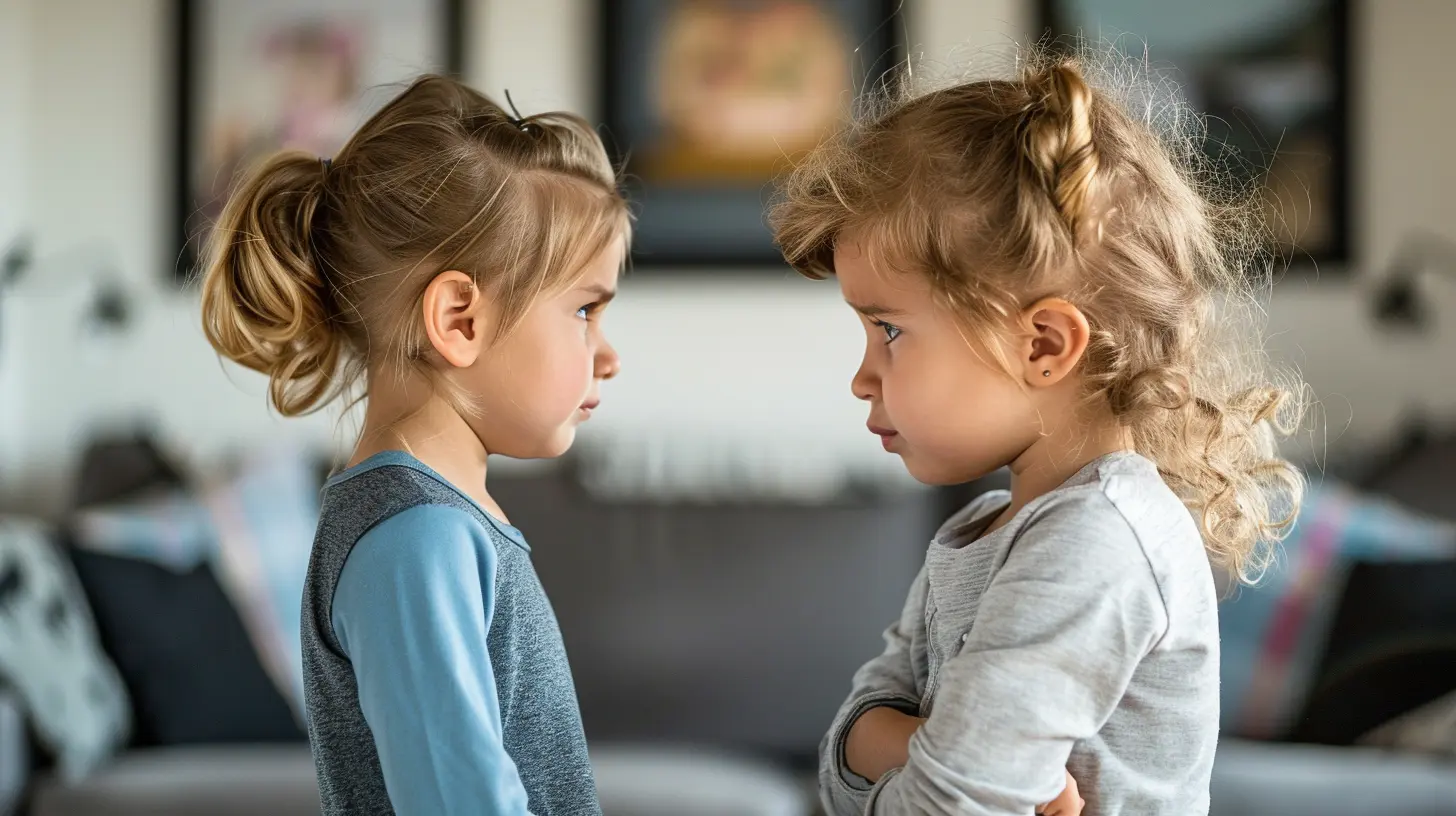
The most common parenting mistake in sibling conflict is stepping into the judge's seat. You hear the crash, you arrive, and you immediately try to figure out who is guilty. This feels responsible. It is usually counterproductive.When you judge, three things happen. First, you teach children that the goal is to convince the authority figure rather than to solve the problem. Second, you guarantee that one child feels wronged by you, which adds a new conflict to the original one. Third, you rob them of the practice.
The alternative is to act as a coach. A coach does not decide who wins. A coach sets up the conditions for the players to perform, observes, and gives feedback afterward. This distinction changes everything about how you show up.
In practice, coaching looks like this:
- You separate children who are physically unsafe or too flooded to think, without assigning blame.
- You narrate what you see without interpreting motives: "I see two kids who both want the same chair and both look upset."
- You hand the problem back: "What are some ways we could solve this?"
- You stay nearby but stay out of the content.
- You follow up later, when everyone is calm, to review what worked and what did not.
There are times when judging is appropriate. If one child hit another, that is a safety issue and needs a clear response. If there is a pattern of bullying, you need to intervene directly. Coaching is the default, not an absolute rule. The judgment call is whether the situation is a skill-building opportunity or a safety concern. When in doubt, prioritize safety, then return to coaching once things are calm.
A Practical Framework for Handling Disputes in the Moment
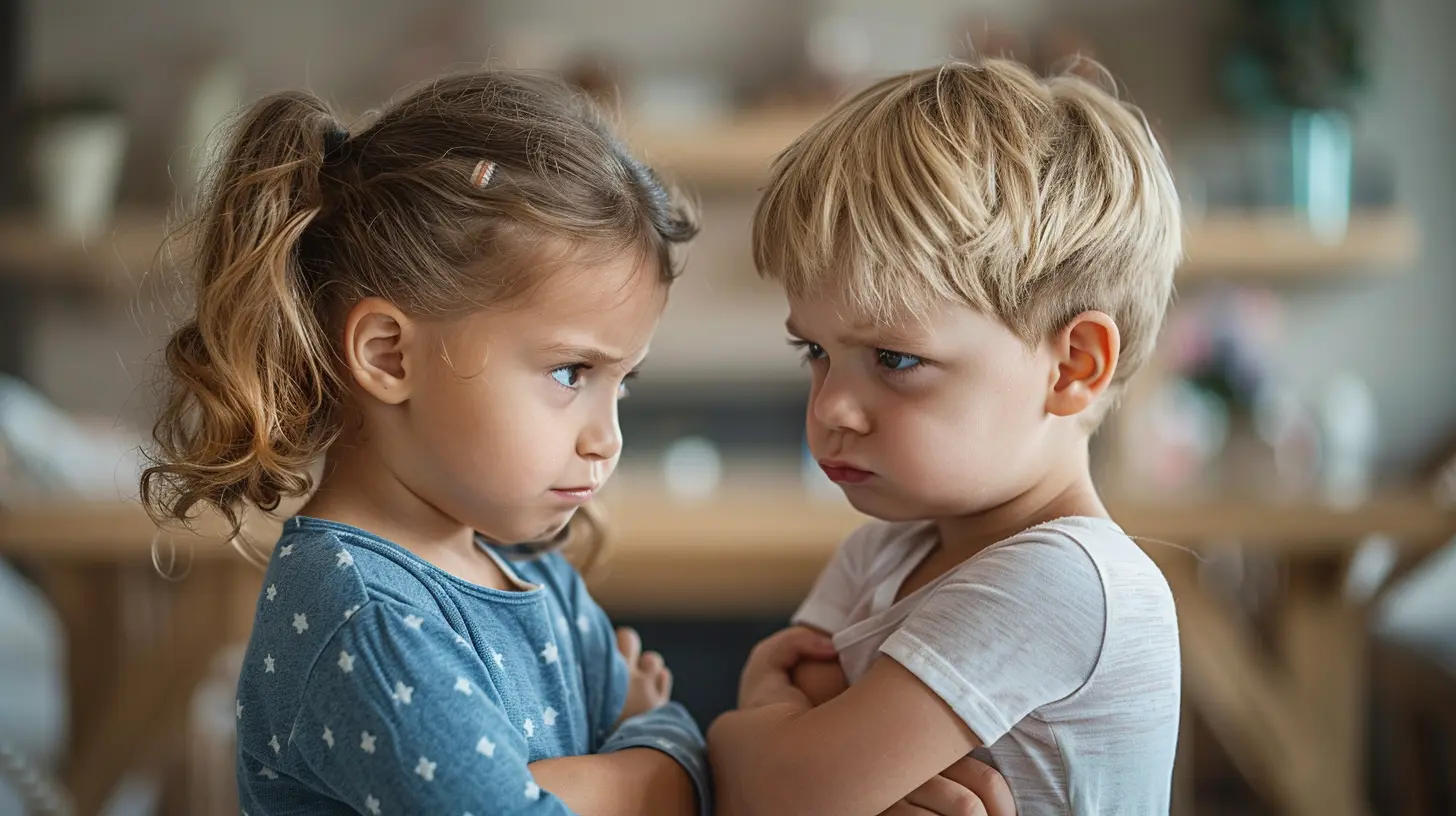
Here is a step-by-step approach you can use in real time. It is not a script to follow mechanically, because every fight is different. Treat it as a mental checklist.Step 1: Regulate yourself first
Your own nervous system sets the tone. If you arrive angry, the fight will escalate. Take a breath before you speak. If you cannot, say so: "I need a minute to calm down before we talk about this." Modeling that is more valuable than any lecture.Step 2: Separate if needed, but do not isolate as punishment
If children are hitting or screaming, separate them briefly. The goal is to lower the temperature, not to sentence anyone. Keep the separation short and frame it as a reset: "You two need a few minutes apart. We will talk when you are both calm." Avoid sending one child to their room as if they are the guilty party unless you actually know they are.Step 3: Acknowledge both sides without ruling
When you return, start with empathy for both children. "It sounds like you felt left out when he started the game without you. And it sounds like you felt pressured when she grabbed the controller." This does two things. It shows each child that you see them, which lowers defensiveness, and it models perspective taking.Step 4: Hand back the problem
Ask a genuine question: "What do you two think would be fair?" Then wait. Silence is uncomfortable, and children will often fill it. Resist the urge to suggest solutions too early. If they are stuck, offer a menu: "Do you want to take turns, find a different game, or ask me to hold the controller and set a timer?" A menu is not a solution. It is a scaffold that teaches them how to generate options.Step 5: Let them own the agreement
If they reach a solution, write it down or have them repeat it back. Ownership matters. A solution imposed by a parent is obeyed, at best. A solution invented by the children is defended.Step 6: Follow up later
The real learning happens in the debrief. Ten minutes or an hour later, when everyone is calm, ask a few questions: "What happened? What did you do that helped? What would you do differently next time?" Keep it short and curious, not prosecutorial. This is where the skill consolidates.Teaching the Skills Explicitly, Not Just in the Heat of Battle
In-the-moment coaching is powerful, but it is hard to learn a skill while you are upset. Children benefit enormously from practicing when they are calm. Think of it like fire drills. You do not teach fire safety during a fire.Emotion regulation practice
Teach children to name their feelings and notice physical signals. "Where do you feel anger in your body? Tight fists? Hot face?" Then practice simple regulation tools during calm moments: slow breathing, counting to ten, squeezing a pillow, walking away. The key is to practice these when nothing is wrong so they are available when something is.A useful family ritual is a "calm corner" that any family member, including adults, can use. It is not a time-out. It is a voluntary space to reset. When children see a parent use it after a frustrating phone call, the lesson lands.
Communication practice
Role-play is underused at home. Pick a low-stakes scenario, like a friend borrowing a book and not returning it, and have your children practice stating a need without attacking. "I felt frustrated when my book was not returned. I would like it back by Friday." Compare that to "You always keep my stuff." The difference is obvious even to young children.You can also practice listening. One child speaks for thirty seconds about a grievance while the other listens without interrupting, then summarizes what they heard. Swap. This is awkward at first and surprisingly effective.
Problem-solving practice
Family meetings are a good venue for this. Once a week, sit down for ten minutes and let each person raise one issue and propose one solution. The parent does not have to adopt every proposal, but the practice of generating and evaluating options is the point.
Common Mistakes and Misconceptions
Mistake: Forcing an apology. A coerced "sorry" teaches children to say words that end a conversation, not to repair a relationship. Better to ask, "What could you do to make this better?" Sometimes the answer is a gesture, not a word. If a child is not ready to apologize, give them time. A genuine apology tomorrow is worth more than a hollow one now.Mistake: Treating all children identically. Fairness is not sameness. A six-year-old and a twelve-year-old have different capacities and different needs. Insisting on identical treatment teaches children to keep score rather than to think about what is actually fair. Explain your reasoning out loud: "She gets to stay up later because she is older. When you are her age, you will too." Children accept differentiated fairness when the logic is transparent.
Misconception: Siblings who fight will grow apart. Not necessarily. The research on sibling relationships is mixed, and the quality of the relationship depends heavily on how conflict is handled. Fighting itself is not the problem. Contempt, cruelty, and unresolved patterns are. A family that fights and repairs is healthier than one that suppresses conflict and seethes.
Mistake: Comparing children. "Why can't you be more like your sister?" is a conflict generator disguised as motivation. It fuels resentment between siblings and teaches children that love is conditional on performance. Avoid comparisons, even flattering ones.
Mistake: Intervening too early. Some conflicts resolve themselves if you wait thirty seconds. Jumping in at the first raised voice teaches children that they cannot handle disagreement without adult rescue. Give them a chance to work it out. If it escalates, step in.
Mistake: Intervening too late. The opposite error is also real. If a fight has turned physical or one child is clearly being hurt, waiting for them to "work it out" is not coaching. It is neglect. Learn to read the difference between heated negotiation and genuine harm.
When to Step In and When to Stay Out
This is the question parents ask most, and there is no formula. But there are useful signals.Step in when:
- Someone is being hurt physically or emotionally in a sustained way.
- There is a significant power imbalance, such as a much older child exploiting a younger one.
- One child is consistently unable to advocate for themselves.
- The conflict is escalating in a way that neither child can de-escalate.
- A rule has been broken that requires adult follow-up.
Stay out when:
- Both children are verbally capable and the conflict is not physical.
- The dispute is over something minor and both children are calm enough to negotiate.
- You have seen them resolve similar disputes before.
- You are tempted to intervene mainly because the noise is annoying.
That last point deserves attention. A lot of parental intervention is driven by the adult's discomfort, not the children's need. If you find yourself stepping in mostly to restore quiet, consider whether headphones and a walk to the other room might serve everyone better.
The Repair Conversation: Where the Real Learning Happens
Most families focus on stopping the fight. Fewer focus on what happens after. The repair conversation is where children learn that conflict does not have to end a relationship.A good repair conversation has three parts. First, each child names what happened from their perspective, without interruption. Second, each child names one thing they could have done differently. Third, they agree on one concrete thing they will do to make it better, whether that is a hug, a shared activity, or simply a fresh start.
The parent's role is to facilitate, not to lecture. Ask questions. Reflect back what you hear. Resist the urge to add your own list of grievances.
Repair works because it separates the person from the behavior. A child who learns "I did something hurtful" can fix it. A child who learns "I am a bad kid" has nowhere to go.
Building a Family Culture That Supports Conflict Resolution
Individual conversations matter, but culture matters more. Children learn more from how the family operates day to day than from any single intervention.Model repair yourself. When you snap at your child, apologize. When you and your partner disagree, let your children see you resolve it respectfully. Children learn more from what they witness than from what they are told.
Use family language. Give your family a shared vocabulary. "That was a repair" or "Let us do a reset" or "Are you flooding?" Shared language makes skills easier to access under stress.
Celebrate good conflict. When you see your children negotiate, compromise, or walk away from a fight, name it. "I noticed you two worked that out without me. That was impressive." Specific praise for the process, not just the outcome, reinforces the skill.
Keep the standards high but the temperature low. A family where conflict is allowed but cruelty is not is a family where children can practice safely. That balance is the whole game.
A Note on Age and Stage
The framework above needs adjustment for age. Toddlers and preschoolers need more physical separation and more concrete language. "You may not hit. Hitting hurts. Use your words or come get me." Their conflicts are often about possession, and turn-taking with a visual timer works well.School-age children can handle more negotiation and more reflection. They can generate options, evaluate fairness, and participate in family meetings. This is the sweet spot for skill-building.
Teenagers need autonomy. Coaching them in the moment often backfires. Better to debrief later, ask questions rather than give answers, and respect their growing need to manage their own relationships. A teenager who rolls their eyes at your framework is still absorbing it. Keep the door open.
Practical Takeaways
If you remember nothing else, remember these:- Conflict is practice, not failure.
- Regulate yourself before you regulate anyone else.
- Coach more than you judge.
- Hand the problem back whenever it is safe to do so.
- Follow up later, when everyone is calm.
- Teach the skills explicitly, not only in the heat of the moment.
- Repair is the goal, not punishment.
Sibling disputes will not disappear. They will change shape as your children grow. But the skills they build in those arguments, the ability to stay calm, to see another perspective, to speak honestly, to fix what they break, will follow them into every relationship they have. That is worth the noise.
all images in this post were generated using AI tools
Category:
Sibling RelationshipsAuthor:

Max Shaffer