Celebrating the First Time They Tie Their Shoes
8 October 2026
There are milestones parents mark with elaborate fanfare. First steps. First words. First day of school. And then there is the first time your kid ties their own shoes, an event that arrives not with a parade but usually with a grunt from the hallway while you are elbow deep in dishes.
This is the milestone nobody warns you about, mostly because it does not photograph well. You cannot frame a double knot. You cannot caption a loop. And yet, if you have spent the last four years crouching on floors, in mudrooms, on sidewalks, and once memorably in an airport jet bridge, this moment matters more than you might expect.
So let's give the shoelace its due. Not with a party banner, necessarily, but with something better: an honest look at why this skill is harder than it looks, why the timing varies wildly from kid to kid, and how to get through the teaching phase without losing your mind or your lower back.
Why This Tiny Skill Is a Bigger Deal Than It Seems
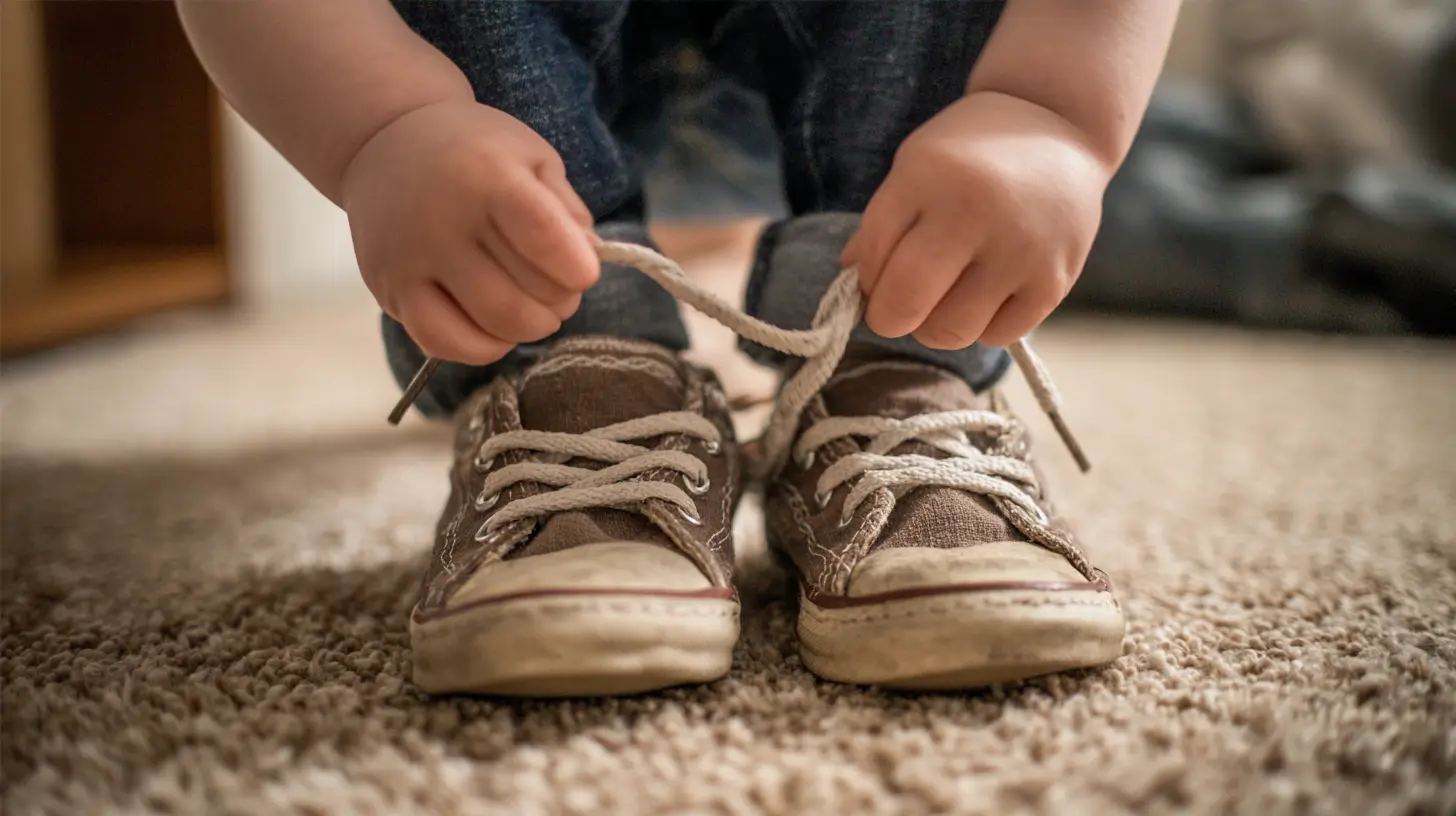
Tying shoes sits at a strange intersection of physical dexterity and mental sequencing. It is not one skill. It is at least six, stacked on top of each other.First, the child has to hold two separate strings without letting go. Then they have to cross them. Then they have to tuck one end under the cross and pull it through, which requires a pincer grip and a sense of tension. Then they have to form a loop, hold that loop steady, wrap the other lace around it, push a second loop through a small gap, and pull. All while their fingers are still developing the fine motor control that will not fully mature for years.
Think about that. You are asking a person whose primary hobbies include licking doorknobs and running into furniture to perform a small act of origami under tension.
This is why the skill tends to arrive somewhere between ages five and seven for most kids, though the range is wide and perfectly normal. Some four-year-olds crack it. Some eight-year-olds are still rocking velcro and doing just fine, thank you. If your child is on the later end, that is not a red flag. It is a timeline.

The Case for Letting Them Struggle (a Little)
Here is where a lot of well-meaning parents go wrong. The moment the lace slips out of a small hand, we swoop in and do it ourselves. We are not being lazy. We are being efficient. We have somewhere to be.But efficiency is the enemy of mastery. Every time you tie the shoe for them, you rob them of one repetition. And repetition, not instruction, is what actually wires this skill into the brain.
That said, there is a difference between productive struggle and pointless frustration. The sweet spot looks like this:
- Let them try for a minute or two without intervention.
- Offer a verbal cue, not a hand.
- Step in only when genuine tears or genuine defeat appear.
- Then hand the shoe back and let them finish the last step themselves.
The last step matters. Even if you did 90 percent of the work, letting them pull the final loop tight gives them a sense of ownership. Ownership is what makes them want to try again tomorrow.
When Should You Actually Start Teaching?
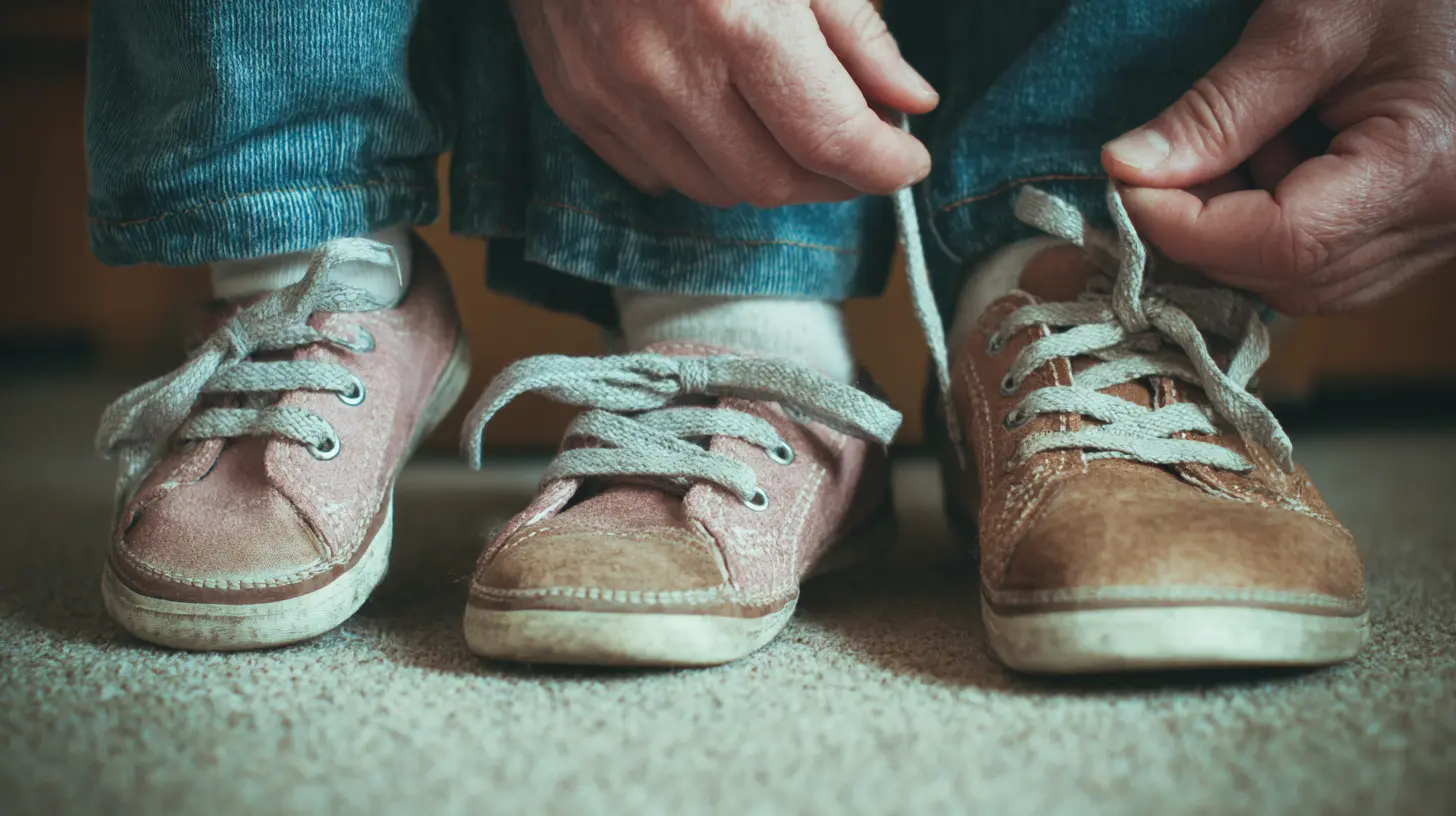
The honest answer is: when they show interest and when their hands are ready. Those two things do not always arrive together.Signs a child might be ready include:
- They can hold a crayon with a mature grip.
- They can button a large button or zip a jacket with help.
- They can follow a three-step instruction without forgetting step one.
- They are asking to try.
Signs they are probably not ready yet:
- They still put shoes on the wrong feet without noticing.
- They get frustrated within seconds of a failed attempt.
- They cannot yet cross the midline of their body, which is the awkward task of reaching across yourself.
There is no prize for starting early. A child who learns at seven will not remember that they learned later than their cousin. But a child who is pushed into it at four and fails repeatedly may develop a quiet belief that they are bad at this kind of thing, which is a much bigger problem than a loose lace.
The Two Main Methods, and Why You Should Not Pick a Favorite Yet
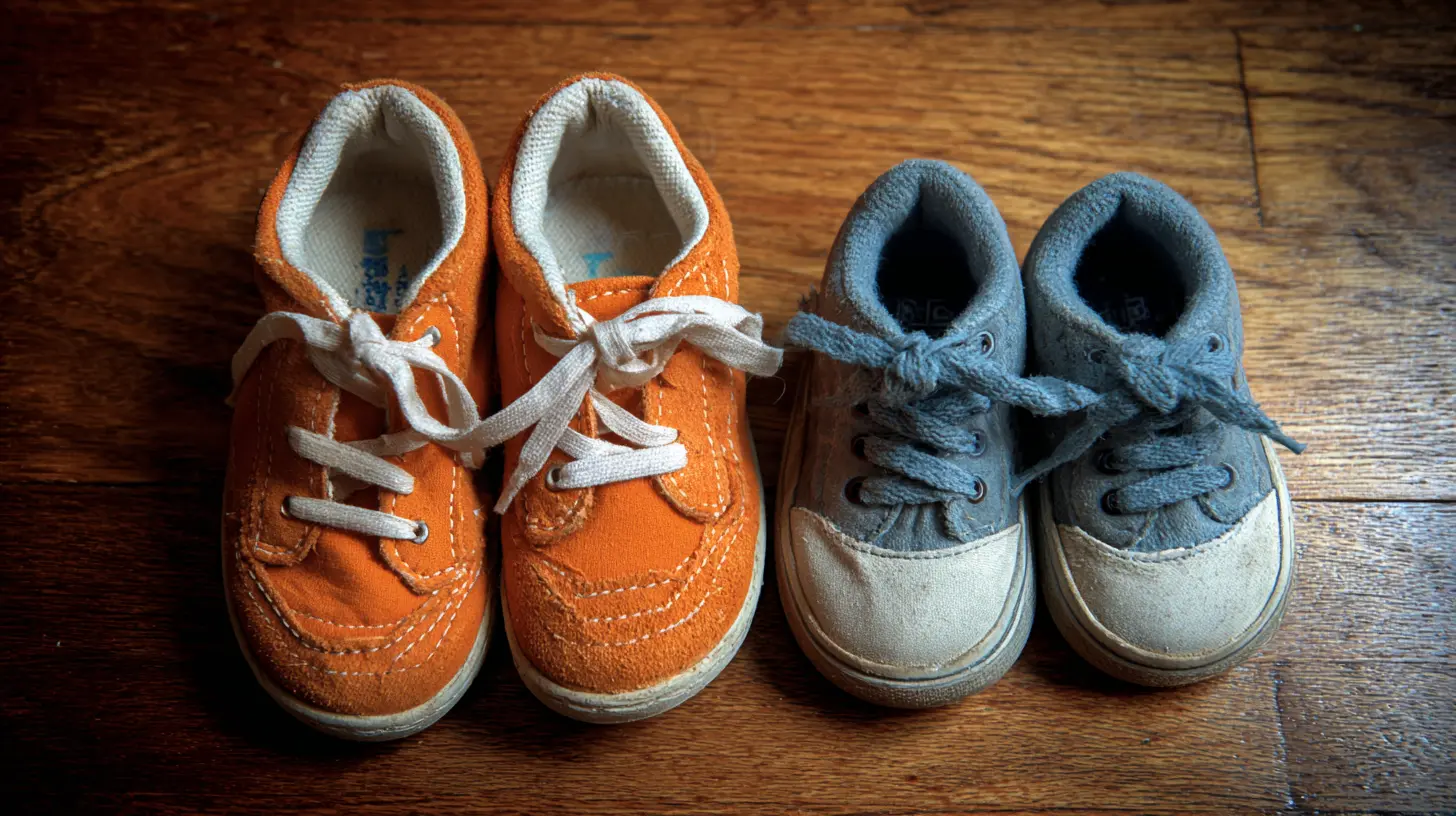
There are two dominant ways to teach shoe tying, and parents tend to become weirdly tribal about them.The Bunny Ears Method
You make two loops, one from each lace, and tie them together.Pros: It is easy to explain, easy to visualize, and easy for a child to see what is happening because both loops are visible at all times. Kids who struggle with spatial reasoning often click with this method first.
Cons: It produces a slightly bulkier knot and, more importantly, it is a dead end. Almost no adult ties their shoes this way. At some point the child will need to learn the other method or accept a lifetime of bunny ears.
The Loop and Swoop Method
You make one loop, wrap the other lace around it, and pull a second loop through the gap.Pros: This is the method most adults use. It is faster, produces a cleaner knot, and once learned, it sticks.
Cons: It is harder to teach. The second loop has to be pushed through a small hole, and that hole is not always easy to see or feel. Many kids fail at this step for weeks.
The Verdict
Start with whichever method your child finds less confusing. Do not force the "adult" method just because it is the adult method. A kid who can tie their shoes with bunny ears is more confident and more independent than a kid who cannot tie them at all. You can always upgrade later, usually around age eight or nine, when their fingers and patience have both leveled up.The Secret Weapon Nobody Talks About: Different Laces
Here is a piece of advice that gets buried under all the technique talk. The laces themselves matter enormously.Standard round laces on a pair of sneakers are slippery, thin, and hard to grip. They are basically the worst possible training tool. If you want to make this process easier, do this:
- Buy a pair of flat, slightly stiff laces in two contrasting colors.
- Swap them into a pair of shoes your child wears often.
- Practice with those shoes specifically.
Why does this work? Because two colors let a child see which lace is which. Flat laces stay put when you let go. Stiff laces hold a loop shape instead of collapsing the moment tension drops. And using the same shoes every time builds muscle memory faster than switching between different pairs.
Some parents also use a practice board, which is a wooden or cardboard shoe-shaped cutout with laces threaded through it. These are genuinely useful for kids who get frustrated by the awkward angle of bending down to their own feet. Sitting at a table and tying a board removes the postural challenge and lets them focus purely on the hand movements.
The Timing Trap: Why Bedtime Is the Worst Time to Practice
You will be tempted to practice when it is convenient. That is usually right before leaving the house or right before bed. Both are terrible.Mornings are rushed. Bedtime is when everyone is tired and emotional. Practicing a frustrating fine motor skill during either window is a recipe for a meltdown, and not always the child's.
Instead, pick a neutral moment. After lunch on a weekend. During a quiet afternoon. Ten minutes when nobody has anywhere to be. The emotional state of the learner matters as much as the technique. A calm kid learns faster than a rushed one, every single time.
How Long Should This Actually Take?
Parents often ask how many sessions it takes. The honest answer is that it varies so much that any number is misleading.Some kids get it in a single afternoon. Others need short practice sessions spread over several months. The variable is not intelligence or coordination in any simple sense. It is a mix of hand strength, patience, interest, and how often they actually practice.
What matters more than speed is consistency. Five minutes a day beats an hour once a week. Short, frequent practice builds the neural pathway faster and with less resentment.
Common Mistakes Parents Make
Let's run through the ones that show up again and again.Doing it for them the second they struggle. Covered above, but worth repeating. The struggle is the lesson.
Teaching while standing over them. Get down to their level. Literally. Sit on the floor next to them. The angle matters.
Using words instead of hands. "Make a loop and wrap it around" means nothing to a five-year-old. Show them. Then guide their hands through the motion. Then let them try.
Practicing on the wrong shoes. Slippery laces on a wobbly shoe are a setup for failure.
Getting visibly frustrated. Kids read your face. If you sigh, they will decide this is a thing they are bad at.
Skipping the celebration. This sounds soft, but it is not. The moment they succeed, stop everything and make a big deal out of it. Not because the skill is monumental, but because your reaction tells them that effort leads to something good.
The Celebration Itself (Yes, It Deserves One)
You do not need a party. You do not need a cake. But you should mark the moment, because marking it tells your child that this mattered.Some low-effort, high-impact options:
- A silly certificate, printed or hand-drawn, that says "Official Shoe Tier."
- A photo of the finished knot, taken right there.
- A small treat, like a trip to the park or a favorite snack.
- A phone call to a grandparent, with the child announcing the news themselves.
The point is not the reward. The point is the recognition. Kids remember the moments adults stopped and noticed.
What Comes After the First Successful Tie
Here is the part nobody tells you. The first successful tie is not the finish line. It is the start of a long, messy middle.For the next several months, your child will tie their shoes badly. The knot will be loose. It will come undone in ten minutes. They will tie it too high up the ankle or too low near the toe. They will forget how to do it on a Tuesday after doing it perfectly on a Monday.
This is normal. This is the plateau. And the way you handle it determines whether they keep tying or quietly ask you to do it again.
The best approach is to resist the urge to fix every bad knot. Let them live with a loose lace. Let them feel it come undone and have to redo it. Natural consequences teach faster than lectures. If they ask for help, give them a cue, not a fix. "Try pulling the loops tighter this time." Then step back.
Around this stage, it also helps to introduce a second skill: double knotting. A single knot on a flat lace holds reasonably well, but a double knot is what keeps shoes tied through recess, gym class, and the general chaos of childhood. Teach it as a separate, later step. Do not stack it on top of the first lesson.
When to Worry (and When Not To)
Some parents worry that a child who cannot tie shoes by age seven has a developmental issue. Most of the time, they do not. Fine motor skills develop on a wide spectrum, and shoe tying is one of the last fine motor milestones to arrive.That said, there are situations where it is worth mentioning to a pediatrician or occupational therapist:
- The child is eight or older and cannot manage buttons, zippers, or utensils either.
- They show significant hand weakness or avoid fine motor tasks entirely.
- They have trouble with other sequenced motor tasks, like clapping patterns or hopping.
If none of that applies, your child is almost certainly fine. They are just on their own timeline, and their timeline is not a problem.
The Bigger Lesson Hiding Inside the Small One
Shoe tying is not really about shoes. It is about the first time your child does something for themselves that you used to do for them. It is the beginning of a long series of small handoffs, each one a little further from you and a little closer to independence.That is why it deserves a moment. Not because the knot is impressive, but because the person tying it is becoming someone who does not need you for this anymore.
So when it happens, in your hallway, on a random Tuesday, with a grunt and a crooked loop and a lace that is definitely not tight enough, stop what you are doing. Look at it. Say something. Take the photo.
Then let them tie the other one.
all images in this post were generated using AI tools
Category:
Parenting MilestonesAuthor:

Max Shaffer