Your Child’s First Sleepover: A Parent’s Survival Guide
13 October 2026
The phone call comes on a Tuesday afternoon. Your child's best friend wants to know if yours can sleep over on Saturday. Your child's face lights up with hope. Your stomach does something complicated.
This is one of those parenting thresholds that catches you off guard. One day you are managing bedtime routines in your own home, and the next you are considering handing that responsibility to another family for an entire night. The decision carries more weight than it might seem on the surface, and the emotions it stirs up are rarely simple.
This guide is for the parent standing at that threshold, unsure whether to say yes, how to prepare, and what to expect when you do.

Why This Milestone Feels Bigger Than It Looks
A sleepover is not just a playdate with pajamas. It represents a transfer of care, however temporary, in a setting you do not control. For many parents, the anxiety that surfaces is not really about the sleepover itself. It is about what the sleepover symbolizes: your child becoming more independent, forming attachments outside the family unit, and navigating social situations without you there to interpret or intervene.That is a lot to process in the span of a phone call.
It helps to name what is actually happening. Your child is not being taken from you. They are being given an opportunity to practice being a separate, capable person in a safe environment. The discomfort you feel is proportionate to your love, not to any real danger.
Still, love alone does not make the decision. Practical considerations matter, and they deserve careful thought.
The Readiness Question: Your Child
Age is a starting point, not an answer. Most children are developmentally ready for a first sleepover somewhere between seven and ten years old, but the range is wide and individual. A confident six year old who has spent many nights at a grandparent's house may handle a friend's sleepover better than a cautious nine year old who has never slept away from home.Ask yourself these questions:
Has your child ever spent a night away from you? If yes, how did it go? If no, a sleepover at a friend's house is probably not the right first experience. Consider a night at a relative's home first, where the environment is familiar and the adults are known to your child.
Does your child understand what a sleepover involves? Some children imagine it as an extended playdate and are surprised by the reality of sharing a room, following another family's rules, and going to sleep without their usual routine. Talk through the sequence of events before agreeing.
Is your child asking for this, or are you pushing it? A child who wants to try is more likely to manage the emotional ups and downs of the night. A child who is ambivalent or anxious may need more time.
Can your child communicate needs to adults? If your child struggles to tell an adult they feel sick, scared, or need to go home, a sleepover may be premature. This is a skill that can be practiced and built.
There is no prize for being first. A child who waits until they are genuinely ready will likely have a better experience than one who is pushed into it to meet a social expectation.

The Readiness Question: You
Your readiness matters too, and it is worth being honest about it.Some parents delay sleepovers not because their child is unready but because they are. That is a valid feeling, but it should be examined rather than obeyed automatically. If your hesitation is rooted in a specific, addressable concern, you can address it. If it is rooted in a general inability to tolerate your child being away, that is worth reflecting on separately from this particular decision.
Ask yourself what you are actually afraid of. Is it that the other parents will not supervise properly? That your child will feel abandoned? That something unpredictable will happen? Each fear points to a different solution. The first might mean getting to know the family better. The second might mean preparing your child more thoroughly. The third might mean accepting that some risk is inherent in all parenting and deciding what level you can live with.

Vetting the Host Family
This is where most of the real work happens, and it is work worth doing carefully.You are not being paranoid by wanting to know who will be responsible for your child overnight. You are being a parent. A good host family will understand this, and their response to your questions will tell you a great deal.
What to Ask
Start with the basics. Who will be home that night? Will there be other children present, including older siblings? Are there pets? Is there a pool, trampoline, or other feature that requires extra supervision?Then move to logistics. What time do they usually go to bed? What is the bedtime routine? What will they eat for dinner and breakfast? Do they have any firearms in the home, and if so, are they locked and stored separately from ammunition?
That last question can feel awkward to ask, but it is entirely reasonable. If the answer makes you uncomfortable, that is important information.
You might also ask about their approach to screen time, whether the children will be allowed to watch movies or play video games, and what the plan is if a child wants to go home in the middle of the night.
What to Listen For
Pay attention to how the other parent responds. Do they seem annoyed by your questions, or do they answer them directly and without defensiveness? A parent who says "Of course, I would want to know the same things" is signaling that they take their responsibility seriously. A parent who brushes off your concerns or makes you feel excessive is telling you something too.If you do not know the family well, consider a shorter trial first. An evening playdate that extends past dinner, or a half-day visit, gives you and your child a chance to see how things go before committing to an overnight.
Preparing Your Child
Once you have decided to move forward, preparation makes a measurable difference. A child who knows what to expect is far less likely to feel overwhelmed.Talk Through the Evening
Walk your child through the sequence of events in plain language. You will get there in the afternoon. You will play for a while. You will have dinner with their family. You will probably watch something or play a game. Then you will brush teeth and get into pajamas. You will sleep in the same room or a nearby room. In the morning, you will have breakfast, and then I will come pick you up.This kind of preview reduces uncertainty, which is the main driver of anxiety in children.
Practice the Skills They Will Need
If your child has never slept away from home, consider a practice run. A night at a grandparent's or aunt's house, where your child knows the adults and the environment, builds confidence and gives you useful information about how they handle separation.Teach your child how to ask an adult for help. Role-play a few scenarios. What would you say if you felt sick? What would you say if you missed me? What would you say if you wanted to go home? Giving your child the words to use makes it more likely they will use them.
Pack Together
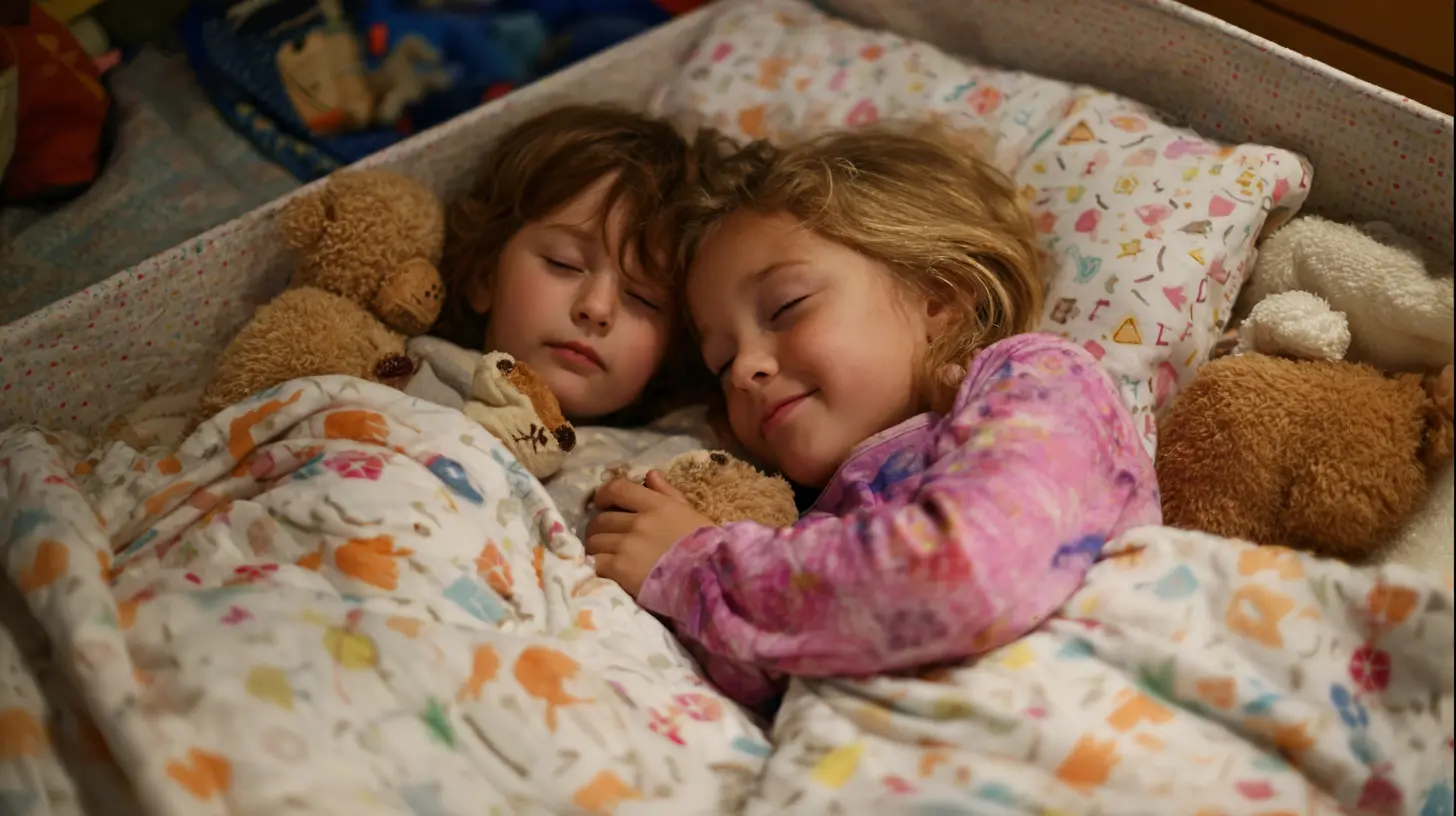
Let your child help pack their bag. Include a comfort item, even if they have outgrown it at home. A favorite stuffed animal or blanket can be a lifeline in an unfamiliar setting. Pack a change of clothes, pajamas, a toothbrush, and anything else they need for their routine.Write down your phone number on a small card and put it in their bag. Do not assume your child has memorized it.
The Drop-Off
The drop-off is often harder for the parent than for the child. Keep it brief. A long, emotional goodbye can communicate to your child that there is something to be worried about. A confident, warm send-off says the opposite.Give a specific time you will return. "I will be here after breakfast, around nine o'clock." This gives your child a concrete endpoint to hold onto.
If your child clings or cries, do not panic. This is common and usually passes within minutes of your departure. If you are worried, you can text the host parent after an hour to check in. Most parents are happy to send a quick update.
When Your Child Calls Wanting to Come Home
This is one of the most common scenarios, and it is worth deciding in advance how you will handle it.If your child calls and asks to come home, your first instinct may be to rush over immediately. Sometimes that is the right call. If your child is genuinely distressed, sick, or unsafe, go get them without hesitation or guilt.
But if your child is simply having a moment of missing you, a brief conversation can often turn things around. Ask what is happening. Remind them that it is okay to feel a little sad and that you are proud of them for trying. Suggest they talk to the host parent or rejoin the activity. Sometimes a child just needs to hear your voice to feel steady again.
Do not frame coming home as failure. If your child does end up coming home early, treat it as information, not a verdict. Some children need a few attempts before they are comfortable. Others simply are not ready yet, and that is fine too.
The Pickup and Debrief
When you pick up your child, resist the urge to interrogate them in the car. Let them tell you what they want to tell you. You can ask open-ended questions later, like "What was the best part?" or "What was different from what you expected?"Watch for signs of how it went. Did your child sleep well? Are they eager to do it again, or hesitant? Do they seem withdrawn or unusually clingy? These are clues about whether the experience was positive or whether it needs more time before the next attempt.
Check in with the host parent too. They can often give you a clearer picture of how the night actually went, including any moments your child might not mention.
Common Mistakes Parents Make
The most common mistake is treating the first sleepover as a test your child either passes or fails. It is neither. It is an experience, and like all experiences, it provides information.Another mistake is letting your own anxiety dictate the tone. If you are nervous, your child will pick up on it. That does not mean you have to pretend to be completely relaxed. It means managing your own emotions so they do not become your child's burden.
A third mistake is failing to prepare the host family. Give them your phone number, tell them about any allergies or medical conditions, and let them know if your child has any specific fears or habits. The more they know, the better they can care for your child.
Finally, do not compare your child's readiness to anyone else's. Some children are ready at six. Some are not ready until twelve. The timeline is individual, and there is no benefit to rushing it.
When to Say No
Sometimes the answer is no, and that is okay.Say no if you do not know the family well enough to feel comfortable. Say no if your child is not ready. Say no if there will be unsupervised older children, unsecured firearms, or other conditions you cannot accept. Say no if your instincts are telling you something is off, even if you cannot articulate why.
You do not owe anyone an elaborate explanation. "We are not ready for sleepovers yet" is a complete sentence.
Building Toward Success
The first sleepover is rarely the best one. It is often a learning experience for everyone involved. Your child learns what it feels like to sleep somewhere else. You learn what your child needs to feel secure. The host family learns how to support your child.If the first attempt does not go smoothly, that does not mean sleepovers are off the table forever. It means you have more information now. Maybe your child needs a shorter visit first. Maybe they need a comfort item they did not have. Maybe they need to be a little older.
The goal is not to get through the first sleepover. The goal is to help your child build the confidence and skills to handle being away from home, one step at a time. That is a process, not an event, and it unfolds at its own pace.
Trust that pace. Trust your child. Trust yourself.
all images in this post were generated using AI tools
Category:
Parenting MilestonesAuthor:

Max Shaffer