When Sibling Competition Turns Toxic and What to Do
29 November 2026
Every parent of more than one child knows the scene. Two kids, one remote control, and suddenly you are not a parent anymore. You are a referee, a hostage negotiator, and a damage control specialist, all before breakfast.
Sibling rivalry is normal. It is also, in small doses, useful. Kids learn to negotiate, to lose gracefully (eventually), and to share space with someone who has very different opinions about everything. But there is a line between healthy competition and something that quietly corrodes a child's sense of safety at home. That line is easier to cross than most parents realize, and it rarely announces itself with a loud crash. More often it shows up as a kid who stops trying, a kid who stops talking, or a household where every board game ends in tears.
This article is about that line. How to spot it, why it matters, and what actually works when sibling competition stops being fun and starts being harmful.
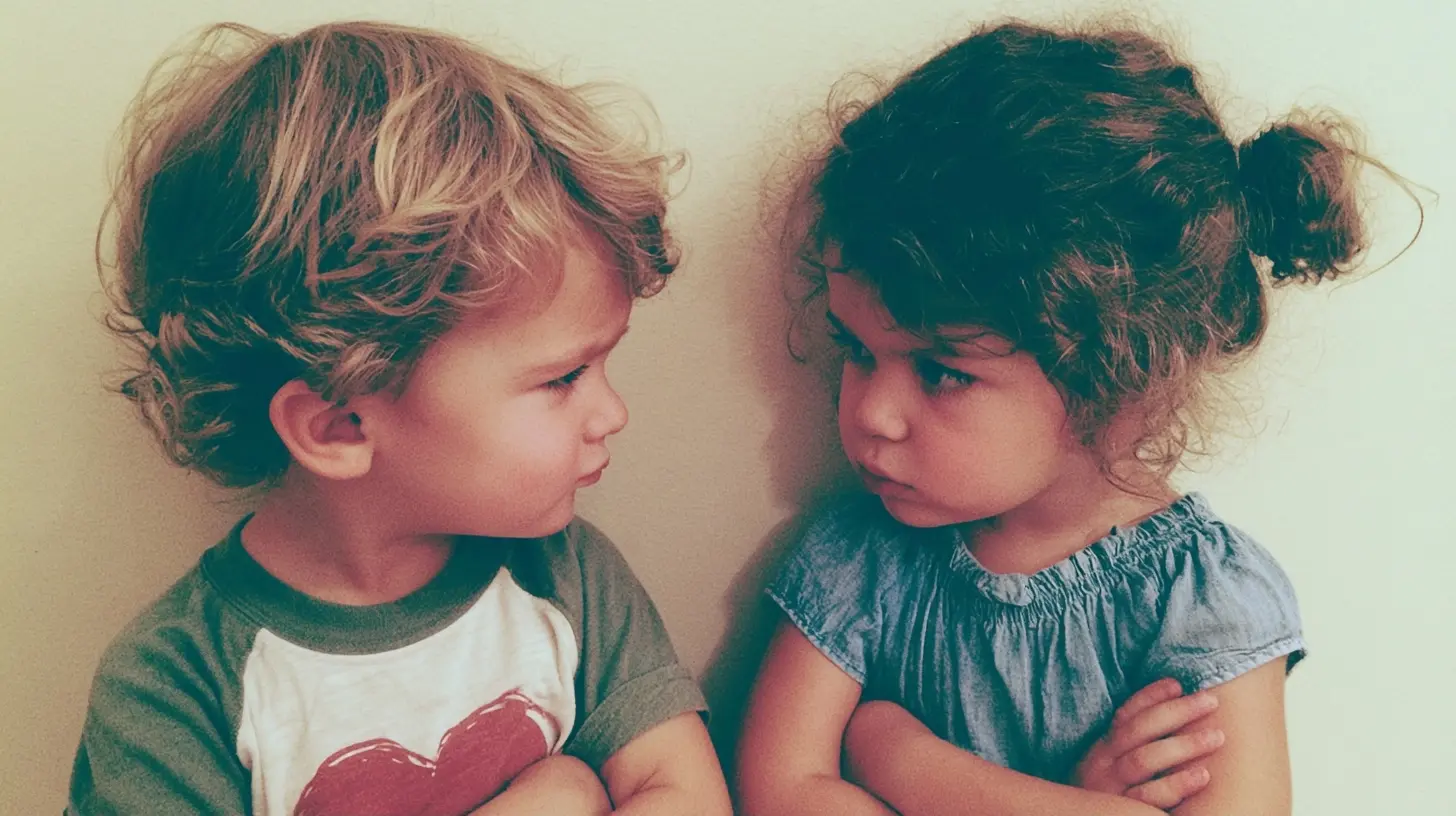
What Healthy Sibling Competition Looks Like
Before we talk about the toxic version, it helps to be clear about the normal version, because a lot of parents panic over behavior that is developmentally appropriate.Healthy competition has a few recognizable features:
- It is situational. Kids compete over a toy, a seat in the car, or who gets to press the elevator button. Once the moment passes, the conflict fades.
- It is roughly balanced. The same child does not lose every single time, and no child is always the aggressor.
- It leaves room for repair. Kids might yell, storm off, and then be playing together twenty minutes later. The relationship recovers on its own.
- It happens between kids, not around them. Children are competing with each other, not performing for a parent's approval in a way that feels desperate.
If your kids squabble over the front seat and then move on, you do not have a problem. You have children. Congratulations.

How Sibling Competition Turns Toxic
Toxic competition is different in kind, not just in volume. It stops being a game and becomes a structure. One child consistently needs to win to feel okay. Another consistently feels like the loser, and starts to believe it. The competition stops being about the remote control and starts being about identity.Here is what that looks like in practice.
The scoreboard never resets
In healthy rivalry, yesterday's loss does not carry into today. In toxic rivalry, everything accumulates. Who got the bigger slice of cake last week. Who was praised for their report card. Who got new shoes first. The child keeps a mental ledger, and the ledger is always unbalanced in their favor or always unbalanced against them. Either way, it is exhausting.Winning stops being fun and starts being necessary
Watch a child who has crossed the line. They do not look happy when they win. They look relieved. That is a key difference. Joy is replaced by tension, and the win is less a celebration than a temporary escape from the fear of losing.One child starts shrinking
This is the quiet sign that parents miss. The more dominant child does not have to be loud or aggressive. They simply have to be consistently better, faster, or more rewarded. The other child starts opting out. They stop playing the game. They stop trying out for the team. They stop showing their artwork. Shrinking is not always a dramatic withdrawal. Sometimes it looks like a kid who is "just not that into" things they used to love.The relationship becomes transactional
Siblings who are locked in toxic competition stop doing things for each other without a reason. Kindness becomes leverage. "I'll let you use my charger if you tell Mom I didn't do it." The relationship starts to look less like siblings and more like business rivals who happen to share a bathroom.Parents get recruited
This is the part that makes toxic competition so hard to fix. The kids start pulling parents into the fight, and parents, often without realizing it, pick sides. One child becomes "the easy one." Another becomes "the difficult one." Those labels stick, and they feed the exact dynamic you are trying to break.
Why It Happens: The Underlying Mechanics
Understanding the why matters, because the wrong fix often makes things worse. Toxic sibling competition is rarely about the kids being bad or the parents being incompetent. It is usually about one or more of the following.Uneven comparison
Children are exquisitely sensitive to comparison, even when parents think they are being fair. If one child is consistently praised for achievement and the other for effort, that sounds balanced to an adult. To a child, it can feel like a ranking. "She is the smart one, I am the trying one" is a story a child will carry for years.Scarcity of attention
Competition intensifies when a child feels that attention is finite. If one child needs more support, whether due to temperament, health, or school struggles, the other child may start competing for a share of the spotlight. This is not manipulation. It is a child doing math with the emotional tools they have.Identity fusion
Some kids build their identity around being the winner, the funny one, the responsible one, or the rebel. Once that identity is set, losing feels like losing themselves. A child who has decided they are "the athletic one" will fight hard against a sibling who suddenly gets good at sports, because the competition is no longer about the sport.Modeled behavior
Kids who see competition framed as a measure of worth, whether at home, in extended family dynamics, or in how parents talk about their own siblings, will replicate it. If you regularly compare your kids to cousins, neighbors, or each other, even casually, they will learn that comparison is the currency of belonging.Temperament mismatch
Two easygoing kids rarely produce toxic competition. Two intense kids often do. So does one intense child paired with one sensitive child, or one competitive child paired with one who avoids conflict at all costs. The mismatch is not a flaw. It is a design challenge.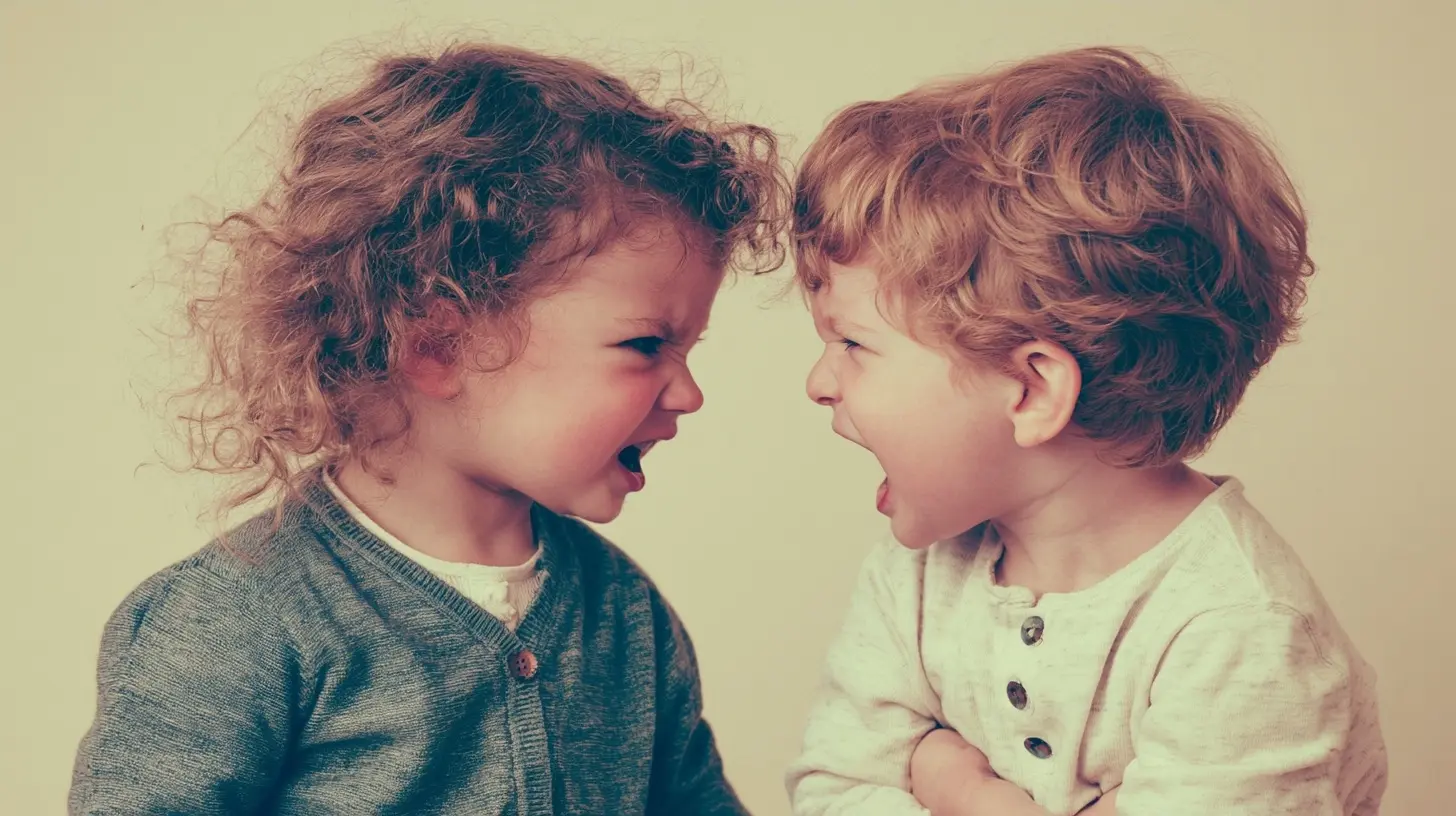
The Real Costs of Letting It Run
Parents sometimes assume that sibling competition, even the ugly kind, is just part of growing up and will sort itself out. Sometimes it does. Often it does not, and the costs show up in ways that are easy to miss.- Anxiety and perfectionism. A child who has learned that losing is unacceptable at home will often carry that into school, sports, and friendships. The stakes feel higher than they are.
- Low self-worth in the "losing" child. Repeatedly coming up short against a sibling, especially when parents do not intervene, can harden into a belief that they are simply less capable.
- Erosion of the sibling bond. Siblings who spend childhood as rivals often become adults who are polite, distant, and relieved to see each other twice a year. That is a real loss, and it is hard to reverse later.
- Household tension. A home where every game, meal, and car ride is a potential flashpoint is a home where nobody relaxes. That affects everyone, including the parents.
- Sibling bullying. Toxic competition can slide into bullying, especially when one child has a consistent power advantage in age, size, or social skill. Parents often dismiss this as "just sibling stuff," which leaves the targeted child without protection.
How to Tell the Difference: A Practical Checklist
If you are unsure whether your household has crossed the line, run through these questions honestly:1. Does one child consistently avoid activities they might lose at, even ones they used to enjoy?
2. Does the "winner" seem tense or anxious rather than happy after a win?
3. Do conflicts end with repair, or do they leave a residue that lasts for days?
4. Is one child routinely cast as the problem, the victim, or the favorite, either by you or by the other sibling?
5. Do your kids compete for your attention in ways that feel performative rather than genuine?
6. Does one child hide achievements or downplay them to avoid triggering the other?
7. Do you find yourself keeping score, or refereeing every interaction?
A yes to one or two is not a crisis. A yes to several, especially over time, is a signal to change course.
What Actually Works: Strategies That Hold Up
The good news is that toxic sibling competition is highly responsive to changes in the family system, and most of those changes are within a parent's control. Here is what tends to work, and why.Stop refereeing, start coaching
Parents often jump into the middle of conflicts to declare a winner and a loser, or to distribute blame. This feels fair in the moment but reinforces the idea that every conflict needs a verdict. Instead, shift to a coaching role. Name the dynamic, not the villain. "It looks like you two are both trying to be the one who decides the game. That is going to keep ending badly. What is another way to handle it?"This works because it moves the focus from who is right to how the relationship functions. It also removes the parent as the prize, which is often the real thing being competed for.
Separate the child from the label
If you have ever said, even in passing, "She is my little perfectionist" or "He is the competitive one," you have handed that child a script. Kids live into labels. The fix is not to deny the trait but to stop making it the child's identity. "You really like to win" is a description of a behavior. "You are my competitive one" is a role. Roles get defended. Behaviors can change.Make winning less emotionally expensive
This sounds counterintuitive, but many toxic competitions are fueled by the fear of losing, not the love of winning. If losing at home is treated as a catastrophe, kids will fight harder to avoid it. Parents can lower the temperature by modeling how to lose well. Play games with your kids and lose sometimes, visibly and cheerfully. Say "I wanted to win, and I did not, and that is okay" out loud. Kids learn more from watching a parent lose gracefully than from a hundred lectures about sportsmanship.Reduce the comparison, not the praise
Some parents, worried about competition, swing to the opposite extreme and stop praising achievement altogether. That does not work either. Kids need recognition. The goal is to praise in a way that is specific, internal, and not comparative. "You worked really hard on that project and you are proud of it" lands differently than "You are so much better at math than your brother."The first sentence is about the child and their effort. The second is a ranking. Rankings create rivals. Specific praise creates confidence.
Create separate lanes
Not every activity needs to be shared. If two siblings are both intensely competitive about the same thing, whether it is a sport, a subject, or a video game, consider giving them separate arenas. One plays soccer, the other swims. One does debate, the other does robotics. This is not avoidance. It is a deliberate reduction of head-to-head pressure, and it gives each child a place to feel competent without a built-in rival.This strategy has trade-offs. Separate lanes can reduce shared family time, and some kids genuinely enjoy competing with a sibling in the same field. The key is to ask whether the shared activity is building the relationship or feeding the rivalry. If it is feeding it, separation is not surrender. It is strategy.
Address the power imbalance, not just the behavior
If one child is consistently dominating, whether through age, size, or social skill, the answer is not to tell the other child to be tougher. It is to adjust the conditions. That might mean changing the rules of a game, separating them during heated moments, or giving the younger or less dominant child a genuine voice in family decisions. Power imbalances do not fix themselves through lectures. They need structural adjustment.Protect the targeted child
If one child is routinely on the receiving end of teasing, exclusion, or physical aggression, that is not competition. That is a safety issue. Parents need to name it clearly, set firm limits, and make sure the targeted child knows they will be protected. "Siblings fight" is not a pass for one child to be someone's punching bag. If the behavior is persistent and severe, it may be worth talking to a school counselor or family therapist, not because something is broken beyond repair, but because some patterns need outside help to shift.Rebuild the relationship deliberately
Competition thrives in a vacuum where siblings only interact in high-stakes moments. It weakens when siblings have a bank of positive shared experiences. That means creating low-stakes, cooperative time. Cooking together. Building something. Playing a cooperative board game where everyone wins or loses as a team. The goal is to build a reservoir of good will that can absorb the friction of competition.This is not a quick fix. It is a slow rebuild, and it works because it changes the baseline. Siblings who have fun together most of the time can survive losing to each other some of the time.
Common Mistakes Parents Make
Even well-intentioned parents make moves that accidentally feed the dynamic. Here are the most common ones.Treating fairness as identical treatment. Kids do not need identical treatment. They need to feel seen. Giving each child exactly the same thing, the same attention, the same praise, often results in nobody feeling seen. Fairness is about meeting needs, not matching quantities.
Forcing apologies. A forced "sorry" is a performance. It teaches kids to say the right words without meaning them, and it often makes the targeted child feel worse, not better. Better to focus on repair: what happened, how did it affect the other person, and what will you do differently next time.
Rewarding the winner. If the household subtly rewards winning with attention, praise, or status, competition will intensify. Watch for the small ways this happens, like the child who wins a game getting to choose dinner, or the child with better grades getting more airtime in family conversations.
Dismissing the quiet child. The loud, competitive child gets attention. The quiet, withdrawing child often gets overlooked because they are not causing problems. That quiet child is often the one paying the highest price.
Assuming age solves it. "They will grow out of it" is sometimes true and sometimes a way of avoiding a problem that will follow the kids into adulthood. If the pattern has been stable for years, time alone is not the fix.
When to Bring In Outside Help
Most toxic sibling competition can be addressed at home with consistent effort. But there are situations where professional support is the right call:- The dynamic involves physical aggression or fear.
- One child is showing signs of anxiety, depression, or significant withdrawal.
- The competition is tied to a larger family pattern, such as a parent's own unresolved sibling history.
- You have tried the strategies above consistently for several months without meaningful change.
A family therapist or child counselor is not a sign that you have failed. It is a sign that you are taking the dynamic seriously, which is exactly what a good parent does.
A Final Word
Sibling competition is not the enemy. It is a normal part of growing up with another person who shares your space, your parents, and your history. The goal is not to eliminate it. The goal is to keep it in a range where it builds skills instead of eroding self-worth.That means paying attention to the signs, resisting the urge to referee every conflict, reducing comparison, protecting the child who is shrinking, and building enough shared positive experience that the relationship can survive the losses. It is not glamorous work. It is mostly small, consistent adjustments. But those adjustments are what separate siblings who grow up as rivals from siblings who grow up as allies.
And if you are reading this because you are worried, that worry is itself a good sign. Parents who do not care do not notice. You noticed. Now you can do something about it.
all images in this post were generated using AI tools
Category:
Sibling RelationshipsAuthor:

Max Shaffer