Teaching Cultural Empathy to the Next Generation
18 August 2026
Cultural empathy is not a soft skill. It is a survival skill. In a world where a single social media post can cross borders in seconds, where classrooms hold children from a dozen language backgrounds, and where remote teams work across time zones, the ability to genuinely understand another person's cultural reality is as practical as reading or arithmetic. Yet most parenting advice on this topic stays stuck at the level of "celebrate diversity" and "try new foods." That is not empathy. That is tourism.
This article walks through what cultural empathy actually means, why it matters more than tolerance or awareness, and how you can build it into your child's daily life without turning your home into a lecture hall.

What Cultural Empathy Is (and What It Is Not)
Cultural empathy is the capacity to recognize that another person's thoughts, feelings, and behaviors make sense within their cultural framework, even when that framework differs sharply from your own. It does not require agreement. It does not require abandoning your own values. It requires a willingness to temporarily set aside your own lens and look through theirs.Many parents confuse cultural empathy with cultural awareness. Awareness is knowing that Diwali exists or that some cultures avoid eye contact. Empathy is understanding what it feels like for a child who celebrates Diwali to sit in a classroom where no one else does. Awareness is informational. Empathy is emotional and relational.
Tolerance is another false substitute. Tolerance says, "I will put up with your difference." Empathy says, "Your difference makes sense to me because I understand where it comes from." Tolerance is passive. Empathy is active. A child who merely tolerates a classmate's accent will not defend that classmate against a bully. A child with cultural empathy will.
The distinction matters because parents often feel they have done their job by exposing kids to cultural facts. Exposure without emotional engagement can even backfire. A child might learn about Ramadan as a calendar fact and still mock a fasting classmate for being tired. The fact did not translate into feeling.

Why Empathy Must Be Taught, Not Caught
Some children seem naturally empathetic. They notice when a friend is sad, and they respond. But cultural empathy is different from general empathy because it requires knowledge, imagination, and practice. A child can be highly empathetic toward a friend who lost a dog and completely indifferent to a new student who speaks with an accent. The emotional machinery is there. The cultural bridge is missing.General empathy is partly innate. Cultural empathy is learned. It depends on exposure, modeling, and explicit conversation. If you do not teach it, your child will absorb the cultural attitudes of their peers, media, and extended family, for better or worse. That is a gamble you do not need to take.
The best time to start is early, but it is never too late. A three-year-old can learn that a friend eats with hands at home and that is okay. A teenager can unlearn a stereotype if you give them a reason to question it. The methods differ by age, but the underlying principle stays the same: empathy grows when a child repeatedly practices seeing from another's perspective.
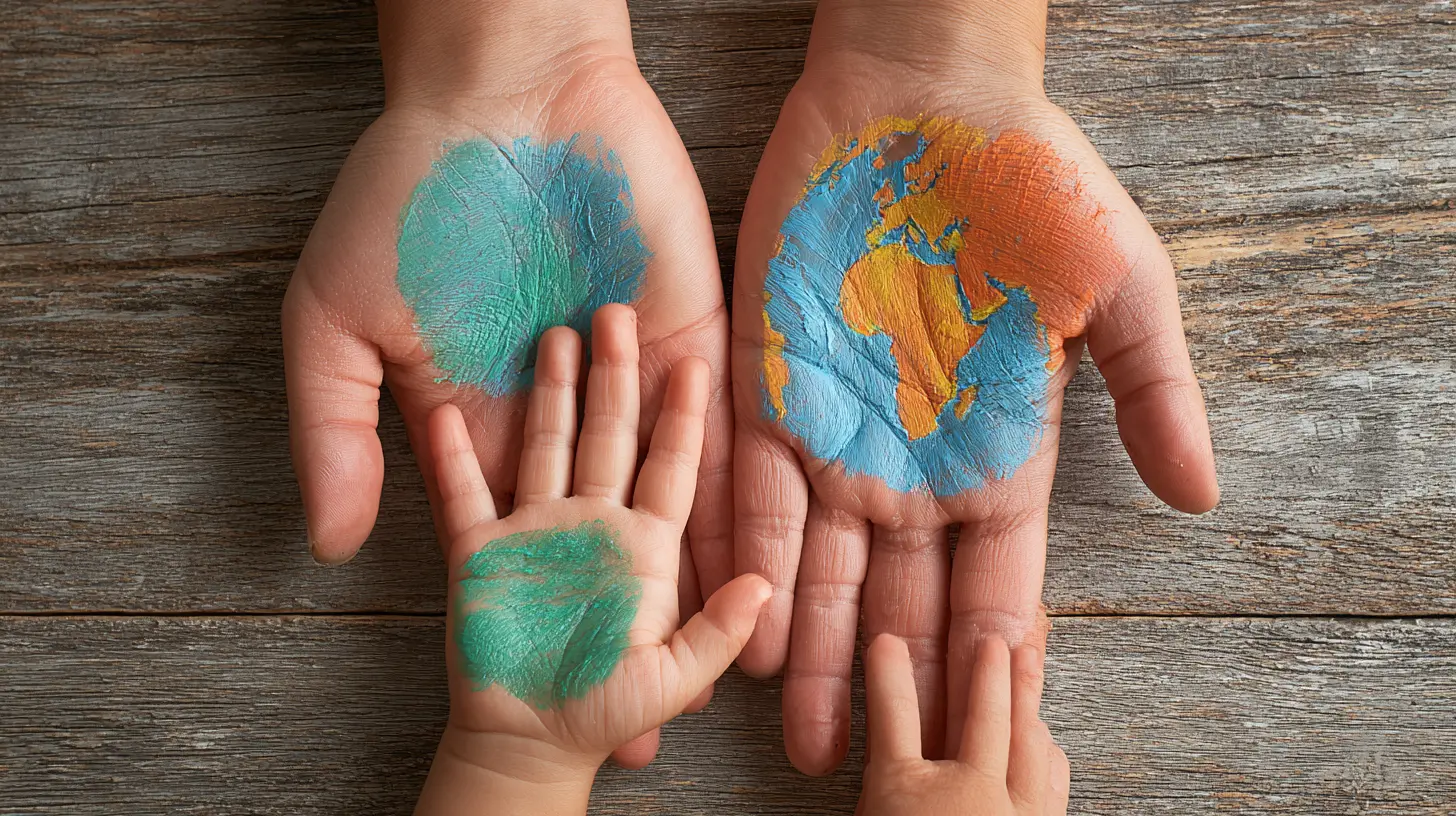
The Role of Your Own Cultural Baggage
Before you can teach cultural empathy, you need to look at your own assumptions. Every parent carries a cultural lens, often invisible. You have ideas about respect, discipline, food, time, gender, and success that feel natural to you. They are not natural. They are inherited.If you believe that children should look adults in the eye when speaking, you may interpret a child who looks down as disrespectful. In many East Asian and Indigenous cultures, looking down is a sign of respect. If you do not know that, you will misread the child, and your own child will learn your misreading.
Take an inventory of your own reactions. When you see a mother feeding her toddler with her hands, what do you feel? When a father lets his son wear a dress to school, what is your first thought? These reactions are data. They show you where your own cultural boundaries sit. You do not have to erase those boundaries, but you must recognize them so you do not pass them on as universal truth.
A practical exercise: write down five things you believe about "good parenting." Then ask yourself where those beliefs come from. Were they modeled by your parents? Are they shaped by your religion, your social class, your region? Could a reasonable person from another culture disagree without being wrong? If you can answer yes to that last question, you have found a place where cultural empathy can begin.
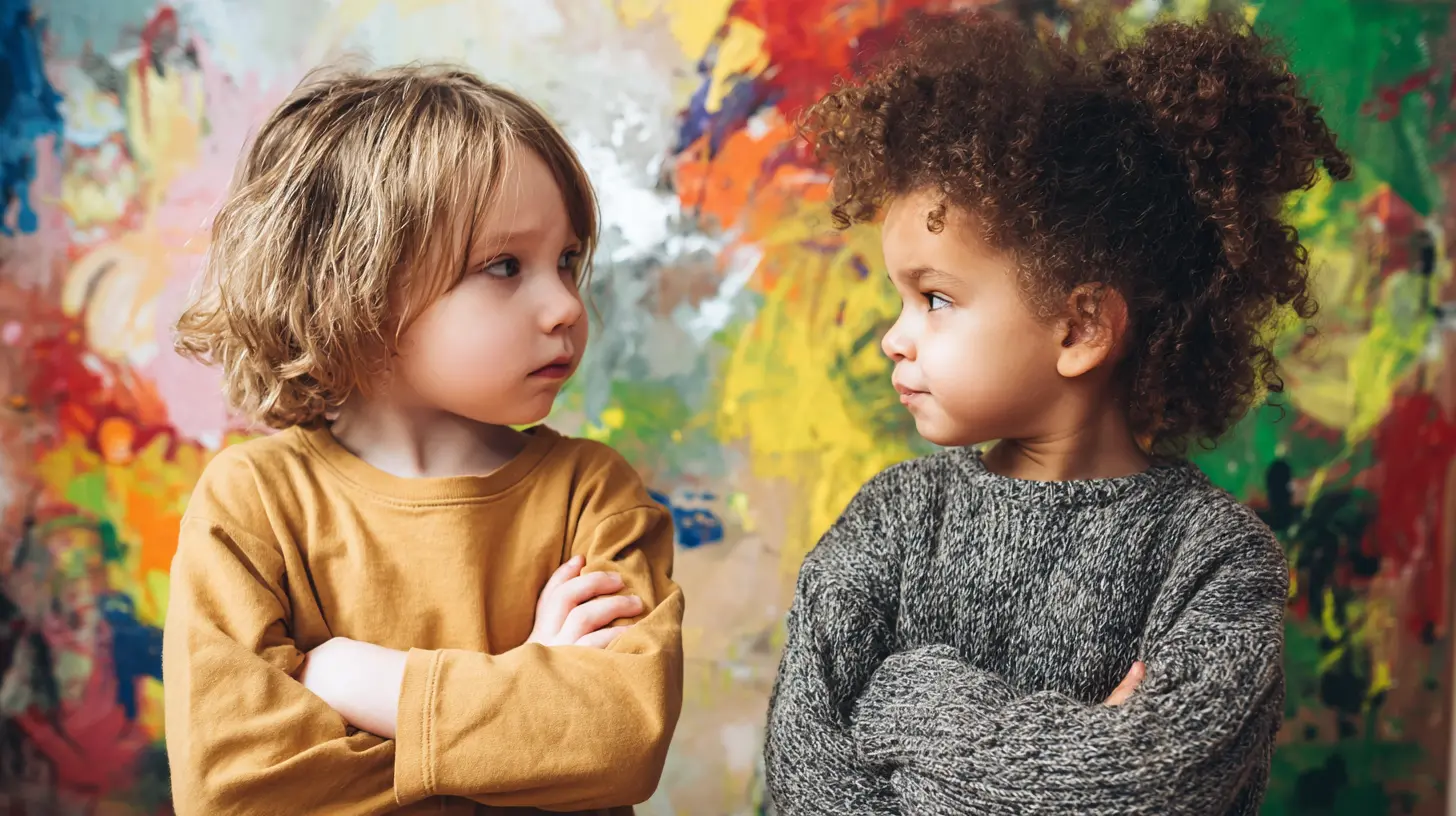
Everyday Practices for Young Children (Ages 3 to 7)
At this age, children are egocentric by nature. That is normal development, not selfishness. They assume their way is the only way because they have not yet built the mental capacity to imagine alternative realities. Your job is to gently expand that capacity.Start with Concrete, Tangible Differences
Do not lecture a five-year-old about systemic inequality. Instead, focus on visible, everyday practices. Talk about how some families eat with chopsticks, some with forks, some with hands. Talk about how some children have two homes, some live with grandparents, some have parents who do not speak the same language. Keep it factual and neutral.When you encounter a difference in a book or a show, pause and ask, "Why do you think they do it that way?" Let your child guess. Then offer a simple explanation. The goal is not to teach every culture's customs. The goal is to build the habit of asking why before judging.
Use Play as a Training Ground
Pretend play is one of the most powerful empathy tools you have. When your child pretends to be a doctor, a parent, or a dog, they are practicing perspective taking. You can extend this to cultural scenarios. Set up a pretend tea party where the guests have different rules. One guest slurps their tea. One guest does not. One guest sits on the floor. Ask your child how each guest might feel if someone told them they were doing it wrong.This sounds simple, but it does real work. It teaches that rules are contextual, not absolute. It also gives your child practice in holding multiple realities in their head at once, which is the core of empathy.
Watch Your Language
Children absorb your vocabulary. If you describe a neighbor's food as "weird" or "smelly," your child will too. Instead, use descriptive language. Say "strong smell" or "different texture." If you do not like a food, say "It is not for me" rather than "It is gross." This small shift teaches that taste is personal, not universal.Also avoid framing differences as exotic. Saying "How cool that they eat such interesting food!" still positions the other culture as outside the norm. Aim for matter-of-fact acceptance. "They eat rice for breakfast. We eat oatmeal. Both are fine."
Building Cultural Empathy in Middle Childhood (Ages 8 to 12)
This is the sweet spot. Children at this age can handle complexity, they are forming their own moral compass, and they are highly influenced by peer norms. You have a window of about four years to shape how they interpret cultural difference before adolescence makes everything harder.Move Beyond Holidays and Food
Schools often celebrate cultural diversity through festivals, food, and traditional clothing. These are fun, but they can reduce a culture to a costume. At home, you can go deeper. Talk about how a culture's history shapes its present. Why do some families place high value on education? Why do some cultures emphasize collective decision making over individual choice? These conversations do not require a curriculum. They can happen during dinner or car rides.Use current events as entry points, but keep them age appropriate. If a news story involves refugees, talk about what it might feel like to leave your home with one suitcase. If a story involves a cultural conflict, ask your child what each side might be feeling. You do not need to resolve global issues. You need to practice the muscle of seeing multiple sides.
Encourage Cross-Cultural Friendships
The single most effective way to build cultural empathy is sustained, positive contact with people from different backgrounds. A playdate is better than a textbook. A shared hobby is better than a classroom lesson.If your child's school is not diverse, create opportunities elsewhere. Sports teams, music lessons, community centers, and religious or secular youth groups often bring together families from different backgrounds. Invite a classmate over even if their family speaks a different language. You do not need a common tongue for children to play. They will find a way.
Be prepared for awkwardness. Your child might ask a guest, "Why is your skin brown?" That is not racism. It is curiosity. Do not shush them. Instead, say, "People have different amounts of melanin in their skin, just like they have different hair colors. It is one of the many ways humans are different." Then move on. The guest's parent will likely understand.
Address Stereotypes Directly
By age eight or nine, children have absorbed stereotypes from media, jokes, and peers. They may not voice them, but they hold them. Ask your child what they have heard about a particular group. Then break it down. Ask, "Do you think every person in that group is like that?" and "What would happen if someone judged you based on one thing they heard about your family?"This is uncomfortable work, but it is necessary. A stereotype that goes unchallenged hardens into prejudice. You do not need to deliver a lecture. You need to ask questions that make your child examine their own assumptions.
Navigating the Teen Years (Ages 13 to 18)
Adolescence is where cultural empathy gets tested. Teens are hyperaware of social belonging. They fear standing out, and they often use cultural differences as markers of who is "in" and who is "out." Your role shifts from teacher to coach. You cannot force empathy on a teenager, but you can create conditions where it grows.Respect Their Identity Exploration
Teens are figuring out who they are, including their cultural identity. If your family is from a minority background, your teen may struggle with feeling "too different" or "not different enough." If your family is from the majority culture, your teen may feel guilty about privilege or confused about how to engage with other cultures without being performative.Listen more than you talk. Do not rush to solve their feelings. Ask questions like, "What makes you say that?" and "How did that experience feel?" Your goal is not to provide answers. It is to help them think clearly.
Use Media Critically
Teens consume a massive amount of media, much of it depicting other cultures in distorted ways. Movie villains often have foreign accents. News stories often frame immigrants as threats. Reality shows often mock traditional practices for laughs.Watch shows or movies with your teen and ask questions. "How are the characters from this culture portrayed?" "Who is the hero and who is the villain?" "What would this story look like if it were told from the other side?" This builds critical thinking, which is a prerequisite for empathy. You cannot empathize with a caricature.
Encourage Travel and Exchange, But Do Not Romanticize It
Travel is valuable, but only if it is done with humility. A family vacation to a resort in Mexico does not build cultural empathy. It builds a tan. Service trips can be even worse if they position local people as needy recipients of your charity.If you have the means, consider longer stays, homestays, or exchange programs. If you do not, find local ways to engage with immigrant communities, refugee support organizations, or cultural centers. The key is reciprocity. Your family should be learning as much as giving.
Before any travel, talk about what your family will not know. Model curiosity. Say, "I do not know the right way to greet people there. Let us find out together." That humility is the heart of cultural empathy.
Common Mistakes Parents Make
Even well-intentioned parents make errors. Here are the most common ones, and how to avoid them.Mistake One: Treating Culture as a Monolith
Saying "In Japan, people are polite" or "In Mexico, families are close" flattens millions of individuals into a single trait. It is a stereotype, even if it is a positive one. Instead, teach your child that culture is a set of tendencies, not a rulebook. Individuals vary within every culture.Mistake Two: Forcing Guilt
Telling a white suburban child that they are "privileged" and should feel bad about it does not create empathy. It creates defensiveness. Instead, help them notice differences without judgment. You can say, "Not every child has a bedroom of their own. Some families share rooms. That does not make either way right or wrong. It just means people have different lives." Guilt shuts down empathy. Curiosity opens it.Mistake Three: Avoiding Difficult Topics
Parents often avoid talking about race, class, religion, or politics because they fear saying the wrong thing. But silence teaches more than you think. A child who hears nothing about race learns that race is taboo. A child who hears nothing about poverty learns that poor people are invisible.You do not need perfect words. You need honest words. If you do not know something, say so. If you are uncomfortable, say that too. Your child will respect your effort more than your polish.
Mistake Four: Expecting Empathy to Be Natural
Some parents assume that if they are good people, their children will be empathetic. That is like assuming that if you are a good swimmer, your child will swim without lessons. Empathy is a skill. It requires practice, feedback, and repetition.
The Trade-Offs and Tensions You Will Face
Teaching cultural empathy is not without cost. It can create friction with extended family. A grandparent may hold outdated views. A neighbor may mock your family for being "too woke." Your child may come home confused or upset after a conversation about inequality.You will also face the tension between protecting your child and exposing them to harsh realities. There is no perfect balance. A child who never learns about injustice will be unprepared for the real world. A child who learns too much too young may feel overwhelmed or hopeless.
The best approach is gradual and developmentally appropriate. Start with small, concrete differences. Build up to structural issues as your child matures. Always end difficult conversations with a sense of agency. Ask, "What can we do about this?" even if the answer is small.
Another tension is between cultural empathy and cultural critique. You want your child to understand why a practice exists in a culture, but you may also believe that practice is harmful. For example, you might empathize with a culture that discourages women from working while also believing that is unjust. Empathy does not require approval. It requires understanding. You can say, "I understand why this rule made sense in their history, and I still think it is unfair. Both things can be true."
A Practical Framework for Everyday Life
If you want a simple system to follow, try this four-step approach. Use it whenever a cultural difference comes up, whether in a book, a conversation, or real life.First, notice. Point out the difference without judgment. "I see that her family speaks Spanish at home."
Second, wonder. Ask a question. "I wonder what that is like for her when she is at school."
Third, imagine. Help your child imagine the other person's experience. "How would you feel if you could only speak your home language for part of the day?"
Fourth, connect. Find a common thread. "Everyone wants to be understood, right?"
This framework works because it moves from observation to empathy without forcing a conclusion. You are not telling your child what to think. You are showing them how to think.
What Success Looks Like
Do not expect a single dramatic moment where your child declares they now understand all cultures. Empathy is incremental. Success looks like your child noticing when a classmate is left out because of their background. It looks like them asking questions instead of making jokes. It looks like them defending a friend whose culture they do not fully understand, not because they know everything, but because they know that understanding matters.It also looks like them making mistakes. Your child will say something insensitive. They will laugh at a joke they should not. They will assume something based on a movie. That is not failure. That is practice. What matters is how you respond. Correct gently, explain why, and move on. Shame does not teach. It only teaches hiding.
The Long Game
Cultural empathy is not a lesson you teach once. It is a habit you build over years. It is the way you talk about the news, the way you treat the cashier, the way you respond when your child brings home a friend from a different background. Your children are watching you more than they are listening to you. If you treat people with genuine curiosity and respect, they will learn that. If you use polite words but show discomfort in your body language, they will learn that too.The world your children will inherit is more connected and more divided at the same time. They will have unprecedented access to other cultures, and they will also face unprecedented pressure to see those cultures as enemies. Cultural empathy is the only tool that lets them hold both realities without losing their humanity.
Start where you are. You do not need a plan, a curriculum, or a special trip. You need a willingness to ask questions, to sit with discomfort, and to let your children see you struggling to understand. That struggle, witnessed and shared, is the most powerful teaching you can offer.
all images in this post were generated using AI tools
Category:
Parenting And CultureAuthor:

Max Shaffer
Discussion
rate this article
1 comments
Arden McCool
Empathy starts at home; let's raise kids who embrace differences, not fear them.
August 24, 2026 at 3:02 AM