Preparing for the Work Life Shift of 2027
2 September 2026
If you are reading this, you are probably a parent who has spent the last few years juggling school runs, dinner prep, and a career that seems to shift shape every few months. The conversation around work in 2027 is not about flying cars or robot nannies. It is about something quieter but far more disruptive: the permanent restructuring of when, where, and how work gets done. And as a parent, you are not just a bystander to this shift. You are ground zero.
The year 2027 is not a magic threshold. It is a convergence point. By then, several trends that have been building since the early 2020s will have matured into standard practice. Remote work will no longer be a perk. It will be a default for many roles, but with a twist: hybrid schedules will have settled into rigid patterns that are harder to negotiate than the chaotic early days of the pandemic. Artificial intelligence will have automated not just repetitive tasks, but also first-draft writing, data analysis, and customer triage. And the four-day workweek, once a pilot program in a few European countries, will have become a serious bargaining chip in many white-collar industries.
For parents, this is both a threat and an opportunity. The threat is that your job may change faster than your employer's policies. The opportunity is that you have a chance to design your family's life around a new reality, but only if you start preparing now.

Why 2027 Is Different From 2023 or 2025
It is tempting to think that the work life shift is already here. After all, millions of people worked from home in 2024. But the difference between then and 2027 is the difference between improvisation and institutionalization.In 2023 and 2024, most companies were still figuring out what they wanted. Some mandated returns to the office, then quietly backed off when attrition spiked. Others went fully remote, then realized that mentorship and collaboration suffered. The result was a messy patchwork of policies that changed quarterly.
By 2027, that patchwork will have hardened into a set of unwritten laws. For example, many large employers will have settled on a three-day-in-office model, not because it is optimal, but because it is a compromise that no one loves and everyone accepts. The real estate leases are signed. The hybrid scheduling software is purchased. The middle managers have been trained. Changing it again would cost too much.
This matters for parents because the window for negotiating flexible arrangements is closing. If you are currently working in a job that allows you to pick your in-office days, you should not assume that flexibility will last. In 2027, the question will not be "Can I work from home on Tuesdays?" It will be "Does my team have a fixed Tuesday anchor day, and can I swap it for Thursday?"
The second major difference is the maturity of AI tools. In 2024, using AI felt optional. By 2027, it will be expected. A parent who cannot efficiently draft a project brief, summarize a meeting, or generate a first-pass budget using AI will be at a serious disadvantage. This is not about being replaced by machines. It is about being outpaced by colleagues who use machines well.

The Four-Day Workweek: Realistic or Fantasy?
There is a lot of talk about the four-day workweek becoming standard by 2027. The reality is more nuanced. Some industries, particularly tech, consulting, and creative fields, will see genuine adoption. Others, like healthcare, retail, and manufacturing, will not. The reason is not stubbornness. It is the nature of the work.For a parent, the four-day workweek is not just about having an extra day off. It is about the quality of that day. A true four-day week means you compress forty hours into four days, which often means longer hours on those days. That can be brutal for parents of young children, because the school pickup time does not move.
There is a different version, though, that is gaining traction: the reduced-hours model. Instead of working four ten-hour days, some companies are experimenting with four eight-hour days and a 20 percent pay cut, or five days with Friday afternoons off. This is more family-friendly, but it comes with a trade-off. Your career progression may slow, because you are visibly working less than your peers.
Before you push for a four-day arrangement in 2027, ask yourself what you actually need. If you need a day for appointments, school events, and errands, a compressed week might work. If you need to reduce stress, a shorter week with a pay cut might be better. If you just want more time with your kids, consider whether that time will be quality time or just more hours of everyone being tired.

The Hidden Cost of Flexibility
One of the biggest misconceptions about the 2027 work shift is that flexibility equals freedom. It does not. Flexibility often means that work bleeds into every part of your day, and you are expected to be available at odd hours because you are not in the office.Parents who negotiated remote work in the early 2020s often found themselves working longer hours than they did in the office. The commute time was converted into more meetings. The lack of physical separation between home and work meant that they never fully switched off.
By 2027, this will have become a formalized problem. Many employers will have implemented "core hours" or "async communication windows" to address burnout. But these policies are only as good as the culture that supports them. If your manager sends emails at 11 p.m. and expects a response by 7 a.m., the policy is meaningless.
As a parent, you need to set boundaries that are not just about your time, but about your attention. This is harder than it sounds. When you are at home, your children will interrupt you. When you are at work, you will worry about your children. The key is to build a schedule that acknowledges both realities instead of pretending they can be separated.
What Parents Should Do in 2026
The year before the shift is your planning window. Do not wait until January 2027 to react. Here is what you should be doing now.First, audit your current job's trajectory. Look at the skills your employer is asking for in job postings, even if you are not hiring. If AI literacy is becoming a requirement for your role, start learning the specific tools your industry uses. Do not just play with ChatGPT. Learn how to write prompts that produce useful outputs for your field. Learn how to verify AI-generated content. Learn how to integrate AI into your workflow without making your work look generic.
Second, build a network outside your company. The 2027 job market will favor people who can move quickly. If your employer announces a return-to-office mandate that you cannot accommodate, you need to know where the remote-friendly jobs are. That information comes from people, not job boards.
Third, have a conversation with your partner about roles. The work life shift is not just about your job. It is about the division of labor at home. If both parents are working hybrid schedules, someone has to handle the school pickup on the days when both are in the office. If one parent has a more flexible job, that parent may need to take on more home responsibilities, even if it feels unfair.
The Childcare Puzzle in 2027
Childcare is the elephant in the room for any discussion about work and parenting. By 2027, the traditional 9-to-5 daycare model will be increasingly out of sync with work patterns. If you work compressed hours, you may need care for longer days. If you work from home, you may need care that is not just supervision, but active engagement, because you cannot focus on a meeting while your toddler is screaming.Some families will solve this with a nanny share. Others will rely on grandparents who are also working longer careers. Others will opt for hybrid schools or micro-schools that offer more flexible schedules. The problem is that all of these solutions are expensive and require significant planning.
Do not assume that your current childcare arrangement will still work in 2027. Sit down with your childcare provider and ask about their plans. Are they planning to raise rates? Are they planning to change hours? Are they planning to close? If your provider is a family member, have an honest conversation about their capacity and willingness to continue.
One practical approach is to build a backup care network. This is not just a list of babysitters. It is a group of other parents who can cover for each other in emergencies. In 2027, when work schedules are more rigid, having a reliable backup system will be more valuable than any single perk your employer offers.
The Mental Load of the Shift
Everyone talks about the logistics of work life changes, but few talk about the mental load. As a parent, you are already the default manager of the household. You remember the dentist appointments, the permission slips, the birthday gifts, and the school photo deadlines. Adding a major work transition on top of that can be overwhelming.The 2027 shift will require you to make decisions that have no perfect answer. Should you take a lower-paying job with more flexibility, or a higher-paying job with more stress? Should you step back from your career for a few years, or push forward and accept that you will miss some school events? Should you move closer to family, or stay near your job?
There is no right answer. But there is a right process. Write down your priorities. Not your ideal priorities, but your actual ones. If you say that your children's well-being is your top priority, but you are working 60 hours a week, there is a mismatch. Acknowledge that mismatch and decide whether you want to change it.
Common Mistakes Parents Make
One mistake is assuming that your employer has your best interests in mind. They do not. They have the company's interests in mind. That is not evil. It is just reality. When you negotiate for flexibility, frame it in terms of productivity and retention, not in terms of your personal needs. It is sad that you have to do this, but it works.Another mistake is waiting for the perfect job. There is no perfect job. There is only a job that fits your current season of life. In 2027, the job market will be volatile. You may need to take a step back in title or pay to get the flexibility you need. That is not a failure. It is a trade-off.
A third mistake is ignoring your own health. Parents are notorious for putting themselves last. But the work life shift of 2027 will demand more energy, not less. If you are sleep-deprived, stressed, and eating poorly, you will not handle change well. Take care of your body. It is the only tool you have.
The Role of Employers in 2027
It is easy to blame employers for the coming shift, but they are also navigating uncertainty. Many managers are parents too. They are trying to figure out how to run a team when no one is in the office on the same days.The best employers in 2027 will be those that focus on outcomes rather than hours. They will measure what you produce, not when you produce it. They will trust you to manage your schedule as long as the work gets done. They will invest in training for managers so that they know how to lead distributed teams.
If your employer is not moving in this direction, you have a choice. You can try to influence the culture from within, which is slow and often frustrating. Or you can leave. The labor market in 2027 will be tight for skilled workers, which gives you leverage. Use it.
A Realistic Timeline for Preparation
Let us break this down into actionable steps.In the next three months, take stock of your current situation. Write down your work hours, your childcare hours, and your partner's work hours. Identify the gaps and the friction points. If you are constantly missing deadlines or feeling guilty, something is off.
In the next six months, start building skills. Do not try to learn everything. Pick one area that is relevant to your job and get good at it. If you are in marketing, learn AI-driven content personalization. If you are in finance, learn automated reporting. If you are in operations, learn how to manage remote teams.
In the next nine months, have the hard conversations. Talk to your employer about their plans for 2027. Talk to your partner about the division of labor. Talk to your children, if they are old enough, about how the family schedule might change.
In the next twelve months, make a decision. You do not have to have everything figured out, but you should have a direction. Are you staying in your current job? Are you looking for a new one? Are you going to ask for a reduced schedule? Are you going to start a side business? Indecision is a decision, and it is usually the worst one.
The Emotional Side of Change
Finally, do not underestimate the emotional impact of this shift. You may feel grief for the career you thought you would have. You may feel guilt for not being more ambitious. You may feel resentment toward your partner or your employer. These feelings are normal.Talk about them. Not just to your partner, but to friends, to a therapist, or to other parents who are going through the same thing. The worst thing you can do is pretend that you are fine when you are not.
The work life shift of 2027 is not something that happens to you. It is something that you can shape, but only if you are honest about your limits and your desires. You cannot do everything. You cannot be the perfect employee and the perfect parent and the perfect partner all at once. Something has to give.
The good news is that you get to choose what gives. That is the real shift. Not the technology, not the schedules, not the policies. The shift is that more parents are realizing that they have agency. They can design a life that works for their family, even if it does not match the old templates.
Start now. Not because 2027 is coming, but because your children are growing up, and you want to be present for it. That is the only deadline that truly matters.
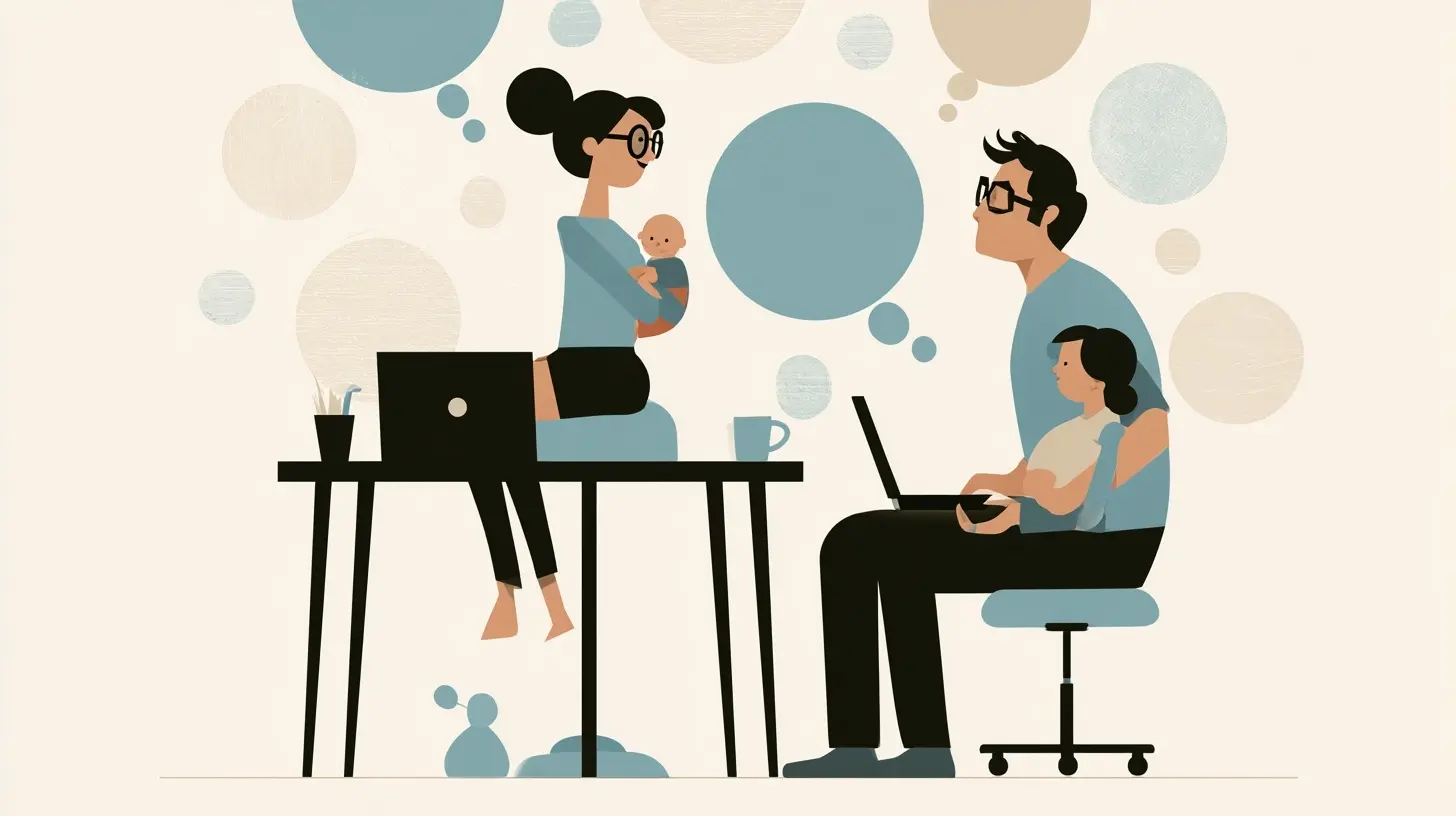
all images in this post were generated using AI tools
Category:
Work Life BalanceAuthor:

Max Shaffer
Discussion
rate this article
2 comments
Jessamine Sharp
Embrace the changes ahead; each challenge is an opportunity for growth. Equip our kids with skills for a bright future.
September 16, 2026 at 2:22 PM
Max Shaffer
Absolutely! Embracing change is essential. Let's focus on building resilience and skills for our kids to thrive in the future.
Denise McAndrews
This article hits home. As a parent, I worry about how the job market will change. It's crucial to prepare our kids with the right skills and mindset. Let's not wait until it's too late to start the conversation.
September 8, 2026 at 3:19 PM
Max Shaffer
I completely understand your concerns. Early preparation is key. Let's keep the conversation going and focus on the skills our kids will need for the future.