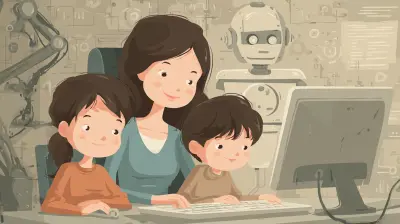
Parenting Doesn’t Have to Be Lonely: Creating Community in 2027
24 April 2026
Remember that moment? The one where you’re knee-deep in laundry, your toddler is screaming because their banana broke in half, and you haven’t had a real conversation with another adult in three days. You look at your phone, scroll through perfectly curated Instagram feeds of moms who seem to have it all together, and feel that familiar pang: Is it just me?
It’s not. And here’s the thing—parenting in 2027 doesn’t have to feel like you’re stranded on a desert island with only a sippy cup and a half-eaten pouch of organic applesauce for company. The landscape of raising kids has shifted dramatically in the last few years, and with it, the ways we connect. We’ve traded coffee shop playdates for something far more nuanced, more deliberate, and honestly, more human. Let’s talk about how to build a village when the old one feels like a ghost town.

The Loneliness Paradox: Why 2027 Feels Different
You’d think with all the tech at our fingertips, we’d be drowning in connection. But here’s the kicker: we’re more connected than ever and lonelier than ever. It’s a paradox that hits parents especially hard. In 2027, we’ve got AI assistants that remind us to schedule our kids’ dental appointments, smart home devices that monitor sleep patterns, and parenting apps that track every diaper change. Yet, when was the last time a neighbor knocked on your door just to say, “Hey, I’ve got an extra batch of cookies—want to chat?”The problem isn’t the technology; it’s how we use it. We’ve replaced deep, messy, real-life interactions with shallow, curated digital ones. Think of it like this: you can have a thousand “friends” online, but none of them will hold your baby while you take a shower. The loneliness epidemic isn’t about a lack of people—it’s about a lack of presence. And in 2027, we’re finally starting to wake up to that.

The New Village: It’s Not Your Grandma’s Playgroup
Let’s clear something up right now: creating community in 2027 doesn’t mean you need to join a PTA, host a weekly potluck, or become best friends with every parent at the playground. That’s a recipe for burnout, not belonging. The new village is flexible, digital-physical hybrid, and—most importantly—it’s built on intention rather than obligation.Micro-Communities: Small, Tight, and Real
Forget the big, sprawling Facebook groups where everyone argues about screen time. The magic in 2027 is in micro-communities. These are groups of 5 to 10 parents who share a specific, hyper-local need. Maybe it’s a “Tuesday Morning Coffee Crew” for parents with toddlers who nap at the same time. Or a “Late-Night Text Group” for those with colicky babies who’re up at 3 AM. These groups don’t need to meet in person every week—sometimes a shared WhatsApp thread where you can vent about the chaos is enough.I’ve seen this work beautifully in my own neighborhood. A friend of mine started a “Parenting Swap” group where we trade skills: one mom teaches basic sign language to babies, another offers a free yoga session, and I do a “how to meal prep without losing your mind” workshop. No membership fees, no guilt trips. Just raw, honest, reciprocal support. It’s like a potluck, but instead of casseroles, we bring patience and a listening ear.
The Digital-Physical Sync
Here’s where 2027 gets clever. We’re no longer pitting online against offline. Instead, we’re using tech to facilitate real-world connection. Think of it as a digital matchmaker for your parenting life. Apps like “Village” (yes, that’s a real thing now) let you find other parents within a 2-mile radius who have kids the same age, share your values, and are open to meeting IRL. You can filter by “gentle parenting,” “crunchy granola,” or even “surviving on coffee and sarcasm.”But here’s the rule: the app is just the handshake. The real work happens when you show up at a park bench with a thermos of tea and say, “I have no idea what I’m doing, do you?” That vulnerability—that willingness to be a hot mess together—is the glue. In 2027, we’re finally admitting that perfection is a myth, and authenticity is the only currency that matters.

Why Traditional Support Systems Fail (And What Works Instead)
Let’s be honest: a lot of the old-school parenting support structures are crumbling. Extended families are spread across states or countries. Work schedules are erratic. And the “village” we were promised often translates to a monthly “Mommy and Me” class where everyone is too busy comparing baby milestones to actually talk.So what’s the alternative? Radical hospitality. It sounds fancy, but it’s dead simple. It means opening your home—or your heart—without expecting anything in return. It’s the parent who leaves a casserole on your porch without texting first. The neighbor who offers to watch your kid for 20 minutes so you can finish a work call. The stranger at the library who quietly hands you a wipe when your toddler has a meltdown.
In 2027, we’re seeing a rise in “parenting pods.” These are small, trusted groups of families who share childcare, meals, and emotional support. Think of it as a co-op for sanity. One week, you take all the kids for a morning; the next, someone else does. It’s not transactional; it’s relational. And it works because it lowers the barrier to asking for help. You don’t have to make a big, awkward ask—it’s built into the system.

The Art of Asking for Help (Yes, It’s a Skill)
Here’s a truth bomb: most of us are terrible at asking for help. We’d rather suffer in silence than admit we’re drowning. Why? Because we’ve been sold a lie that “good parents” have it all figured out. Newsflash: they don’t. The best parents I know are the ones who say, “I’m struggling, and I need backup.”In 2027, we’re learning to reframe asking for help as an act of strength, not weakness. It’s like climbing a mountain—you wouldn’t refuse a rope just because you want to prove you can do it alone. So start small. Next time you’re at the park, say to another parent, “I’m having a rough day—can I just sit here and complain for five minutes?” You’ll be shocked how many people say, “Me too.”
The “No-Strings-Attached” Rule
One of the biggest barriers to community is the fear of indebtedness. We worry that if someone helps us, we’ll owe them something. So we decline. But in 2027, we’re shifting to a model of “unconditional support.” It’s not about keeping score. It’s about creating a culture where giving and receiving flow naturally. You help because you can, and you receive because you need to. It’s not a transaction; it’s a rhythm.I practice this in my own life. When a friend drops off a meal, I don’t immediately plan to return the favor. Instead, I pay it forward to someone else. The result? A web of support that isn’t linear but circular. It’s messy, but it’s alive.
Practical Steps to Build Your 2027 Community
Okay, let’s get down to brass tacks. You’re busy, you’re tired, and you probably have a kid attached to your leg right now. How do you actually do this? Here’s a no-BS roadmap.1. Start with One Person
Don’t try to build a village overnight. That’s like trying to bake a five-layer cake when you’ve never made a cupcake. Start with one person. Maybe it’s the parent you see every morning at drop-off. Instead of a polite nod, say, “I love that your kid always wears mismatched socks—it’s adorable.” That’s an opening. From there, it’s just a few steps to, “Hey, want to grab coffee after drop-off one day?”2. Use “Low-Friction” Gatherings
Forget elaborate playdates with homemade snacks and scheduled activities. In 2027, the best gatherings are low-friction: a 20-minute park meetup, a “walk and talk” around the block, or a virtual coffee chat where both of you have a baby on your lap. The goal isn’t to impress; it’s to connect. Lower the bar so low that it’s impossible to fail.3. Create a “Help Signal”
In my parenting pod, we have a group chat with a special emoji—a red flag. If anyone sends that emoji, it means “I need immediate backup.” It could be a sick kid, a work deadline, or just a mental health crisis. Within minutes, someone responds. It’s not a burden; it’s a lifeline. You can do this with just two or three trusted friends. The key is to normalize the signal, so no one feels guilty for using it.4. Embrace the “Third Place”
Sociologists talk about “third places”—spaces that aren’t home or work. For parents, the third place is where community happens. In 2027, these are evolving. Think community gardens, co-working spaces with childcare, or even a local bookstore that hosts a “parent happy hour” (with or without the happy). Find your third place and show up regularly. Consistency breeds familiarity, and familiarity breeds trust.5. Be the Initiator, Not the Avoider
I’ll be honest: this one is hard. It takes guts to be the person who says, “Let’s start a group.” But someone has to. Why not you? You don’t need to be an extrovert or a natural leader. You just need to be willing to send one text: “Hey, I’m trying to meet more local parents. Any interest in a casual park meetup this Saturday?” You’ll be surprised how many people are waiting for someone else to make the first move.
The Role of Technology in 2027: Friend or Foe?
Let’s address the elephant in the room: screens. Are they destroying community or enabling it? The answer is: both. It depends on how you use them.In 2027, the most effective communities are tech-supported but not tech-dependent. Use apps to coordinate, but don’t let them replace real interaction. Think of technology as the scaffolding, not the building. For example, you can use a shared calendar to plan park meetups, but the actual connection happens when you’re sitting on a blanket, watching your kids chase a bubble.
One trend I love is the “digital detox playdate.” Parents agree to put their phones in a basket for an hour. It’s radical, but it works. Without the distraction, conversations go deeper. You notice the small things: the way a toddler’s laugh sounds, the tiredness in another parent’s eyes. That’s the real stuff.
The Unexpected Benefits of Community (Beyond Sanity)
Sure, community helps you survive the hard days. But it does so much more. When you’re part of a village, your kids see you modeling connection. They learn that it’s okay to ask for help, that people are inherently good, and that we’re all in this together. They witness you laughing with another parent over a spilled juice box, and they internalize that relationships are messy but worth it.There’s also the ripple effect. When you support another parent, you’re indirectly supporting their child. It’s a small act that can change the trajectory of a family’s week. I’ve seen a simple text—“I’m thinking of you”—prevent a parent from unraveling. You never know the weight your words carry.
A Final Thought: The Village Is Already There
Here’s the beautiful, uncomfortable truth: the community you’re longing for already exists. It’s hiding in plain sight. It’s the mom at the grocery store who gives you a knowing smile when your kid throws a tantrum in the cereal aisle. It’s the dad at the bus stop who offers to walk your child to school one morning. It’s the neighbor you’ve only nodded at but who, one day, might leave a note on your door: “I saw you had a rough night. I’m home all day if you need a break.”The village isn’t something you find; it’s something you build. Brick by brick, conversation by conversation, one brave “I need help” at a time. And in 2027, we have more tools than ever to do it. But the tools are just the means. The end is always, always human connection.
So, here’s my challenge to you: this week, reach out to one parent. Send a text. Make a plan. Say something real. It might feel awkward. It might feel scary. But I promise you—on the other side of that discomfort is a community waiting to welcome you.
Because parenting doesn’t have to be lonely. It never did. We just forgot how to ask for company.
all images in this post were generated using AI tools
Category:
Parenting And Support SystemsAuthor:

Max Shaffer
Discussion
rate this article
2 comments
Sofia McGonagle
Community makes parenting so much easier!
May 7, 2026 at 3:15 PM
Max Shaffer
Absolutely! A strong community can be a game changer for parents. It really helps to share the journey together.
Zephyros McGowan
How can we build connections in today's parenting world?
May 3, 2026 at 3:59 PM
Max Shaffer
Start by seeking out local parenting groups, both online and offline. Engage in conversations, share experiences, and support each other. Building connections is all about being open and finding common ground.