Mom Tribes and Father Circles: The New Support Groups of 2026
9 September 2026
Parenting has always been a communal act disguised as a private one. For most of human history, raising children happened within earshot of grandmothers, aunties, neighbors, and the village elder who had seen it all before. Then came the modern era: the nuclear family, the suburban cul-de-sac, the locked front door. We traded the village for a mortgage and called it independence. But by the mid-2020s, something cracked. The isolation that crept into parenting became too loud to ignore, and the response did not look like a return to the old ways. It looked like Mom Tribes and Father Circles.
These are not your grandmother's playgroups or your dad's bowling league. They are structured, intentional, and often surprisingly raw. By 2026, they have evolved into a distinct ecosystem of support, part therapy group, part logistics network, and part identity anchor. Understanding how they work, why they fail, and how to actually use them requires looking past the hashtags and into the messy mechanics of modern caregiving.
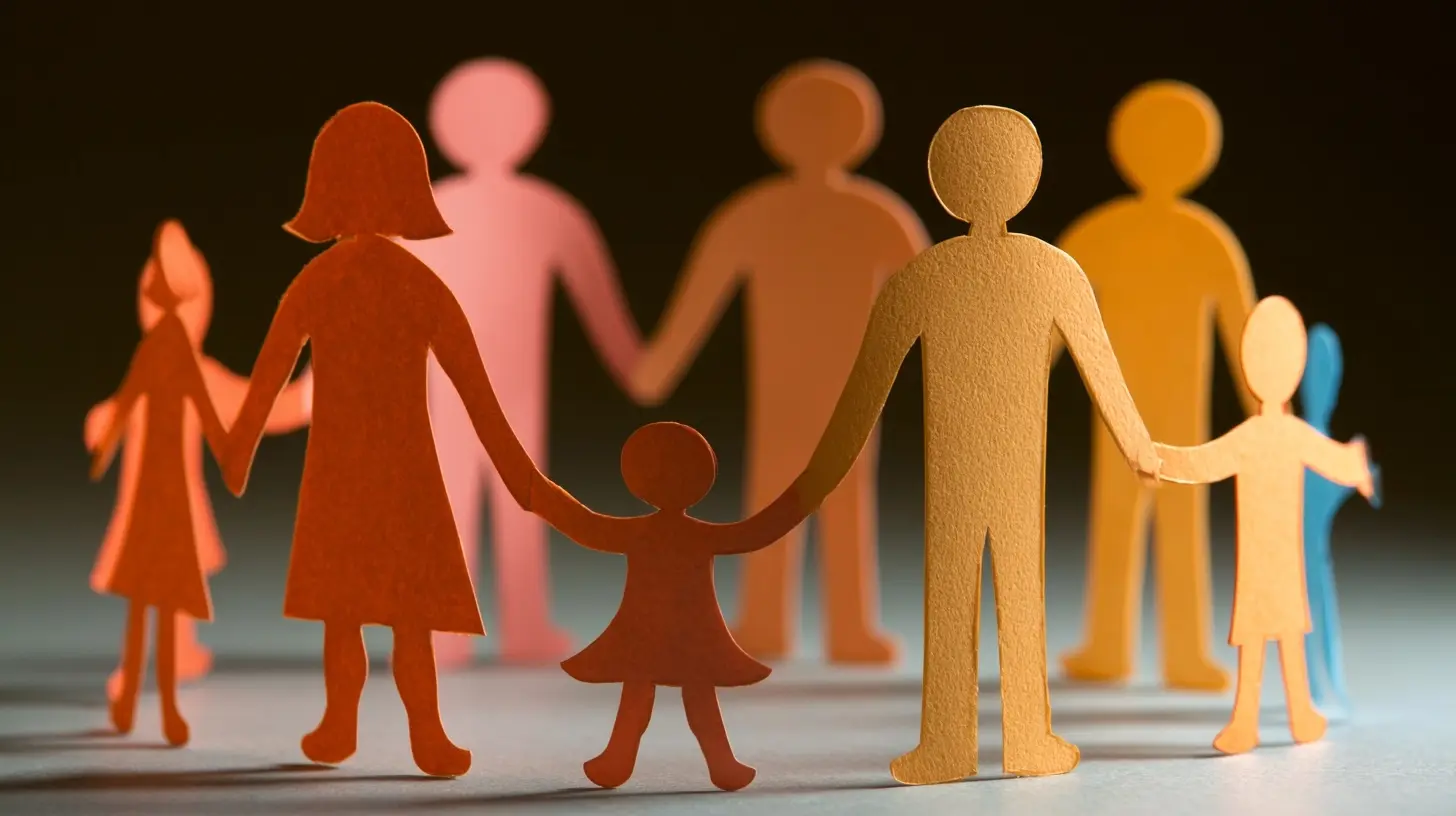
The Quiet Collapse of the Traditional Village
Before diving into what these groups are, it helps to understand the vacuum they fill. The traditional support structures that once held parents aloft have not just thinned; they have structurally failed. Geographic mobility means that a new parent in Austin, Texas, may have their closest family member 1,200 miles away. The average age of first-time mothers has risen, which means their own parents are often older, less mobile, and sometimes already caring for aging relatives. And the workplace, despite all the rhetoric about flexibility, still punishes the primary caregiver with the slow drip of missed promotions and sidelined projects.The result is a specific kind of loneliness. It is not the loneliness of being alone; it is the loneliness of being misunderstood in real time. A mother who is struggling with breastfeeding rejection does not need a nurse's hotline as much as she needs another mother who says, "Yeah, that happened to me at week three, and here is what I did." A father who feels like a wallet with legs does not need a podcast about toxic masculinity; he needs three other dads who admit they have no idea how to talk to their teenage son.
The internet tried to solve this with forums and Facebook groups, but those spaces became performative. They are curated highlight reels, full of milestone brags and silent judgment. The reaction against that performance is what birthed the modern Mom Tribe and Father Circle. These groups are built on the radical premise that vulnerability is more useful than perfection.
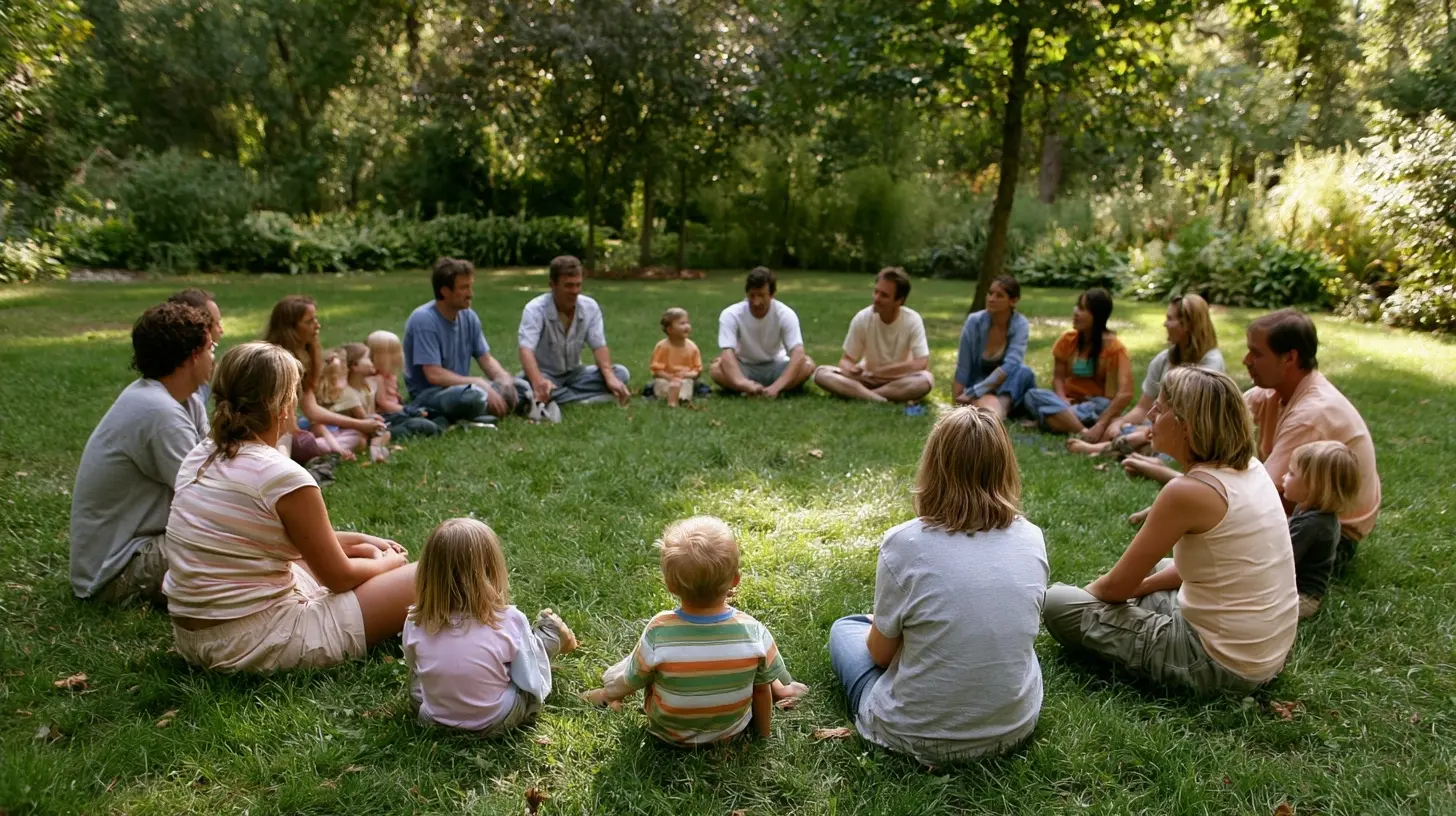
What Exactly Is a Mom Tribe in 2026?
The term "tribe" gets thrown around a lot, but in the parenting context of 2026, a Mom Tribe has a fairly specific anatomy. It is usually a group of five to twelve mothers who meet on a regular cadence, often weekly or biweekly, with a shared purpose that goes beyond socializing. They are not just complaining over coffee, though there is plenty of that. They operate with a loose charter, sometimes written, sometimes just understood.The most successful tribes have a few defining characteristics. First, they are homogeneous in life stage but heterogeneous in personality. A tribe of only first-time mothers with colicky newborns is a recipe for collective anxiety. The best groups mix a first-timer with a mother of three, a working mom with a stay-at-home mom, and someone who formula feeds alongside someone who breastfeeds. That diversity is not cosmetic; it is functional. It provides perspective when one member is spiraling over a developmental milestone that another member has already seen pass.
Second, the tribe has a rhythm. Meetings are not spontaneous. They are scheduled, often with a rotating host or a standing reservation at a coffee shop with a corner booth. The predictability matters. When you are in the trenches of sleep regression, knowing that Tuesday at 10 a.m. belongs to your tribe is a lifeline. It gives structure to a week that otherwise blurs into a series of feedings and diaper changes.
Third, and this is where 2026 groups differ from earlier iterations, they have a functional component. The modern Mom Tribe is not just an emotional support circle; it is a mutual aid society. Members trade meal trains, share hand-me-down clothing with a rotating bin system, and coordinate childcare swaps. One group in Portland, Oregon, reportedly runs a shared spreadsheet for sick-day coverage. If one mother's child has a fever and she has a big presentation, another tribe member who is free that day steps in. This is not casual neighborliness; it is a deliberate system of reciprocal obligation.
The Unspoken Rules of Tribe Membership
Joining a Mom Tribe is harder than it looks. Because these groups are intimate by design, they are also exclusionary by necessity. There is no open enrollment. A tribe that admits everyone becomes a meetup group, and a meetup group does not provide the depth of connection that parents crave.The unspoken rule is that membership requires a probationary period. You do not get the deep secrets on day one. You get the surface stuff: the sleep schedules, the pediatrician recommendations, the polite laughter. The real currency of the tribe, the admission of postpartum rage or the confession that you sometimes hide in the bathroom just to hear yourself think, is only exchanged after trust has been proven. This is not gatekeeping for its own sake. It is risk management. Sharing your darkest parenting moments is an act of vulnerability, and vulnerability requires a safe container.
The trade-off here is real. The very exclusivity that makes a tribe powerful also makes it fragile. If one member moves away, the group can collapse. If two members have a falling out over a parenting philosophy clash, the fracture can be irreparable. The best tribes anticipate this by having a clear, if informal, process for bringing in new members. They interview candidates, not in a formal sense, but through playdates and group outings that serve as extended auditions. It sounds clinical, but it works because it protects the core mission: a space where no one has to perform.
Father Circles: The New Frontier of Male Caregiving
Father Circles are a different beast entirely. They have emerged later and with more resistance, largely because men are socialized to solve problems, not to share them. The traditional male response to parenting stress is to double down on work or to retreat into hobbies. The Father Circle challenges that by providing a space where the only task is to talk, and where the only solution is to be heard.The modern Father Circle, as of 2026, often forms around a specific transition point. It might be a new dad group connected to a hospital's birth center, or it might be a circle for fathers of children with special needs. The most effective ones are facilitated, at least initially, by a trained professional such as a family therapist or a social worker. This is a critical difference from Mom Tribes, which often form organically and remain peer-led. Fathers, on average, need more scaffolding to move past the "fix it" mode and into the "feel it" mode.
A skilled facilitator does not lecture. They pose questions that cut through the defenses. They ask, "When was the last time you felt genuinely proud of yourself as a father, and why?" They ask, "What do you miss most about your life before kids, and what does that missing say about your current needs?" These questions sound simple, but for many men, they are the first time anyone has asked them to examine their fatherhood as an emotional experience rather than a list of duties.
Why Men Need a Different Container
The mistake many well-intentioned people make is assuming that a Mom Tribe and a Father Circle can be merged into one "Parent Group." In theory, that sounds progressive. In practice, it often fails. The reasons are nuanced and have nothing to do with capability or love. They have to do with social conditioning and the different pressures each parent faces.Mothers, even in 2026, face the default expectation of primary caregiving. Their conversations often revolve around the mental load: the scheduling, the nutrition, the developmental tracking, the emotional regulation of the children. Fathers, even the most involved ones, often face the expectation of provision and protection. Their conversations revolve around identity: Am I doing enough? Am I present but still a man? How do I connect with a daughter who only wants her mother?
When you put these two groups together, the mothers often dominate because they have been trained to articulate their feelings, and the fathers retreat because they feel their struggles are less legitimate. The father who is terrified that he does not know how to braid his daughter's hair feels shame next to a mother who is exhausted from braiding it every day. Separate spaces allow each group to go to the depths of their own experience without comparison. That is not segregation; it is specialization.
The Father Circle also addresses a specific crisis of male friendship. Studies have long shown that men have fewer close friendships than women and that these friendships often lack emotional depth. The Father Circle is a corrective. It gives men permission to be vulnerable with other men, which is a skill that has atrophied. The first few sessions are often awkward. Men deflect with humor. They talk about sports or work. But a good facilitator holds the space, and eventually, the armor cracks. The result is often profound. Men who have never told another man that they are scared of failing their children find themselves weeping in a circle of near-strangers, and instead of judgment, they find nods of recognition.
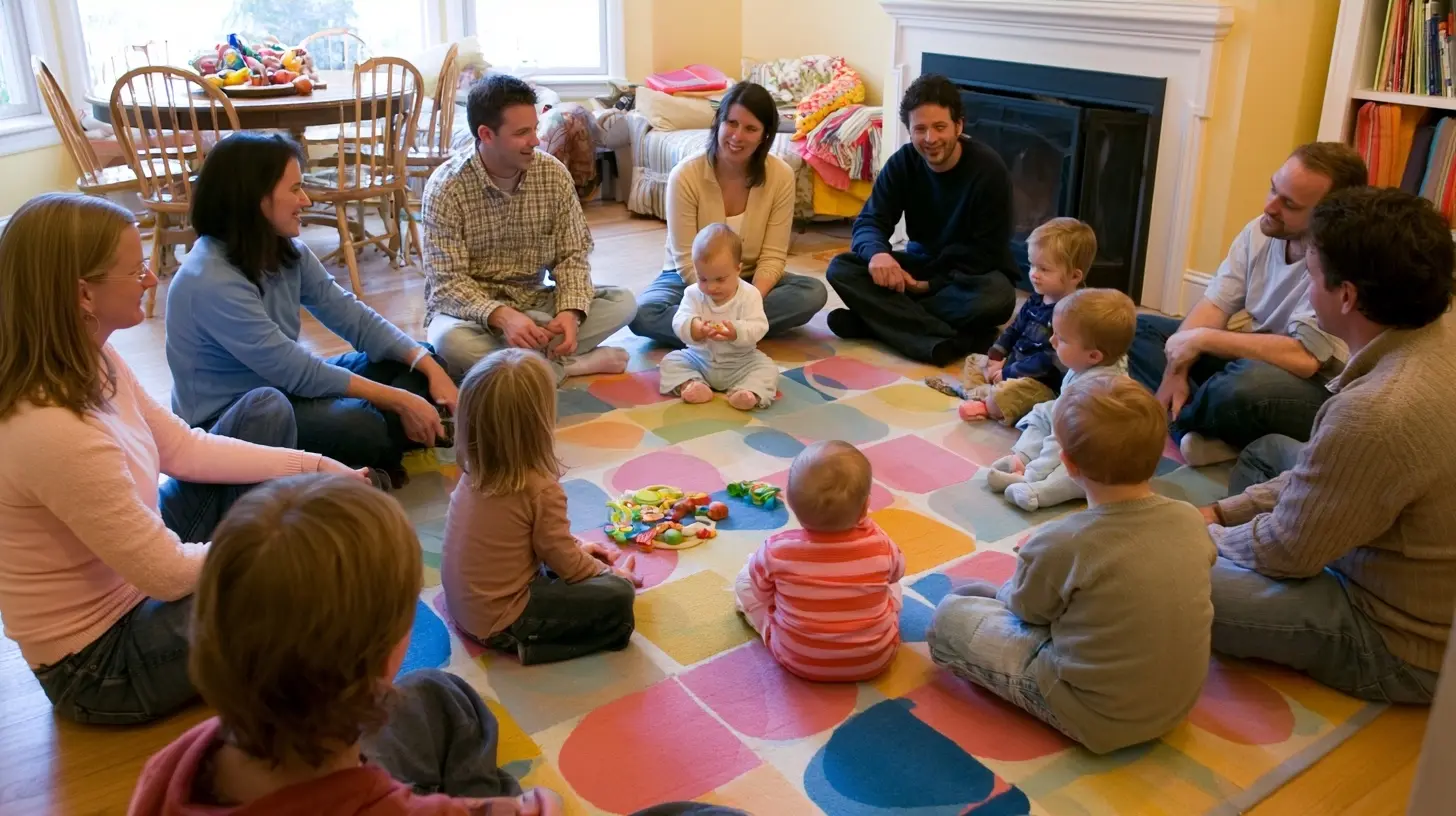
The Digital Layer: Apps and Algorithms in the Support Space
No discussion of 2026 support groups would be complete without addressing the technology that enables them. While the core of Mom Tribes and Father Circles is face-to-face interaction, the logistics are almost entirely digital. Dedicated apps have sprung up that do more than schedule meetings. They match parents based on compatibility metrics that go beyond zip code and child age.These apps ask questions that get at parenting philosophy. Are you a strict sleep trainer or a gentle parent? Do you believe in screen time limits or are you more relaxed? Do you want a group that is solution-focused or one that is purely empathetic? The algorithms then propose clusters of parents who are likely to mesh. This is a double-edged sword. On one hand, it dramatically increases the odds of a good fit. On the other hand, it creates echo chambers. A group of parents who all agree on attachment parenting will never challenge each other, and the group can become a confirmation machine for anxiety.
The best digital platforms of 2026 have recognized this and introduced a "contrarian pairing" feature. They deliberately mix in one or two parents with different but respectful viewpoints. A tribe of gentle parents might get a mother who is a firm believer in boundaries and early independence. The friction this creates is uncomfortable, but it is also generative. It forces parents to articulate why they do what they do, which is the first step toward confident parenting.
However, the digital layer has a dark side. The same apps that connect you to a tribe also track your activity. They know when you log in at 3 a.m., frantically searching for advice on toddler tantrums. This data is valuable, and some platforms have been caught selling it to baby product companies. The result is targeted advertising that feels predatory. A mother who confides in her tribe that she is struggling with weaning might suddenly see a flood of ads for toddler formula. The trust that the tribe builds offline is undermined by the surveillance of the online platform. Parents in 2026 must be vigilant about the privacy policies of the tools they use. The safest approach is to use the app for initial matching and scheduling, then move all substantive communication to encrypted, end-to-end messaging platforms that do not mine data.
The Practical Guide to Finding or Building Your Group
So you are convinced that you need a Mom Tribe or a Father Circle. How do you actually go about getting one? The process is different depending on whether you are starting from zero or looking to join an existing group.Joining an Existing Group
The first step is to look where the parents already are. Your child's pediatrician's office often has a bulletin board, physical or digital. Your local library hosts story times, and the parents in the corner who are talking to each other rather than scrolling on their phones are a promising sign. Community centers, places of worship, and even gyms with childcare are fertile ground.When you approach a potential group, do not lead with your needs. Lead with your offer. Say, "I have a minivan and I am happy to drive on field trips," or "I am a decent cook and I can bring meals on tough days." This signals that you understand the reciprocal nature of the arrangement. Groups are wary of takers. They are open to givers.
Be prepared for rejection. It is not personal. A tribe at capacity is not going to expand just because you are lovely. If you are turned away, ask if they know of other groups forming. The ecosystem is interconnected. A polite rejection often comes with a referral.
Starting Your Own Group
If you cannot find a group, you have to build one. This is more work, but it allows you to shape the culture from day one. Start with a small invite. Do not post a public call for members on social media. That attracts quantity, not quality. Instead, identify two or three parents you genuinely respect from your existing circles, even if they are just acquaintances. Invite them to a low-stakes meetup at a park or a cafe. Tell them explicitly, "I am trying to build a small support group, and I wanted to see if you are interested in being part of the foundation."Once you have a core of three, you can each invite one more person. This snowball method ensures that every member is vouched for by someone already in the group. It preserves trust.
Then, establish the norms early. Decide on the meeting frequency, the confidentiality rule, and the no-judgment policy. Write these down, even if you do not formalize them into a contract. Having a shared document that says "What is said in this group stays in this group" prevents future misunderstandings.
The Role of the Facilitator
A common mistake is assuming that a group does not need a leader. Every group needs a facilitator, even if that role rotates. The facilitator is not the boss. They are the timekeeper and the emotional thermostat. They notice when one member is monopolizing the conversation and gently redirect. They notice when a quiet member is struggling and draw them out.In Mom Tribes, the facilitator role often falls to the most extroverted member, but that is not always the best choice. The best facilitator is someone who is naturally a good listener, not a good talker. In Father Circles, as mentioned, an external professional facilitator is often necessary for the first six months. After that, the group can transition to peer-led, but the transition should be deliberate, not accidental.
Common Mistakes and Misconceptions
There are several ways these groups go wrong, and understanding them upfront can save you a lot of pain.Mistake One: Confusing the Group with Therapy
A Mom Tribe or Father Circle is not a substitute for professional mental health care. If you are experiencing clinical depression, anxiety, or postpartum psychosis, you need a licensed therapist or psychiatrist. The group can be a wonderful complement to professional care, but it cannot replace it. Members are peers, not practitioners. Trying to therapize a deeply struggling member is a recipe for burnout and resentment. The healthy approach is to support that member in finding professional help while maintaining the group's boundaries.Mistake Two: The Comparison Trap
Even in a well-functioning group, comparison is a poison that seeps in. You hear that another mother's baby slept through the night at six weeks, and your eight-month-old is still waking up every two hours. Your rational brain knows that every child is different. Your emotional brain feels like a failure. The best groups actively combat this by celebrating differences rather than milestones. A good facilitator will say, "We are not here to compare timelines. We are here to support each other through whatever timeline we are on."Mistake Three: Letting the Group Become a Grievance Collective
There is a fine line between venting and wallowing. A group that only complains becomes a drag. Members start to dread the meetings because they know they will leave feeling worse. The best groups have a rule, often implicit, that every meeting must include at least one positive share. It can be small. It can be, "My kid finally ate a vegetable without crying." But forcing the positive share shifts the energy from helplessness to agency.Misconception: These Groups Are Only for Stay-at-Home Parents
This is wildly inaccurate. Working parents need these groups even more, because their time is so fragmented. The modern Mom Tribe and Father Circle have adapted by offering evening or early morning meetings, or by doing hybrid sessions where some members join via video. The key is consistency, not format. A working mother who joins a video call from her car during her lunch break is just as much a tribe member as the mother hosting the playdate in her living room.The Future of Parental Support
Looking ahead, the trend is toward greater specialization. We are already seeing tribes for parents of twins, for adoptive parents, for LGBTQ+ parents, and for parents of children with specific medical conditions. The generalist group will always have a place, but the specialist group offers a level of shared understanding that is almost impossible to fake.Another emerging trend is the intergenerational circle. Some innovative communities are pairing new parents with empty nesters. The older generation provides wisdom and a sense of perspective. The younger generation provides energy and a connection to current research. This is a partial restoration of the old village, but with a modern twist: both sides enter as volunteers, not as obligated family members.
The bottom line is that parenting in 2026 is too complex for isolation. The Mom Tribe and the Father Circle are not luxuries. They are infrastructure. They are the scaffolding that holds up the modern family when the traditional supports have crumbled. Finding your group takes effort, and maintaining it takes intentionality. But the payoff is not just surviving parenthood. It is actually enjoying it, because you are no longer doing it alone.
all images in this post were generated using AI tools
Category:
Parenting And Support SystemsAuthor:

Max Shaffer
Discussion
rate this article
2 comments
Caelum Griffin
Love this idea! Support makes all the difference in parenting.
September 27, 2026 at 4:13 PM
Max Shaffer
Thanks for the support! It's amazing how much we can help each other in this journey.
Marlowe Griffin
Finding your tribe is essential. Together, we can uplift each other and navigate parenting's challenges with strength.
September 25, 2026 at 5:01 AM