How Travel is Changing the Way We Parent
23 August 2026
Parenting has never been a static job. Every generation redefines what it means to raise children, shaped by economics, technology, and cultural shifts. But one force is quietly rewriting the parenting playbook in ways most of us don't fully recognize yet: travel. Not the occasional vacation, but the deliberate, repeated decision to take children into unfamiliar places. Whether it's a weekend camping trip, a month abroad, or a cross-country road trip, travel is changing how we think about safety, education, independence, and family connection.
This isn't just about creating memories or getting cute photos for social media. The act of moving through the world with kids forces parents to confront assumptions they didn't know they had. It exposes the gaps between what we say we value and what we actually do. And it builds skills in both parents and children that are hard to replicate in the comfort of home.
The Shift from Shelter to Exposure
For much of modern parenting history, the dominant instinct was protection. Keep children close, keep them safe, keep them away from anything that might hurt them physically or emotionally. This made sense in an era when information was scarce and danger was more visible. But travel challenges that instinct at every turn.When you take a child to a new city, you cannot control every variable. You cannot sanitize every surface, predict every interaction, or prevent every scraped knee. And here is the surprising part: that loss of control is exactly what makes travel so valuable. It forces parents to move from a mindset of shelter to a mindset of exposure. Not reckless exposure, but intentional, managed exposure to difference.
A child who grows up seeing how other people live - how they eat, how they greet each other, how they solve problems - develops a kind of flexibility that no classroom lesson can provide. They learn that the way things are done at home is not the only way. This is not a theoretical benefit. It shows up in how they handle frustration, how they negotiate with siblings, and how they respond to new foods or unfamiliar customs.
The trade-off is real, though. Exposure means accepting that your child will see things that make you uncomfortable. They might ask questions you are not ready to answer. They might witness poverty, or cultural practices that seem strange, or situations where you cannot explain everything. Many parents find this deeply unsettling. But the alternative - keeping children in a bubble - has its own costs. A child who never learns to navigate difference will struggle later in school, in work, and in relationships.
How Travel Reshapes the Definition of Quality Time
At home, "quality time" often feels like a scheduled event. You block out an hour, put away your phone, and try to connect. The problem is that home is full of distractions. Chores pile up. Screens call. There is always something that needs fixing or cleaning or organizing.Travel strips those distractions away. Not completely, of course. You still have to manage logistics, deal with meltdowns, and find food. But the context is different. When you are in a new place, the ordinary tasks of daily life become shared adventures. Figuring out how to buy a train ticket, deciding where to eat, getting lost and finding your way back - these are not interruptions to family time. They are family time.
This changes the parenting dynamic in a subtle but profound way. At home, parents are often managers. You assign tasks, enforce rules, and keep schedules. On the road, you become co-navigators. You are solving problems together, and that shifts the power balance in a healthy way. Children see their parents as people who also get confused, who also make mistakes, who also need help. That vulnerability builds trust in a way that constant competence never does.
The practical implication is that you do not need a big budget or a long itinerary to get this benefit. A day trip to a nearby town can create the same conditions. The key is novelty. When you are in a familiar environment, the brain defaults to autopilot. Travel, even small-scale travel, forces everyone to be present.
Building Resilience Through Managed Risk
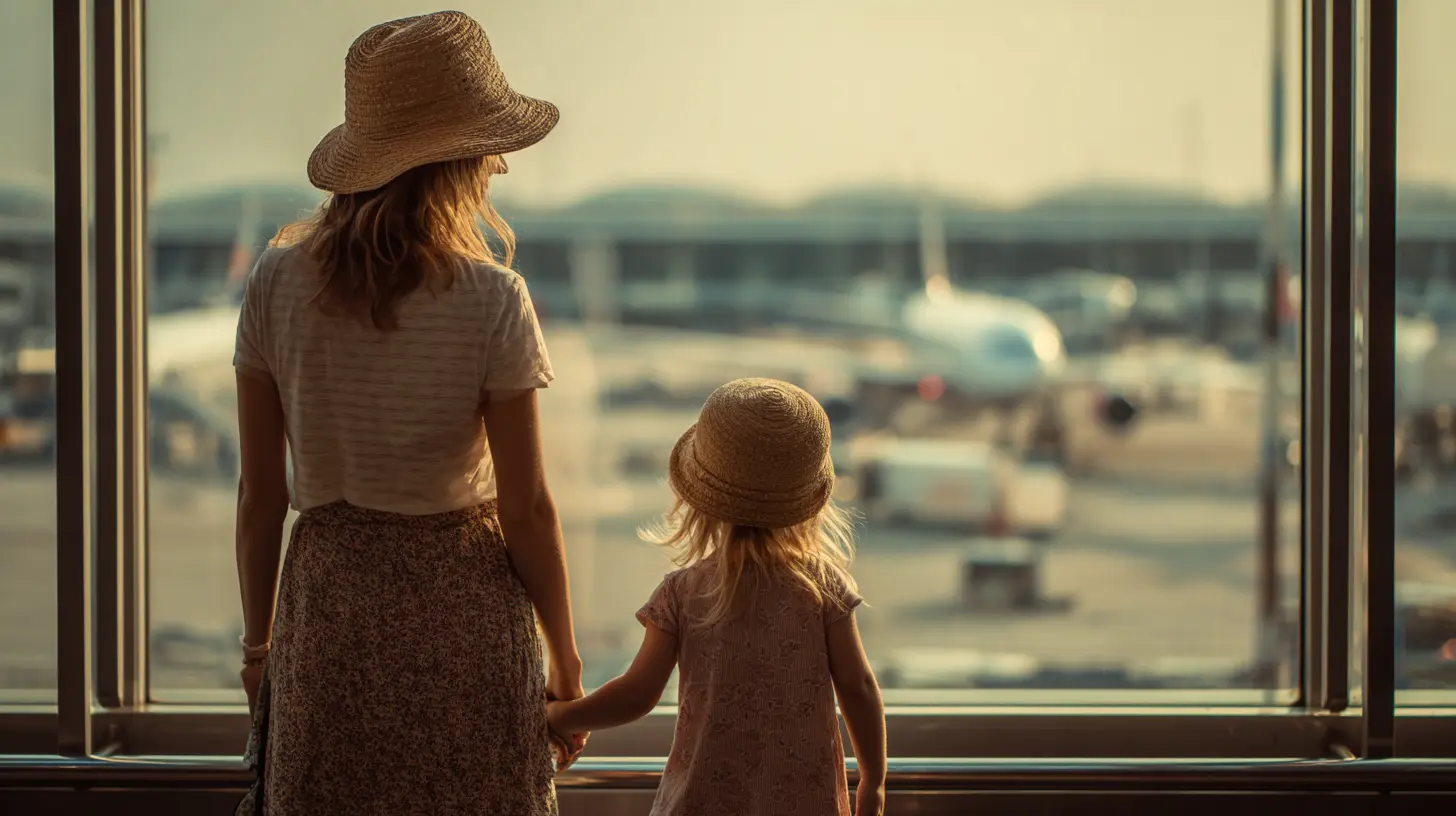
One of the most common mistakes parents make is assuming that resilience is something you either have or you don't. In reality, resilience is a skill, and it develops through practice. The best practice involves facing manageable challenges and successfully overcoming them. Travel provides a steady stream of these challenges.Consider a simple example: navigating an airport with a six-year-old. The child has to keep track of their backpack, stay close to the group, understand the sequence of security checks, and manage the boredom of waiting. None of these are life-threatening, but they are real tasks. When the child completes them, they get a genuine sense of competence. They did not just watch their parents solve a problem. They were part of the solution.
The same logic applies to older children. A teenager who has to read a map, ask for directions in a foreign language, or manage a small budget for a day is practicing executive function skills. These are the same skills they will need for college, for jobs, and for adult relationships. The difference is that on a trip, the stakes are low enough that failure is not catastrophic. If they get lost, you can help. If they overspend, they learn to adjust.
Parents often worry that giving children this kind of responsibility is dangerous. But the opposite is true. Children who are never allowed to take small risks become adults who are paralyzed by big ones. Travel lets you calibrate the risk to match the child's maturity. A five-year-old can choose which snack to buy. A ten-year-old can order food at a restaurant. A fifteen-year-old can plan a day's itinerary. Each step builds confidence without crossing into recklessness.
The Unexpected Lesson of Slowing Down
There is a common misconception that travel with children has to be action-packed. You have to see every landmark, visit every museum, and check every box. This is a mistake, and it creates stressed-out parents and miserable kids.The truth is that children experience time differently than adults. They are not trying to maximize experiences per hour. They are trying to make sense of the world. A child can spend forty minutes watching ants on a sidewalk and get more out of that than from a two-hour tour of a cathedral. When you travel with kids, you are forced to slow down. You cannot do everything, and if you try, everyone pays for it.
This slowdown is actually a gift. It teaches parents to let go of the itinerary, to leave room for spontaneity, and to value the moments that cannot be planned. The best travel memories are often the unplanned ones: the unexpected conversation with a local shopkeeper, the sudden rainstorm that led to a game of puddle-jumping, the random playground that became the highlight of the day.
The parenting lesson here is about priorities. When you stop trying to do everything, you start paying attention to what actually matters. For some families, that means spending an entire afternoon at a single park. For others, it means skipping a famous attraction to have a long, slow lunch. The point is not what you see. The point is how you are together.
How Travel Teaches Emotional Regulation
Parents often wonder how to teach children to manage big emotions. Travel is one of the most effective classrooms for this, precisely because it generates so many big emotions. Excitement, disappointment, frustration, joy, exhaustion - all of these come up in a single day of travel.A child who misses their favorite toy while on a trip is not just being difficult. They are practicing the skill of coping with loss, even if the loss is small. A child who is tired and hungry but has to wait for dinner is learning to tolerate discomfort. A child who is scared of a new place is learning that they can survive fear.
The key is how parents respond. When you are at home, it is easy to soothe a child by giving them what they want. On the road, that is not always possible. You cannot produce a favorite snack from the pantry or fix a broken schedule with a familiar routine. You have to name the feeling, validate it, and help the child find a way through it. This is emotional coaching at its most practical.
Parents who do this well find that the skills transfer back home. A child who has learned to calm themselves on a long flight is better equipped to handle a stressful day at school. A child who has practiced waiting in line at an amusement park can handle a long wait at the doctor's office. Travel does not create these skills from nothing, but it gives them a workout.
The Financial Reality Check
Money is the elephant in the room when it comes to travel and parenting. Many parents assume that travel is only for the wealthy, and they feel guilty or inadequate when they cannot afford big trips. This is a misconception that causes real harm.The truth is that travel does not have to mean expensive flights and hotels. A camping trip, a visit to relatives in another state, or even a day trip to a nearby city can provide the same developmental benefits. What matters is novelty and the willingness to be present. A child who spends a weekend in a tent learns more about adaptability than a child who spends a week at a luxury resort.
That said, there is a real trade-off. Family travel often requires spending money that could go elsewhere - toward college savings, a bigger home, or retirement. Parents have to make honest decisions about their priorities. There is no right answer. Some families will value travel over other things, and that is fine. Others will choose to stay closer to home, and that is also fine.
The mistake is to assume that travel is a luxury that only matters if you can do it big. It is not. The skills and memories come from the experience, not the budget. A well-planned road trip with packed lunches can be just as transformative as a trip to Paris. The question is not how much you spend. The question is how present you are.
Common Mistakes Parents Make When Traveling with Kids
Even parents who understand the value of travel often stumble in predictable ways. The first mistake is overpacking. You do not need three outfits per day or a separate toy for every possible mood. Kids do not need as much stuff as you think. The extra weight becomes a burden, and the burden makes everyone cranky.The second mistake is overscheduling. When you pack too many activities into a day, you create stress. Children need downtime. They need unstructured time to process what they have seen. If you fill every hour, you are not giving them space to actually absorb the experience.
The third mistake is ignoring basic physical needs. A hungry, tired child cannot learn anything. Travel is not the time to be casual about meals or sleep. Stick to routines as much as possible. This does not mean you cannot have late nights, but it means you should plan for recovery time.
The fourth mistake is expecting perfection. Travel with kids is messy. Someone will cry. Someone will get sick. Something will go wrong. If you treat these moments as failures, you will be miserable. If you treat them as part of the experience, you will be fine. The best travel parents are the ones who can laugh when everything falls apart.
What Travel Does Not Do
It is important to be honest about the limits of travel. Travel is not a cure-all. It will not fix a struggling marriage, and it will not magically turn a difficult child into an easy one. If you are fighting at home, you will likely fight on the road. The stress of travel can amplify existing problems.Travel also does not guarantee that your child will become worldly or open-minded. Some children resist new experiences. They complain, they cling to familiar routines, and they seem to get nothing out of the trip. This is normal, and it does not mean the trip was a waste. Children often process experiences long after the fact. A child who seemed miserable on a trip might bring it up months later in a surprising way.
Finally, travel does not make you a better parent by itself. The value comes from how you approach it. If you travel with a closed mind, if you refuse to let go of your routines, if you treat every inconvenience as a disaster, you will not get the benefits. Travel is a tool, not a magic wand.
The Long-Term Impact on Family Culture
When you make travel a regular part of family life, something shifts. It stops being an event and becomes part of your identity. Your family starts to see itself as the kind of family that goes places, that tries new things, that embraces the unknown. This identity matters.Children who grow up in families that travel tend to approach the world with more confidence. They are less afraid of the unfamiliar because they have practiced encountering it. They are better at adapting to change because they have done it many times. They are more likely to seek out experiences rather than avoid them.
This is not about raising world travelers. It is about raising people who are comfortable with uncertainty, who can connect with others across differences, and who know that they can handle whatever comes their way. These are not just travel skills. They are life skills.
A Practical Framework for Getting Started
If you are convinced that travel can change how you parent, the next question is where to start. The answer is simple: start small and start local. Pick a place within a few hours of your home that you have never visited. Spend one night. Keep the expectations low. The goal is not to have an amazing trip. The goal is to practice being a family in a new place.Pay attention to what works and what does not. Notice how your children respond to new food, new beds, new sounds. Notice how you respond to their responses. Do not try to fix everything. Let some things be uncomfortable.
As you get more confident, you can expand the distance and the duration. But always keep the same principles in mind: go slow, leave room for spontaneity, prioritize connection over checking boxes, and be willing to laugh at your own mistakes.
Travel is not the only way to become a better parent, but it is one of the most effective. It forces you to be present, to let go of control, and to trust your children more than you thought you could. In return, it gives you a family that knows how to face the unfamiliar together.
all images in this post were generated using AI tools
Category:
Parenting And CultureAuthor:

Max Shaffer
Discussion
rate this article
2 comments
Dior Hall
This article offers valuable insights on how travel enriches parenting. Experiencing new cultures together fosters connection and teaches children adaptability and open-mindedness.
September 2, 2026 at 4:24 AM
Orion McClellan
Travel truly opens our eyes as parents, creating unforgettable memories and lessons for the whole family!
August 31, 2026 at 4:26 AM
Max Shaffer
Absolutely! Travel enriches our experiences and strengthens family bonds in unique ways.