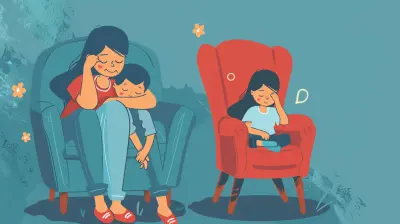
How to Build Your Toddler’s Emotional Resilience
18 December 2025
Parenting is an incredible journey filled with laughter, love, and, let’s be honest—some pretty intense meltdowns. One minute your toddler is giggling at their favorite cartoon, and the next, they’re on the floor screaming because their banana broke in half.
Emotional ups and downs are part of growing up, but as parents, we can help our little ones navigate these emotions and develop emotional resilience. But what exactly does that mean? And how do we teach it?
Let’s dig in and talk about what emotional resilience is, why it matters, and how you can help your toddler build this essential life skill. 
What Is Emotional Resilience?
Emotional resilience is the ability to bounce back from challenges, stress, and frustration. It's what helps kids cope with disappointment, manage their feelings, and handle change without falling apart.Think of it like a muscle—every time your toddler faces a difficult situation and works through it, they’re strengthening that resilience muscle. And just like with physical muscles, the more they use it, the stronger it gets.
Why does this matter? Because life is full of ups and downs! Teaching your toddler how to handle emotions now will set them up for success in the future, helping them become confident, adaptable, and emotionally healthy individuals. 
Signs of Emotional Resilience in Toddlers
You might be wondering, “How do I know if my child is emotionally resilient?” Here are a few signs:- They can calm down after getting upset. Of course, meltdowns happen, but resilient toddlers recover relatively quickly.
- They try again after failing. Whether it’s a puzzle, stacking blocks, or learning to climb the couch, they don’t give up right away.
- They express their feelings (even if it’s loud and messy!). A resilient toddler isn’t necessarily a quiet one; they just have a growing awareness of their emotions.
- They seek comfort from caregivers. Instead of shutting down completely, they look for help when overwhelmed.
Not every child will show all these signs right away, and that's okay! Emotional resilience is something that can be nurtured over time. 
How to Build Your Toddler’s Emotional Resilience
Now for the fun part—helping your toddler develop emotional resilience! Here are some practical strategies you can start using today.1. Model Healthy Emotions
Your toddler learns by watching you. If they see you handling frustration calmly, they'll try to do the same. The next time you're stuck in traffic or spill your coffee, try saying aloud:"Wow, that was frustrating, but it's okay. I’ll clean it up and move on."
This helps your toddler see that emotions—both positive and negative—are normal and manageable.
2. Validate Their Feelings
Ever heard the phrase "You're fine, stop crying"? While it's often well-intended, it can make kids feel like their emotions aren’t important. Instead, try validating their feelings:- "I see that you're really upset because your tower fell. That must be frustrating."
- "You're sad because you wanted the red cup, but it's not available. I understand."
When children feel heard and understood, they’re more likely to regulate their emotions instead of suppressing them.
3. Encourage Problem-Solving
Instead of immediately fixing things for your toddler, give them small opportunities to solve problems on their own.For example:
- If they can’t reach a toy, instead of handing it to them, say, "Hmm, how do you think you can get it?"
- If they spill their juice, offer a napkin and say, "Let’s clean this up together."
Problem-solving builds confidence and resilience, helping them learn that challenges can be overcome.
4. Teach Simple Coping Strategies
Toddlers don’t always know what to do with big feelings. Teaching them simple coping strategies can make a huge difference.A few easy ones:
- Deep breaths – Teach them to take “big belly breaths” when they’re upset.
- Counting to five – Helps them slow down and refocus.
- Squeezing a stuffed animal – Provides comfort and security.
- Taking a break – Encourage them to take a few minutes in a quiet space when overwhelmed.
These little tools give toddlers a way to regulate their emotions instead of letting frustration take over.
5. Encourage Independence and Decision-Making
Letting your toddler make small decisions gives them a sense of control, which builds confidence and resilience.Try offering choices like:
- "Do you want the blue socks or the red ones?"
- "Would you like to clean up the blocks first or the books?"
- "Do you want to hold my hand or walk beside me?"
These seemingly small choices help them practice decision-making in a safe environment.
6. Help Them Label Their Emotions
Toddlers often don’t have the words to express how they feel, which leads to frustration and meltdowns. Helping them label their emotions makes a huge difference.If they’re angry, you might say:
- "I see that you're really mad right now."
- "It looks like you’re feeling frustrated because your toy isn’t working."
When kids learn words for their emotions, they’re less likely to express frustration through tantrums.
7. Encourage a Growth Mindset
A growth mindset is the belief that challenges help us grow and improve. You can reinforce this by praising effort instead of just results.Instead of saying:
"You’re so smart!"
Try:
"You worked really hard on that puzzle! I love how you kept trying!"
This helps toddlers understand that persistence and effort are more important than perfection.
8. Use Play to Teach Resilience
Play is one of the best ways toddlers learn. Games that involve problem-solving, turn-taking, and patience help develop emotional resilience.Here are a few ideas:
- Building block towers – Teaches problem-solving and handling setbacks when they fall.
- Board games – Teaches patience, turn-taking, and dealing with losing.
- Pretend play – Helps toddlers practice different social and emotional situations.
Through play, toddlers learn resilience in a fun and engaging way.
9. Create a Safe and Supportive Environment
At the end of the day, toddlers feel secure when they know they are loved and supported. Having a consistent routine, clear expectations, and a predictable environment helps them feel safe, which in turn fosters resilience.Let them know that no matter what emotions they feel—anger, sadness, frustration—you are always there to support and guide them. 
Final Thoughts
Building emotional resilience in your toddler isn’t about making them never feel sad, angry, or frustrated. It’s about equipping them with the tools to handle those emotions in a healthy way.By modeling emotional regulation, validating feelings, encouraging problem-solving, and teaching coping strategies, you’re giving your child an incredible gift—the ability to navigate life’s challenges with confidence.
So, the next time your toddler throws a meltdown over a broken cookie, take a deep breath and remind yourself: this is a learning moment. And with a little patience and consistency, they’ll grow into a resilient, emotionally strong little human.
all images in this post were generated using AI tools
Category:
Toddler MilestonesAuthor:

Max Shaffer
Discussion
rate this article
2 comments
Xavier McGinnis
This article effectively emphasizes the importance of fostering emotional resilience in toddlers through supportive communication, modeling healthy coping strategies, and encouraging problem-solving, ultimately laying a solid foundation for their emotional development.
December 29, 2025 at 4:48 AM
Max Shaffer
Thank you! I'm glad you found the article highlights helpful for supporting toddlers' emotional resilience. Your insights are appreciated!
Monica Hodge
Building your toddler’s emotional resilience is a beautiful journey. Celebrate small victories, offer understanding, and model healthy coping strategies. Your love and guidance will empower them in incredible ways!
December 23, 2025 at 4:43 PM
Max Shaffer
Thank you for your thoughtful comment! Celebrating small wins and modeling healthy coping strategies truly are vital steps in nurturing our toddlers' emotional resilience. Your support makes a significant difference!