How Religion and Culture Shape Parenting Approaches
23 October 2026
Parenting does not happen in a vacuum. Every diaper change, bedtime rule, and response to a child's tantrum carries invisible instructions inherited from family history, community norms, and deeply held beliefs about what a good person looks like. Religion and culture are two of the most powerful forces behind those instructions, and understanding how they operate gives parents something valuable: the ability to choose deliberately instead of repeating automatically.
This article examines how religious traditions and cultural frameworks influence parenting, where they help, where they create friction, and how families can navigate the space between inherited wisdom and modern realities. It is written for parents, grandparents, educators, and anyone who works with families across different backgrounds.
Understanding the Two Forces
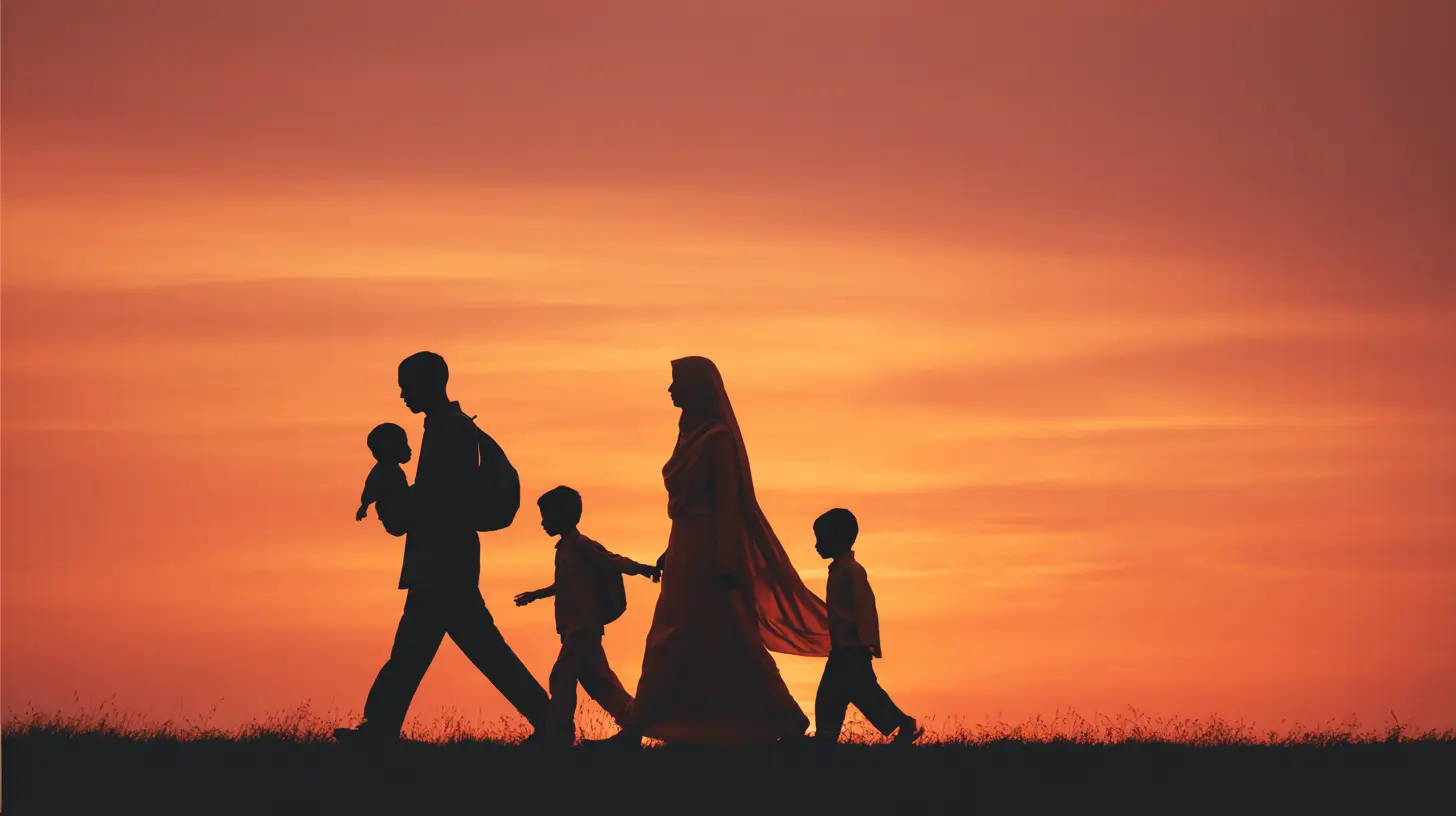
Religion and culture overlap, but they are not the same thing. Culture is the broader system of shared customs, language, foodways, gender expectations, communication styles, and social obligations that a group passes down. Religion is a structured set of beliefs, practices, and moral frameworks, often with texts, rituals, and communities attached.A family can be culturally traditional but not particularly religious, or deeply religious while adopting the surrounding culture's child-rearing habits. Many Muslim families in Western countries, for example, hold fast to religious obligations like daily prayer and fasting while adopting local approaches to schooling, discipline, and extracurricular activities. Meanwhile, secular families in the same countries may carry cultural expectations about academic achievement or respect for elders that originated in religious traditions their ancestors practiced.
This distinction matters because it clarifies what is negotiable. Religious convictions usually sit closer to a family's core identity, while cultural customs often adapt more easily across generations. Parents who understand which is which can make clearer decisions about what to keep, what to modify, and what to let go.

How Religion Influences Parenting
Moral Frameworks and Discipline
Most religions provide explicit guidance on right and wrong, and this shapes how parents respond to misbehavior. In traditions that emphasize sin and repentance, parents may frame mistakes as moral failures requiring correction and forgiveness. In traditions that emphasize compassion and impermanence, such as Buddhism, parents may approach misbehavior as a teaching moment about cause and effect.The practical result shows up in discipline styles. A parent drawing on a framework of accountability might use structured consequences and explicit discussions of guilt and repair. A parent drawing on a framework of compassion might emphasize reflection and natural consequences. Neither approach is inherently better. What matters is whether the discipline is consistent, proportionate, and paired with warmth. Research on child development consistently indicates that harsh or shaming discipline undermines trust, while firm limits delivered with warmth support healthy development. Religious framing can support either outcome, which is why the same tradition produces both gentle and harsh parents.
Rituals and Family Rhythms
Religious practice gives families built-in structure. Shared meals, weekly worship, bedtime prayers, fasting periods, and holiday cycles create predictable rhythms that children come to rely on. These rituals do real work: they mark time, reinforce belonging, and create regular opportunities for connection that busy families might otherwise lose.Consider a family that lights candles every Friday evening. The ritual itself takes minutes, but its value accumulates. Children learn that rest matters, that family gathers, and that something larger than individual schedules exists. Secular families often recreate this structure through weekly traditions of their own, which suggests the benefit comes from the regularity and meaning rather than the specific content.
Community and Shared Responsibility
Religious communities distribute parenting labor in ways that isolated nuclear families often lack. Grandparents, aunts, neighbors, and fellow congregants all participate in watching, teaching, and correcting children. This "village" effect offers real support, especially for single parents or families without extended relatives nearby.The trade-off is reduced privacy and increased scrutiny. Parents in tight-knit communities sometimes feel judged for choices that deviate from group norms, whether that means working outside the home, limiting family size, or raising a child with a disability. The same closeness that provides support can make difference feel costly.
Identity and Belonging
For minority religious families, faith often doubles as identity. Raising children within the tradition becomes a way of anchoring them in a heritage that the wider society may not share or understand. This can build resilience and pride. It can also create pressure, particularly for children who question the faith or who feel caught between the expectations of home and the expectations of school and peers.Parents in this situation face a genuine dilemma. Enforcing participation can preserve continuity but risk resentment. Permitting full autonomy too early can leave children unmoored from a tradition they may later wish they had known. Most developmental guidance suggests a middle path: maintain family participation as a shared practice while leaving room for questions, and be honest that belief often evolves.

How Culture Influences Parenting
Independence Versus Interdependence
One of the clearest cultural divides in parenting concerns the goal of childhood itself. Many Western, individualist cultures treat independence as the destination: children should learn to self-soothe, make choices, and eventually leave home as self-sufficient adults. Many collectivist cultures treat interdependence as the destination: children should learn to contribute, respect hierarchy, and remain closely tied to family across the lifespan.These goals produce visibly different parenting. Parents aiming for independence may encourage early self-feeding, separate sleeping arrangements, and open expression of opinion. Parents aiming for interdependence may feed children longer, sleep near them, and teach deference to elders. Neither is neglectful. Each is a coherent strategy for raising an adult who fits the surrounding world.
Problems arise when these frameworks collide, such as when immigrant parents raise children in a society organized around the opposite values. A child may be praised at school for speaking up and corrected at home for talking back, receiving contradictory messages about the same behavior. Parents in this position do well to name the tension openly rather than pretending it does not exist. Children handle complexity better when adults explain it.
Communication and Emotion
Cultures differ in how much emotion is expressed, how directly conflict is addressed, and what counts as respectful speech. Some families discuss feelings openly and treat emotional expression as healthy. Others value restraint and consider loud emotion disruptive.These patterns shape how children learn to manage frustration, sadness, and disagreement. A child raised in an expressive household may struggle in a reserved classroom, while a child raised in a restrained household may be read as withdrawn by expressive teachers. Parents can help by teaching children to read context: which settings reward which styles, and how to adjust without abandoning their natural temperament.
Gender Expectations
Cultural norms about gender remain among the most persistent influences on parenting. Many families hold different expectations for sons and daughters regarding chores, academic focus, emotional expression, and independence. These expectations often operate below conscious awareness, which is precisely what makes them powerful.Parents who wish to examine their own assumptions can start with concrete questions. Who is asked to help in the kitchen? Who is allowed to show fear? Whose curfew is stricter? Whose education is prioritized when money is tight? Honest answers to these questions reveal patterns that abstract discussions often miss. Changing those patterns does not require rejecting one's culture wholesale. It requires deciding which parts serve the child in front of you.

Where Religion and Culture Meet, and Where They Conflict
In many families, religion and culture reinforce each other. Cultural expectations about respect for elders align with religious teachings about honoring parents. Cultural celebrations align with religious holidays. This overlap creates stability and makes transmission easier.In other cases, the two pull apart. A parent may hold a religious conviction that contradicts the surrounding culture, such as a commitment to modest dress or dietary restrictions in a society that treats these as unusual. Or a cultural norm may conflict with religious teaching, such as a tradition of lavish weddings that clashes with a faith's emphasis on simplicity.
These conflicts demand discernment. Parents must decide which framework takes priority and communicate that decision clearly to children, extended family, and community. Ambiguity here is costly, because children are quick to notice inconsistency and often interpret it as hypocrisy.
Common Mistakes and Misconceptions
Mistake 1: Treating tradition as automatically wise. Longevity does not guarantee merit. Some inherited practices served conditions that no longer exist, and some were never good for children. Parents can honor their heritage while still evaluating specific practices on their merits.Mistake 2: Treating tradition as automatically harmful. The opposite error is equally common in modern parenting discourse. Many traditional practices, such as multigenerational caregiving, shared meals, and clear rites of passage, are well supported by developmental science. Dismissing them because they are old deprives children of genuine benefits.
Mistake 3: Assuming children experience the tradition the way parents do. A parent who finds deep meaning in weekly worship may have a child who finds it tedious. This is normal. Faith and cultural identity are not transmitted by force but by example, explanation, and patient presence.
Mistake 4: Outsourcing all decisions to authority. Whether the authority is a religious leader, a grandparent, or a popular parenting expert, abdicating judgment creates problems. Parents know their children best and must remain the final decision-makers.
Misconception: Cultural differences in parenting are mostly about discipline. Discipline gets the most attention, but differences in sleep arrangements, feeding, schooling, and emotional expression are equally significant and often less discussed.
Practical Guidance for Parents
Audit your assumptions. Write down the rules you follow without thinking. Ask where each came from and whether you actually endorse it. This simple exercise surfaces inherited patterns that might otherwise run unexamined for a generation.Separate the value from the method. A value like respect for elders can be taught through many methods, some healthier than others. Keep the value and reconsider the method if it relies on fear or shame.
Explain the why. Children who understand the reasoning behind a practice are far more likely to carry it forward voluntarily. "We fast because it teaches gratitude and solidarity with those who have less" lands differently than "because we do."
Prepare for bicultural tension. If your family navigates two cultural worlds, discuss the differences explicitly. Help children build a vocabulary for code-switching so they see it as a skill rather than a betrayal.
Protect room for questions. Traditions survive when children can question them without being shamed. Suppressing doubt often produces quiet rejection later.
Coordinate with caregivers and schools. Grandparents, teachers, and childcare providers all influence your child. Share your reasoning with them and listen to theirs. Consistency across settings reduces confusion.
Revisit decisions as children grow. What works at age four may not work at fourteen. Parenting approaches shaped by religion and culture should be reviewed periodically, not set in stone.
A Balanced View
Religion and culture are neither saviors nor villains in parenting. They are frameworks, and like all frameworks, their value depends on how thoughtfully they are used. Families that engage with their traditions consciously, keeping what serves their children and adapting what does not, tend to raise children who feel both rooted and free. Families that follow tradition blindly, or reject it reflexively, often miss the genuine wisdom on either side.The goal is not to escape influence. That is impossible. The goal is to understand the forces shaping your parenting well enough to steer them, so that your children inherit not just your habits, but your reasoning.
all images in this post were generated using AI tools
Category:
Parenting And CultureAuthor:

Max Shaffer